
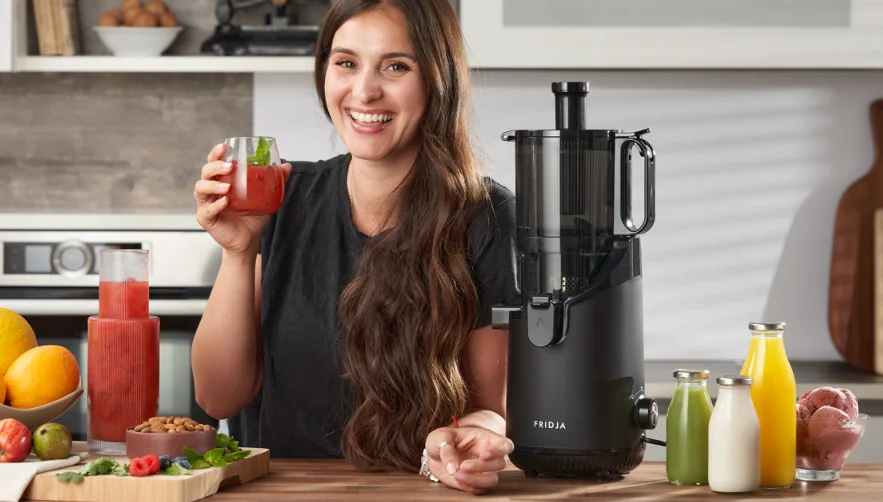

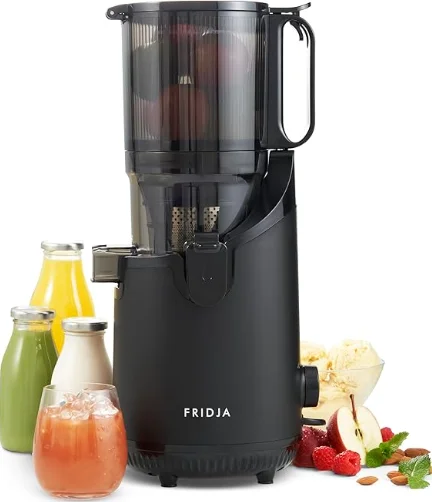
Fridja f2500 Self-Feeding Whole Fruit Juicer
SAFETY WARNINGS
- Read all the instructions carefully before use.
- To protect against the risk of electrical shock and permanent damage to the juicer, do not submerge the base of the unit in water or other liquid.
- Close supervision is necessary when using any appliance near children.
- Unplug the juicer from the plug socket when not in use, before putting on or taking off parts, and before cleaning.
- Avoid contact with moving parts.
- Do not operate any appliance with a damaged cord or plug or after the appliance malfunctions, is dropped, or is damaged. Return the appliance to the nearest authorised service facility for examination, repair, or electrical or mechanical adjustment.
- The use of attachments not recommended or sold by the manufacturer may cause fire, electric shock, or injury.
- Do not use outdoors.
- Do not let the cord hang over the edge of the table or counter.
- Always make sure the juicer cover is clamped securely in place before the juicer is turned on. Do not open or remove the juice jug while in operation.
- Be sure to turn the switch to the OFF position after use. Make sure the motor stops completely before disassembling.
- Do not put your fingers or other objects into the juicer opening while it is in operation. Only push produce with the pusher.
- Always check that the silicone valve lip is inserted into the bowl before use.
- Do not operate without the juice/pulp containers in place.
- Do not alter the appliance in any way.
- Do not use the appliance for anything other than its intended purpose as described in the manual.
- The appliance should be used for a limited period of time (no longer than 20 minutes continuously).
JUICING TIPS
Juicer damage due to owner negligence or from not following the instructions in the owner’s manual will void the warranty service. Please be careful! We recommend you juice slowly! Enjoy the process. Do not rush, what’s the hurry?
- Hard Fruit – Carrots and beetroots should be juiced first when mixed with high-yield fruit such as apples and pears for best results.
- Fibrous and/or tough leafy ingredients – Fibrous ingredients like celery and kale should be cut into small lengths before juicing and mixed with high-yield fruit. If the juicer becomes stuck, run it in reverse or remove it. Use the pusher to push through if necessary.
- Seeded Fruit – Ingredients with seeds, like grapes; afterwards, always thoroughly clean the bottom of the auger.
- Nuts (for nut milk) – Always soak overnight before putting them in the juicer.
DO NOT put the following ingredients into the juicer:
- Ice – Do not use ice inside the juicer. Add ice afterwards. Even better, refrigerate the fruit/vegetables before juicing.
- Hard seeds – Peach, nectarine, apricot, plum, mango, etc. Remove the stones before juicing.
- Skins – Pineapple, melon, mango, orange, etc. Peel the skins from the fruit before juicing. If you don’t eat it, don’t juice it!
- Sesame seed, butter, margarine – Do not extract ingredients containing vegetable or animal oil. This can reduce performance and permanently damage the juicer.
- Coconut, sugarcane, whole grains – Do not extract ingredients with no water content. They will damage the juicer.
YOUR FRIDJA JUICER
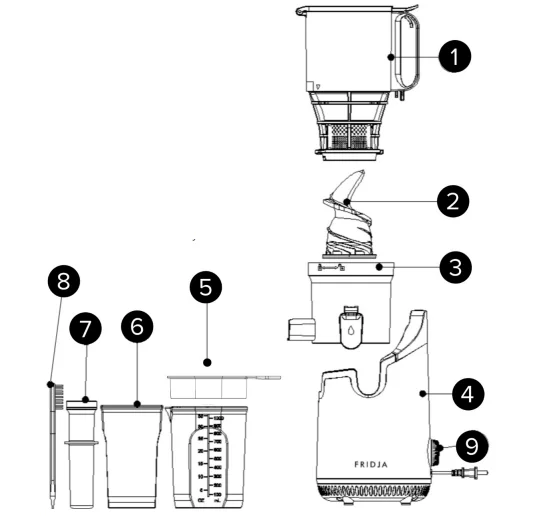
- Juicing Jug
- Auger
- Juicing Bowl with Anti-Drip Tap
- Base
- Juice Jug with Sieve
- Pulp Jug
- Pusher
- Cleaning Brush
- On/Off/Reverse Rotary Knob

ANTI DRIP TAP
Use the anti-drip tap to minimise mess and to mix different fruit and vegetable juices. Once the juice bowl is full, release the juice by opening the anti-drip tap.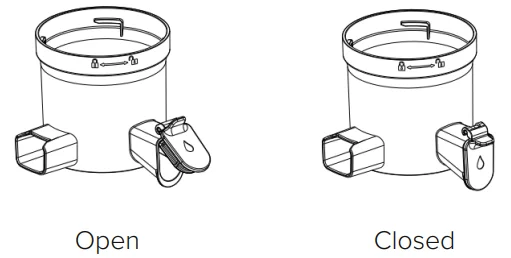
HOW TO ASSEMBLE
For a YouTube video on how to assemble, scan this QR code or go to this link: https://www.youtube.com/Fridja. Wash the parts before first use. The juicer may leak and not turn on if assembled incorrectly.
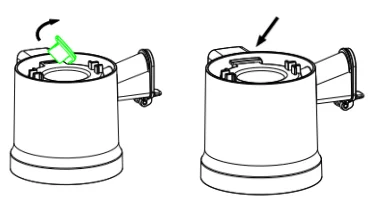
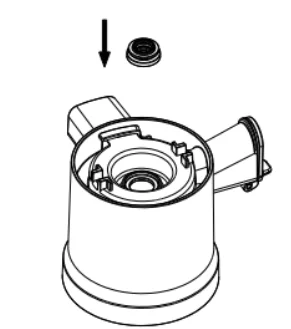
- Always check that the silicone valve plug is inserted into the bowl (particularly after washing).

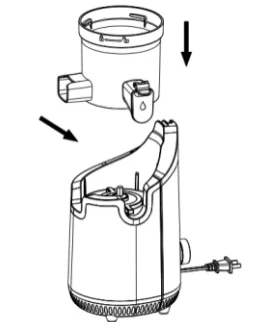
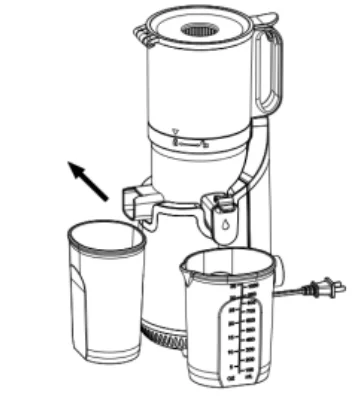
- Position the juice bowl onto the base, aligning the juice and pulp spouts.

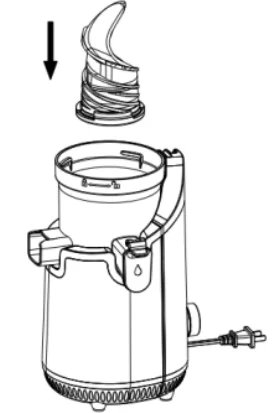
- Once the bowl is in position, place the auger firmly into the centre of the bowl. Make sure it touches the bottom; otherwise, it will not be possible to close the cover of the juicing jug.

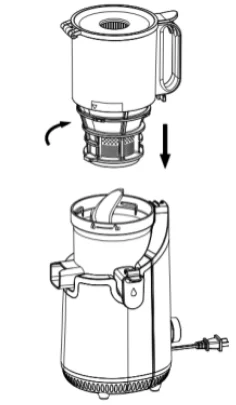
- Position the juicing jug so that the ▲ chute aligns with the padlock. Twist the juicing bowl until it clicks. This will release the safety mechanism.

- Place the juice (with sieve, not illustrated) and pulp jugs under the correct spouts. The juice jug has measurements and a spout to pour.

HOW TO JUICE
For a product overview YouTube video, scan this QR code or go to this link: https://www.youtube.com/Fridja. Wash and prepare all your ingredients. Plug the power cord into a wall plug socket.
- Open the lid and add fruits and vegetables to the juicing jug. Make sure to note which fruits and vegetables are recommended according to this manual.
- Close the lid and ensure the anti-drip tap is closed.
- Rotate the rotary knob to the on position.
On position – Pulls down and slowly masticates the ingredients. Reverse position – Pushes the ingredients back up to dislodge them.
- If you are juicing a mixture of hard and soft fruits, juice the hard fruit first.
- Use the anti-drip tap to make mixed juices and stop juice from escaping the juicing bowl. Juicing with the anti-drip tap closed creates various mixed juice creations when different fruits and vegetables are juiced. Open the anti-drip tap to pour juice into the juice jug. After juicing, close the anti-drip tap to stop the juice from dripping, especially when disassembling the juicing bowl from the base.
- After the fruits and vegetables are completely extracted from the juicing jug, switch the unit OFF.
After each extraction, run the juicer for an additional 30 seconds to let the juicer extract the remaining pulp. Clean the juicer immediately. Details are on the following pages. Your juicer has a safety mechanism when it overheats. The juicer will switch off automatically. If the juicer switches off, turn the rotary knob to ‘off’. Wait at least 10 minutes to let the juicer cool down before turning it back on.
MAKING NUT MILK
Using almond or cashew nut milk instead of dairy is a fantastic idea and really simple to do with your new juicer. Assemble the juicer and use the juice filter, just like you were going to make juice. Soak nuts such as almonds overnight in a bowl. The next day, replace the water with fresh water. Add the nuts along with the fresh water using a ladle into the juicer for delicious nut milk.
HOW TO DISASSEMBLE
Turn the rotary knob to OFF and unplug the power cord from the plug socket. Extract all the remaining produce in the juicing bowl before stopping the juicer. For easier clean up, operate the juicer for an additional 30 seconds after the juicer has finished extracting.
- Close the anti-drip tap. Remove the pulp and juice jugs.
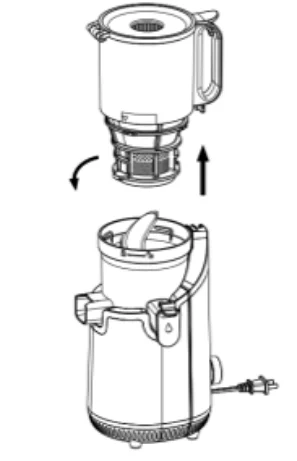
- Remove the juicing jug by rotating anti-clockwise until the ▲ on the chute aligns with the padlock. Lift the juicing jug off.

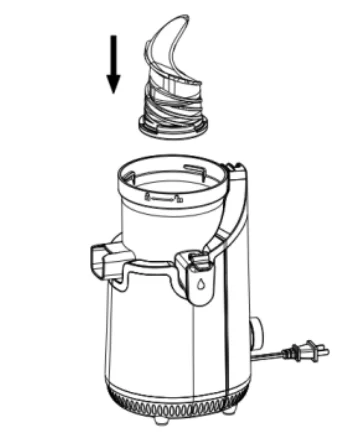
- Remove the auger by lifting from the bowl. If it is stuck, gently rotate until loose.

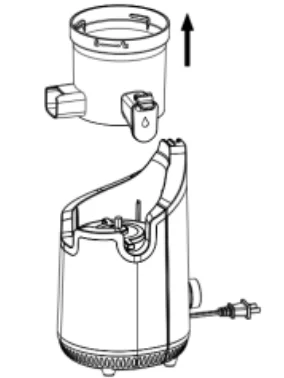
- Lift the bowl from the base. Immediately clean the juicer after each use. If the remaining residue in the juicer dries up, it can make disassembling and cleaning up difficult. The excess buildup can cause poor performance in future uses.

HOW TO CLEAN
It’s important to keep your juicer clean to ensure its long life. Switch off the juicer and unplug. Wash all parts with warm, soapy water. If the mesh on the juicer jug is clogged with pulp, use the supplied cleaning brush.
Please note:
- Do not use an iron wire brush to clean.
- If you use the dishwasher, it is important not to wash at temperatures above 40°C.
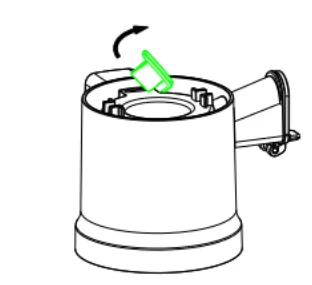
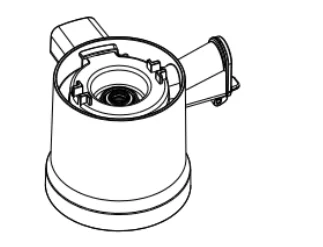
- When washing the bowl, remove the silicone valve from the socket. This will make it easier to clean.

- Clean the seal ring of the bowl by turning the bowl upside down and pushing the ring out with your thumb.

- When putting the seal ring back in, the small ribbed surface should be at the bottom/outside the bowl. The flat side should be inside the bowl.

- When cleaning the base, never submerge it under water. Simply wipe it clean using a damp cloth.
- After cleaning, please make sure all parts are fully dry before reassembling.
TROUBLESHOOTING
When there is no power to the juicer:
- Check if the power cord is properly plugged into the plug socket (and the plug socket is turned on).
- Check if the drum lid and the juicing bowl are properly assembled. Watch the video on how to assemble! It won’t turn on if assembled incorrectly.
- If the juicer stops due to the overload protection, let the juicer cool before juicing again.
Low juice yield:
- Different ingredients hold different amounts of fluid that will yield different amounts of juice. If the ingredients are not fresh, they may contain reduced amounts of fluid, which will yield less juice.
- Check if the silicone valve lip is firmly inserted into the bowl to ensure no juice is leaking.
- If the ingredients have low water content, it may help to soak them in water before juicing. If juicing ingredients with small seeds, the yield may be reduced due to seed residue.
- For certain fruits, disassemble and wash the top set in between juicing. If there is seed residue on the bottom of the auger, this can affect juicer performance and the overall juice yield.
There is too much pulp in the juice:
- When continuously juicing, depending on the ingredients, the juice may contain a lot of fine pulp. To reduce the fine pulp, clean the juicer jug frequently.
- Use an external sieve and put the juice through it to collect the unwanted pulp.
- If the juice jug and the auger are damaged and affect the juicer’s performance, it is recommended that the parts be replaced. The lifetime of each part may vary depending on length, method of use, and ingredients extracted.
The drum lid will not close:
- Make sure the auger is pushed all the way into the strainer for the drum lid to close properly. If the auger is not properly in position, the drum lid may not close.
Odd noise from the juicer:
- Check if the parts are assembled correctly. Try reassembling the parts and listen for the odd noise. Do not start the juicer unless there are ingredients and/or liquid in it.
- If excessive noise occurs when ingredients are inserted into the juicer, check the size of the ingredients. Try cutting up dense/stringy/hard fruits and vegetables.
- Noise can occur if the juicer is operated on an uneven or slanted surface. Place the juicer on a horizontally flat surface when operating.
Juice dripping down the body of the base:
- If the silicone valve lip on the bottom of the juicing bowl is not plugged in correctly, the juice may seep out onto the juicer base. Before assembling the parts, check and make sure the compression silicone is plugged in correctly.
Discolouration of the plastic parts:
- After juicing, if the juicer is not cleaned right away, the remaining pulp inside the juicing jug and auger can dry up, which can make disassembling and cleaning hard. This can also affect the juicer’s performance and colour.
- Ingredients that are rich in carotenoids, such as carrots and spinach, may dye plastic parts. When the parts are dyed with carotenoids, please use a mild detergent to clean.
- Do not use vegetable oil on the juicer. Vegetable oil or oil from animal fat affects the juicer’s performance and will result in damaged parts.
Using for purposes other than juicing:
- This juicer is designed to juice ingredients like fruits and vegetables. Do not use the juicer for extracting vegetable oil.
WARRANTY AND GUARANTEE
Thank you for purchasing a Fridja product! This guarantee applies to goods purchased directly from Fridja Ltd. If you bought your steamer from a third-party retailer, please contact them directly for any issues or queries regarding your purchase.
Warranty Activation
To activate your warranty and enjoy continued support, please register your product by following these simple steps:
- Scan the QR code using your smartphone camera or a QR scanning app to access our official registration page.
- Complete the registration form with your product and personal details, ensuring all information is accurate to activate your warranty.
- Review and submit your information by clicking ‘Submit’ to finalise the registration process.
Upon successful registration, you will receive a confirmation email shortly, which includes your warranty details and other important information regarding your product.
Full Terms and Conditions
For detailed information on the terms and conditions of your purchase and guarantee, please visit https://www.fridja.com/returns-policy.
Assistance
For any assistance, please visit – https://www.fridja.com/help. Keep your purchase receipt safe. It may be required for future warranty claims.
For More Manuals By Fridja, Visit ManualsLibraryy.
Fridja f2500 Self-Feeding Whole Fruit Juicer-FAQ
Are Fridja juicers good?
Fridja juicers are generally well regarded for their modern design, ease of use, and consistent juice quality. Models like the f1900 and f2500 have received positive feedback for efficient cold-press performance and thoughtful features such as wide feeding chutes. Users often appreciate the quieter operation compared to centrifugal juicers and the solid build quality. They are positioned as premium home appliances, offering a balance between performance, convenience, and sleek aesthetics.
What is the Fridja f2500 Self-Feeding Whole Fruit Juicer?
The Fridja f2500 is a cold-press, self-feeding juicer designed to handle whole fruits and vegetables with minimal prep. It features a large 135mm feeding chute and hopper system that automatically pulls ingredients into the juicing chamber. This design reduces chopping time and simplifies the process. It is built for home use and focuses on producing smooth, nutrient-rich juice while remaining relatively quiet and easy to clean.
What is a self-feeding juicer, and how does it work?
A self-feeding juicer uses a hopper-style top rather than a narrow feed tube. Instead of pushing produce down manually with a pusher, you load ingredients into the hopper, and the machine gradually feeds them into the auger automatically. This makes juicing more hands-free and convenient. The system helps streamline preparation and is especially useful for larger batches or when juicing whole fruits.
What is the difference between the Fridja f1900 and f2500?
The f2500 builds on the f1900 with several practical upgrades. It includes a larger 135mm feeding chute, allowing more whole fruits and vegetables to be added at once. The f2500 also has a refined self-feeding mechanism and fewer detachable parts, which can make cleaning simpler. Some components are dishwasher safe, further improving convenience. Overall, the f2500 focuses on efficiency and a more user-friendly experience.
Where are Fridja juicers made?
Fridja products are designed in London, United Kingdom. Manufacturing takes place in both China and the UK, depending on the product and production requirements. The brand combines British design standards with international manufacturing capabilities. This approach allows Fridja to maintain quality control while offering competitively priced appliances in global markets.
What type of juicer is better: masticating or centrifugal?
The answer depends on your priorities. Masticating juicers, like the Fridja f2500, operate at slower speeds and are ideal for cold-pressed juice with less heat and oxidation. They are typically quieter and better for leafy greens. Centrifugal juicers work faster and are often more affordable, but they can be noisier and may produce slightly less nutrient-dense juice. For juice quality and versatility, many prefer masticating models.
What is the warranty on Fridja juicers?
Fridja juicers typically come with a 12-month warranty covering defects in materials and workmanship under normal home use. The warranty does not cover misuse, improper maintenance, or commercial usage beyond recommended limits. For best results, users should clean the juicer thoroughly after each use and follow the manufacturer’s usage guidelines to ensure long-term performance and warranty validity.
What are the disadvantages of using a juicer?
Juicers can be expensive compared to blenders and require regular cleaning after each use. Since most juicers separate juice from pulp, some of the natural fiber found in whole fruits and vegetables is lost in the process. Additionally, preparation and cleanup can take time. However, many users find the convenience of fresh, smooth juice and concentrated nutrients worth the trade-offs.
Which brand of juicer is best in Pakistan?
The best juicer brand in Pakistan depends on budget and preferences. International brands like Philips, Kenwood, Panasonic, and newer premium brands such as Fridja are often considered for quality and durability. Availability, after-sales service, and warranty support also influence buying decisions. It’s important to compare motor power, juicing type, ease of cleaning, and local customer support before making a final choice.
Who owns Fridja?
Fridja was founded by Ben Fridja in 2010. The company started with a mission to create modern, high-quality home appliances that simplify everyday life. Over the years, it has expanded its product range to include steamers, juicers, and blenders. The brand emphasizes functional design, user convenience, and reliable performance, helping it build a growing customer base in the home appliance market.