
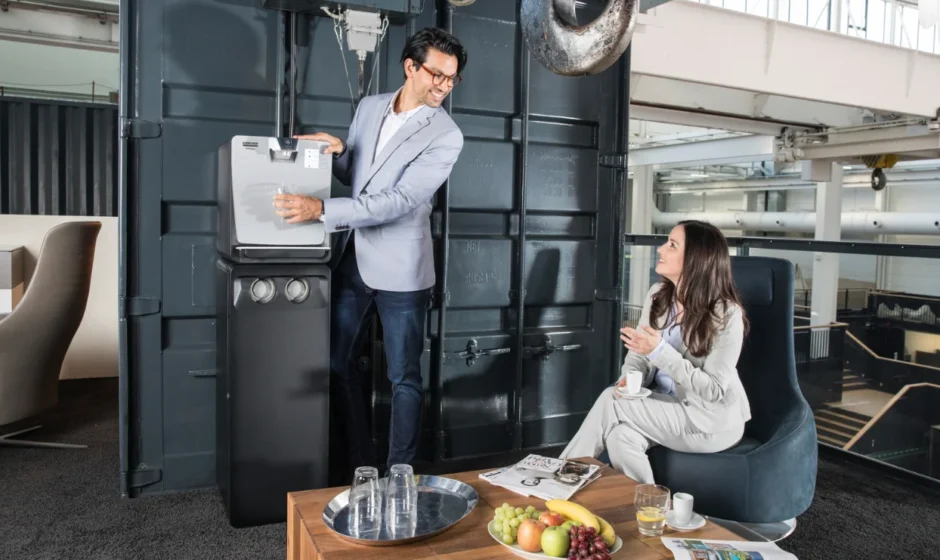

Karcher Water Dispenser WPD 200 Basic

 General instructions
 General instructions
Read the original instructions before using the unit for the first time and act in accordance with it. Keep the original instructions for future reference or for future owners.
- Only drinking water from a public water supply can be used to guarantee the water quality of the emerging water. The quality must at least correspond to the guidelines of the World Health Organization (WHO).
- If intervention in the drinking water network is necessary in order to install the unit, this must be done by a trained specialist who is authorised to do this according to the laws and regulations valid for the location. When installing the device, the applicable national regulations for interventions in the drinking water network must be observed. The work must be commissioned by the customer if required.
- For protection against water damage caused by a burst water hose, we recommend installing a shutoff device and an aqua stop (optionally available) in the water supply line.
- Maintenance work in the interior of the unit may only be carried out by the operator of the unit who has read these operating instructions.
- When using a CO2 bottle, the locally applicable rules for marking the installation room must be observed.
- Do not clean the unit with a water jet.
- Plastic surfaces must not be cleaned with alcohol-based, aggressive or abrasive detergents. The surface cleaner CA 30 R (6.295-686.0) is recommended.
- After initial start-up, filter changes and long downtime periods, dispensed unchilled water may temporarily be milky in appearance. This is due to small air bubbles in the water and does not affect water quality.
Safety instructions
Hazard levels
DANGER
- Indication of an imminent threat of danger that will lead to severe injuries or even death.
WARNING
- Indication of a potentially dangerous situation that may lead to severe injuries or even death.
CAUTION
- Indication of a potentially dangerous situation that may lead to minor injuries.
ATTENTION
- Indication of a potentially dangerous situation that may lead to damage to property.
Safety instructions
DANGER
- Risk of electric shock. Always pull out the mains plug before working on the device. The socket must be protected with a 30 mA fault current protection switch.
- Danger of death from bursting CO2 cylinder. Place the CO2 cylinder upright and secure it. Always connect the CO2 cylinder with a pressure reducer with safety valve approved for the unit type. Protect the CO2 cylinder from excessive heat and never expose it to direct sunlight.
- Danger of explosion. Never connect a CO2bottle with a riser. For example, riser bottles are marked with a red warning sticker.
- Danger of suffocation due to escaping carbon dioxide. Ensure that the installation room is adequately ventilated or install a gas warning system. Observe the country-specific legal requirements regarding the prescribed minimum room size, warning systems and ventilation during the emptying of compressed gas tank.
- Risk of explosion. Do not store any potentially explosive objects such as spray cans with flammable propellants in the unit or the stand.
WARNING
- When positioning the appliance, ensure the supply cord is not trapped or damaged.
- Do not locate multiple portable socket-outlets or portable power supplies at the rear of the appliance.
- Risk of injury from bursting bottles. Carbonated water may only be filled into pressure-stable bottles (10 bar).
- Keep ventilation openings in the appliance enclosure or in the built-in structure clear of obstruction.
- Chemical cleaning must be carried out at least every 6 months (see “Care and service”).
- Health risk due to increased germ concentration. After a warning from the drinking water supplier regarding microbiological contamination, chemical cleaning must be carried out at least once. Cleaning
may need to be repeated. If in any doubt, contact the KÄRCHER Service. - Possible health risk due to increased concentration of germs in the water after prolonged standstill. Therefore, carry out chemical cleaning after a longer period of inactivity.
- Health risk due to an improperly repaired device. The device may only be repaired by a trained specialist personnel.
ATTENTION
- Damage to the device cooling unit. If the device has been stored or transported lying down, you must place the device in its normal position and then wait at least 24 hours before operating it.
Symbols on the unit
WARNING
Risk of fire due to refrigerant
Flammable refrigerant is used in this unit. If refrigerant escapes (damage to or defect in the cooling circuit), keep ignition sources away from the unit, ventilate the installation room and contact the service centre.
Intended use
WARNING
This unit is not intended for use by persons (including children) with reduced physical, sensory, or mental capabilities, unless they are supervised by a person who is responsible for their safety or have received instructions on how to use the unit from them and understand risks associated with using the unit. Cleaning and user maintenance may not be carried out by unsupervised children.
WARNING
Children must be supervised to prevent them from playing with the appliance.
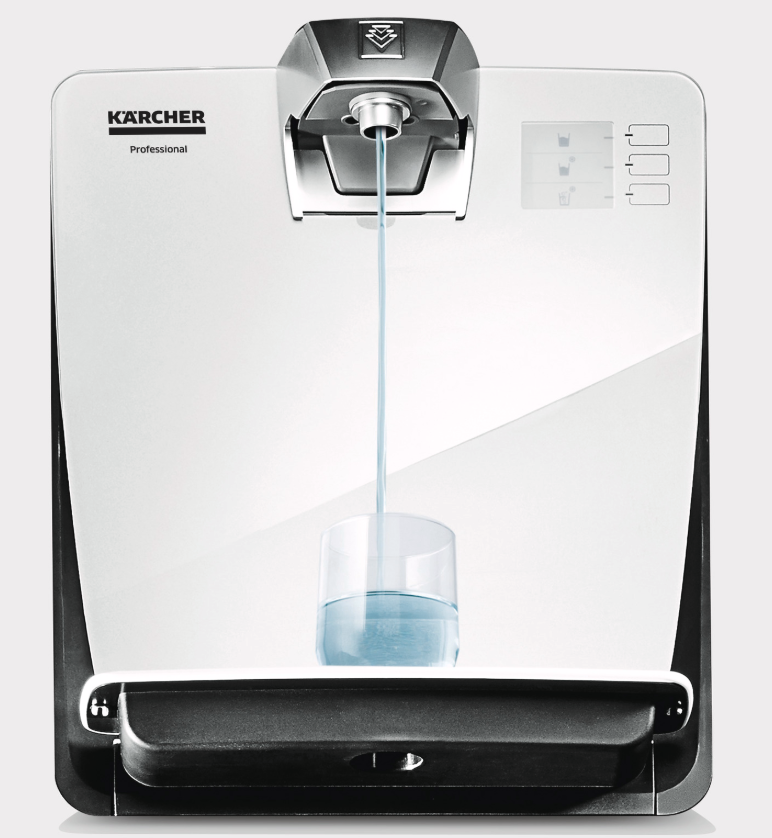
- The unit is used to dispense both tempered and untempered water, with or without the addition of food-grade carbonic acid (CO2), in self-service mode.
- Depending on the unit variant, the unit is equipped with different filters (Active-Pure filter or Hy-Protect filter).
- This unit is intended for use in domestic and similar applications, such as in staff kitchen areas in shops, offices, and other work areas, in agriculture, and by guests in hotels, motels and other accommodation, in catering and similar wholesale use.
- Do not set up or operate the unit in commercial kitchens.
- The unit must be set up in a frost-free room.
- Do not use or place the unit outdoors.
- Do not place, store or transport the unit horizontally.
Foreseeable misuse
Any type of improper use is prohibited. The operating personnel are liable for damage resulting from incorrect use.
Function
From the water inlet, the water flows first through the filter (for a description of the filters, see Consumables). Depending on the button pressed, the water then flows through the cooling module, the CO2-mixer (optional) or directly onward to the water dispenser. If carbonated water is required (optional), carbon dioxide is also added to the water. To ensure perfect hygiene, the entire water system must be chemically cleaned at regular intervals.
General instructions for handling CO2 bottles
When replacing CO2 bottles, the safety instructions of the gas supplier and any legal requirements must be observed.
- The CO2 bottle must be equipped with the pressure reducer approved by KÄRCHER so that the carbonic acid content of the water can be adjusted.
- The carbon dioxide E 290 must comply with the purity requirements of Directive 96/77/EC (food quality) and be labelled in accordance with Article 7 of Directive 89/107/EEC.
- Before using a gas bottle, make sure that the correct type of gas has been provided. Reliable information about the type of gas is provided solely by the hazardous goods label that must be present on every
gas bottle. The colour of the gas bottle does not always give clear information about the type of gas. A gas bottle of which there is any doubt about the contents or which is conspicuous in any other way (damage, exposure to fire, traces of mechanical processing) must not be used. - The country-specific regulations must be observed.
DANGER
Risk of explosion
Never connect a CO2bottle with a riser. For example, riser bottles are marked with a red warning sticker.
WARNING
Danger of death from a possibly bursting CO2gas container
Place the pressure tank vertically and fasten it. Never open the compressed gas tank without a pressure reducer and without a safety valve. The pressure reducer with safety valve must be approved for the type of device.
DANGER
Danger of suffocation due to escaping carbon dioxide
Ensure sufficient ventilation of the installation room or install a gas warning system. Do not expose the CO2 bottle to direct sunlight. Protect the CO2 bottle from excessive heat. Apply a visible marking indicating the possible presence of gaseous carbon dioxide.
Environmental protection
 The packing materials can be recycled. Please dispose of packaging in accordance with the environmental regulations. Electrical and electronic devices contain valuable, recyclable materials and often components such as batteries, rechargeable batteries or oil, which – if handled or disposed of incorrectly, can pose a potential danger to human health and the environment. However, these components are required for the correct operation of the device. Devices marked by this symbol are not allowed to be disposed of together with the household rubbish. R-290 Contains greenhouse gas R290 – hermetically
sealed device
Notes on the content materials (REACH)
Current information on content materials can be found at: www.kaercher.de/REACH
Scope of delivery
Check the carton contents for completeness when unpacking the unit. Also check that the supplied attachment kits are complete. If any accessories are missing or in the event of any shipping damage, please notify your dealer.
Accessories and spare parts
Only use original accessories and original spare parts. They ensure that the appliance will run fault-free and safely. Information on accessories and spare parts can be found at www.kaercher.com.
Device description
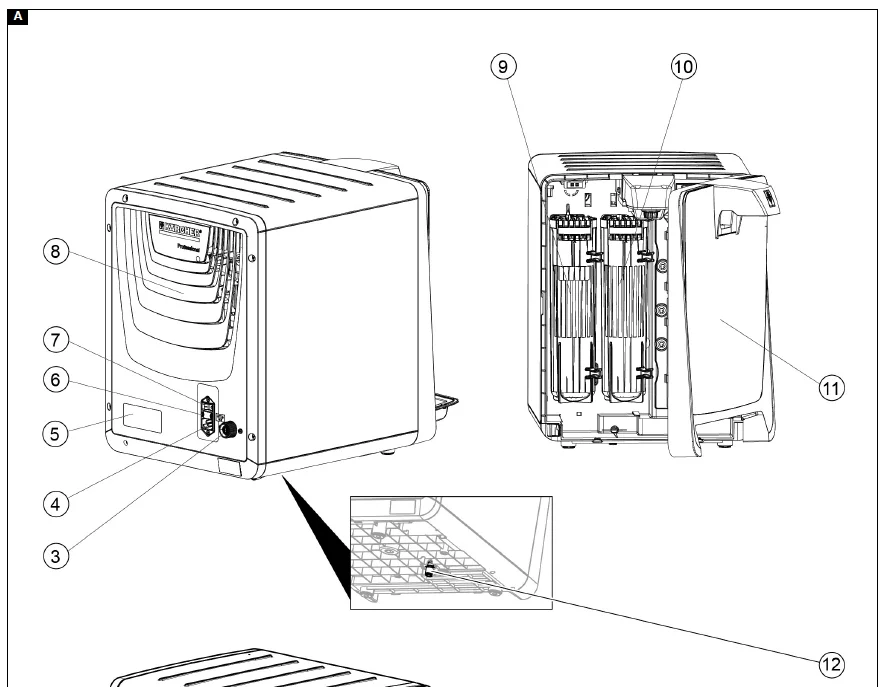
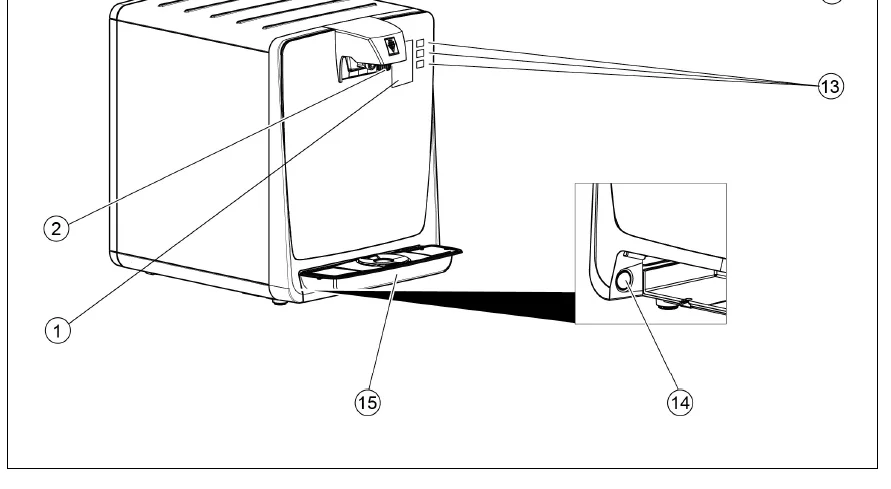
For the figures, please refer to the graphics page Illustration A
- Display
- Water outlet
- Water connection
- Power supply
- Type plate
- Fuse holder cover with 10 A fuse
- Power switch
- Ventilation openings
- Hy-Protect filter
- Active Pure filter
- Device door
- Drip tray drain
- Button
- Unlocking button
- Drip tray
Installation
Prerequisites
The following utilities are required to operate the device:
- Mains socket for connection to the mains.
- Water tap with 3/8″ or 3/4″ external thread for connection to the water supply.
Attaching the attachment kits
- Attach the attachment kits ordered for the device to the device.
Note
The installation for each attachment kit is described in separate installation instructions enclosed with the attachment kit
Connecting the device
DANGER
Danger from electric shock.
Do not remove the side parts, the cover or the circuit board cover of the device. These components may only be removed by a qualified electrician. During initial installation and any repairs that involve the replacement of accessory parts, make sure only parts approved by KÄRCHER (filter, mains cable, connection kit, CO2-pressure regulator, depending on the equipment) are used. These components have been tested and certified to ensure compliance with KÄRCHER Quality Standards. No other components may be used.
- The power connection and water input pressure must correspond to the values in the technical data (see chapter “Technical data”).
- Depending on local regulations, an approved backflow preventer must be installed.
- For devices with drip tray drainage into the building’s wastewater pipe, a siphon must be provided to protect against odours from the wastewater pipe. The siphon must be positioned lower than the drip
tray. The drip tray drain only functions reliably when the wastewater hose slopes continuously downward. - Set up the device on a level surface.
- The mains plug and socket must always be freely accessible.
- The power switch, the fuse and the water connection (rear of the device) must be freely accessible. The minimum distance to the wall is 100 mm.
- In the interest of reducing power consumption, the power supply can be switched off when the device is not in use (e.g. using a timer clock).
- Do not use used hose lines.
Using the device with a stand:
- To ensure a high level of stability of the device in accordance with the guidelines of the device standard, a device with a base must be fixed to the floor or wall (floor attachment kit WPD).
- Alternatively, the WPD additional weight stand attachment kit can be used to lower the centre of gravity of the device accordingly.
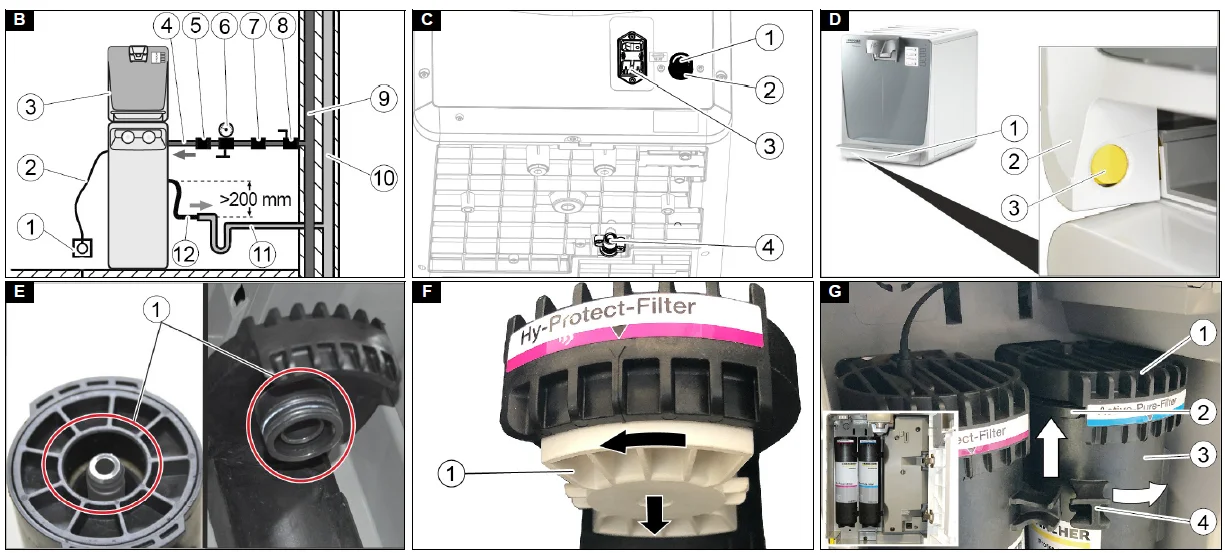
Connection diagram: Illustration B
- Socket (fused with 30 mA error-current circuit breaker)
- Mains cable
- Water dispenser WPD
- Water supply hose (connection kit)
- External backflow preventer (optional)
- External pressure reducer with pressure gauge (only necessary with water inlet pressure above 6 bar (0.6 MPa))
- Aqua stop (optional)
- Water tap of the building installation
- Drinking water line of the building installation, external thread 3/8” or 3/4”.
- Waste water pipe
- Siphon of the building installation
- Drain the drip tray
Connections: Illustration C
- Inlet sieve
- Water connection (connection thread 3/4″)
- Power supply
- Drip tray drain (optional)
Connection as a table-top device
- Attach the table-top device attachment kit according to the enclosed installation instructions.
Note: If the drip tray is to be fitted with a drain, fit the drip tray drain attachment kit and carry out the following installation steps: - Lay a hose from the drip tray drain to the siphon.
- If no wastewater drain is possible, use the WPD can attachment kit.
Note: If a drip tray drain is to be fitted, the drip tray drain adapter attachment kit must also be fitted.
Connection with the stand
- Use the stand attachment kit, possibly also the cup dispenser attachment kit and the additional cooler attachment kit. Attach the attachment kits according to the enclosed installation instructions.
Note: If the drip tray is to be fitted with a drain, fit the drip tray drain attachment kit and carry out the following installation steps: - Attach an angle piece to the drip tray drain.
- Lay a hose through the stand from the angle piece to the siphon.
- If no wastewater drain is possible, use the WPD can attachment kit.
Note: If a drip tray drain is to be fitted, the drip tray drain adapter attachment kit must also be fitted.
Connecting the supply connections
- Connect the water supply hose to the rear of the unit.
- Connect the water supply hose to the tap of the building installation (if necessary, connect additional components).
- Connect the mains cable to the power supply on the rear of the unit.
- Connect the CO2 connection hose (optional) to the CO2 connection.
Initial start-up
Opening the device door
- Pull out the drip tray. Illustration D
- Drip tray
- Device door
- Unlocking button
- Press the unlocking button and open the device door.
Transport
CAUTION
Failure to observe the weight
Risk of injury and damage. Be aware of the weight of the device during transportation.
- Do not transport the device in a horizontal position.
- When transporting the device in vehicles, secure it to prevent it from slipping or overturning in accordance with the respective valid guidelines.
Equipment shipping
The device must not be transported in a horizontal position.
- Select a suitable packaging for transport and mark it on the outside with a conspicuous marking for vertical transport.
- If possible, place a small wooden pallet under the shipping box.
- Alternatively, take the device directly to a Kärcher service centre.
Storage
CAUTION
Risk of injury or damage due to non-observance of the weight. Be aware of the weight of the device during storage.
- Store the device in a frost-free place.
- Remove any filters remaining in the device after storage and replace them with new filters.
- Perform a chemical cleaning.
Care and service
WARNING: Health risk due to an improperly repaired device. Have the device repaired only by trained specialist personnel. Only use original spare parts from the manufacturer, such as
- Spare parts and wearing parts
- Accessories
- Operating materials
- Detergent
Before performing any work on the device:
- Set the trigger to “0”.
- Pull out the mains plug.
- Close the water inlet.
Chemical cleaning
ATTENTION: Health risk due to discharged rinsing water!
The rinse water is not drinking water! Always dispose of rinse water immediately. Chemical cleaning must be carried out after initial Start-Up and at least every 6 months. The same applies after a shutdown for more than 7 days or an extraordinary filter change. A service cartridge is required for chemical cleaning.
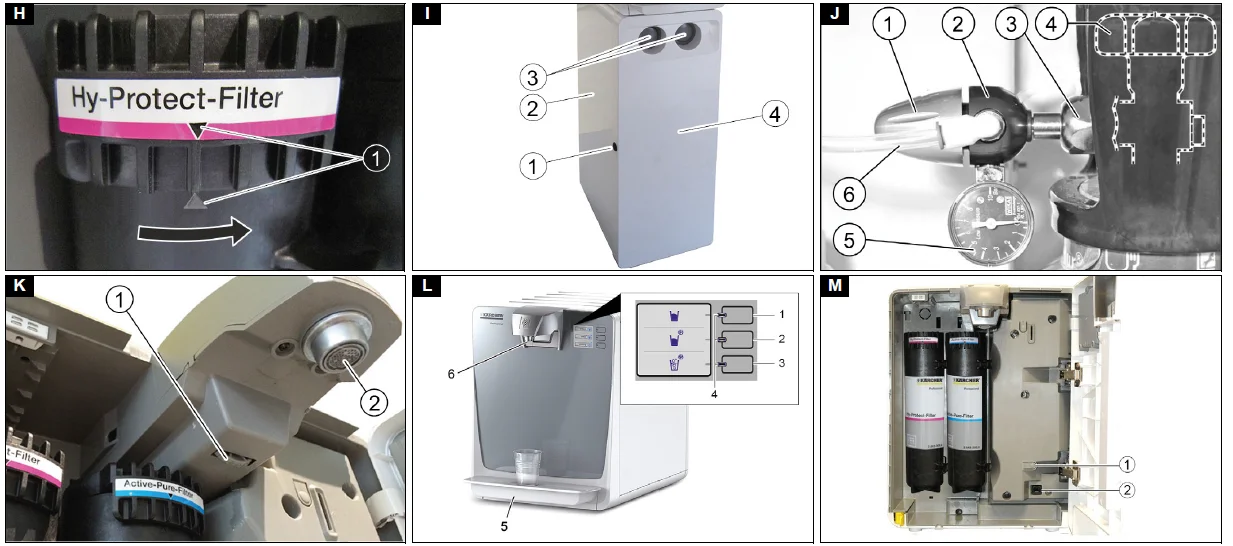
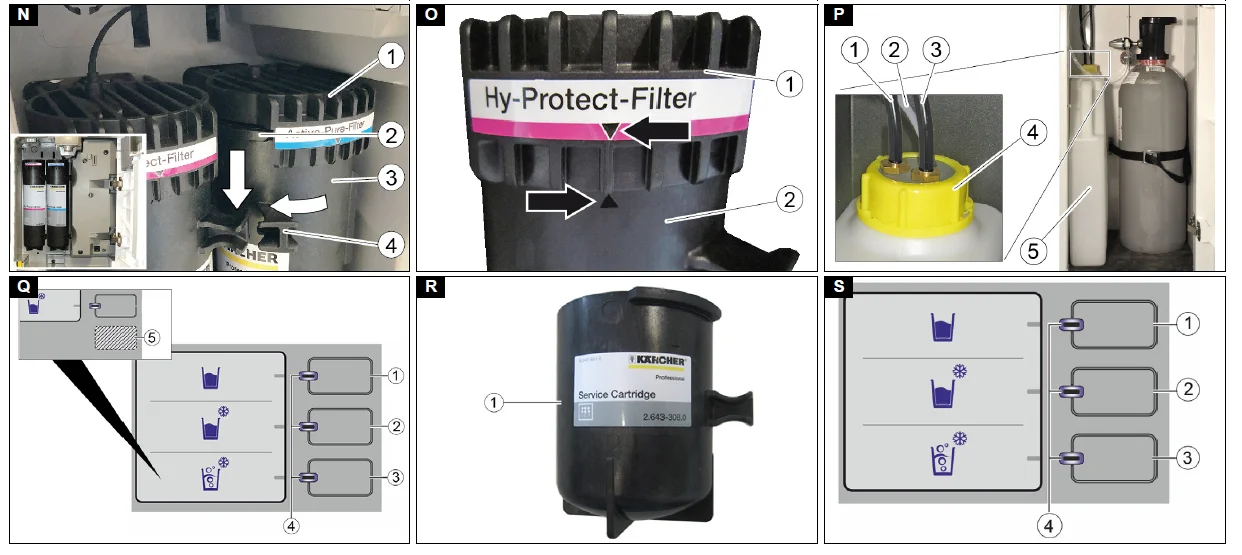
Note: Chemical cleaning takes approx. 60 minutes. Empty the can before starting the chemical cleaning process (optional). Illustration Q
- Button for unchilled water
- Button for chilled water
- Button for carbonated water
- LEDs (red / blue)
- Dummy button
Illustration R
- Service Cartridge
CAUTION: Risk of damage to the filter group
An incorrectly inserted service cartridge will damage the filter group. Always use the service cartridge instead of the Hy-Protect filter! Never use in place of the Active-Pure filter.
WARNING: Risk of injury from contact with detergent. The detergents used can cause skin irritation and other injuries. Wear suitable gloves and safety goggles during chemical disinfection. Observe the instructions on the detergent!
- For devices with a drip tray drain, empty the can.
- Place a container with a capacity of at least 1 litre under the water outlet.
Start chemical cleaning: - Press the button for unchilled water and the button for carbonated water or the dummy button at the same time.
Note: Pressing the buttons simultaneously starts the cleaning programme. The drinking water dispenser is blocked during the cleaning programme. The cleaning programme takes approx. one hour with subsequent rinsing and cannot be interrupted once it has started. - When a signal tone sounds, press and hold the buttons for 5 seconds until another signal tone sounds. All LEDs flash blue.
- Press any button.
- The pressure in the system is released, and the process takes approx. 30 seconds. All LEDs flash red.
- Remove the drip tray and open the device door. Beeps sound as long as the door is open and the drip tray is removed.
- Remove the Hy-Protect filter.
- Place the detergent (4 tablets) into the service cartridge and insert it into the filter holder.
Troubleshooting guide
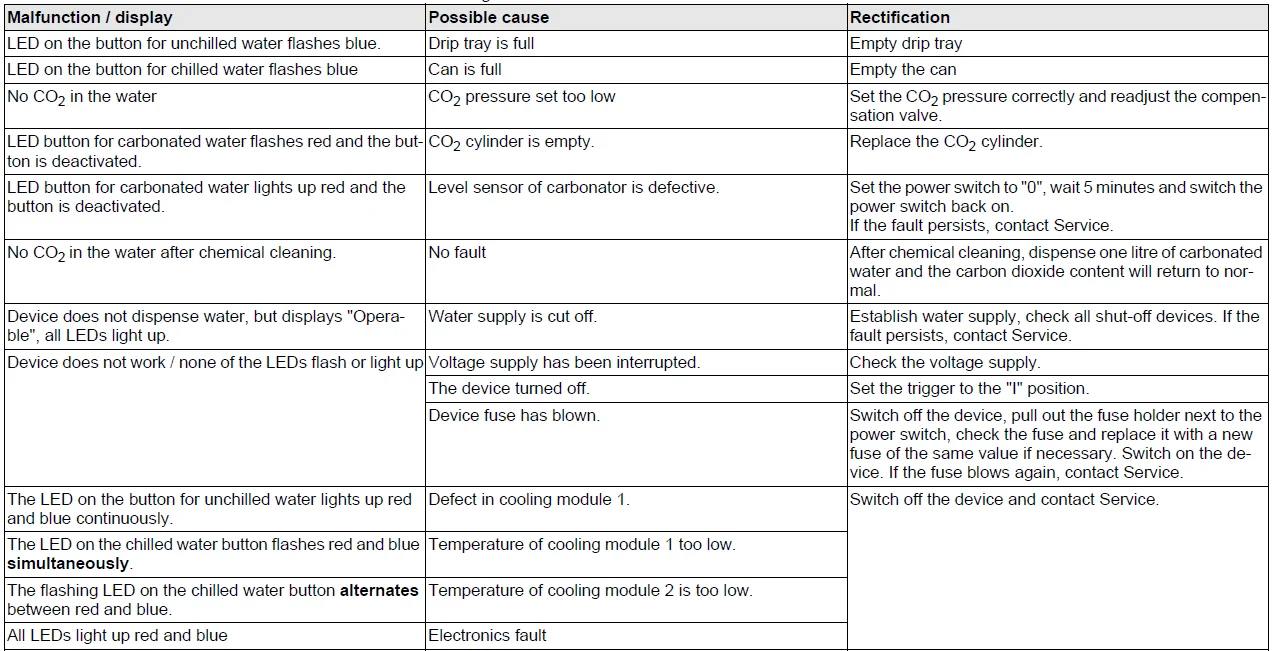
Many faults can be rectified using the fault table.
Note: Contact the service personnel if a malfunction cannot be corrected using this table.
WARNING: Health and damage hazards due to an improperly repaired device!
If repairs are carried out incorrectly, there is a risk of contamination of the water system, electric shock or flooding of the installation site. The device may only be operated by specifically trained specialist personnel.

Warranty
The warranty conditions issued by our relevant sales company apply in all countries. We shall remedy possible malfunctions on your appliance within the warranty period, free of cost, provided that a material or manufacturing flaw is the cause. In a warranty case, please contact your dealer (with the purchase receipt) or the next authorised customer service site. (See overleaf for the address)
Further warranty information (if available) can be found in the service area of your local Kärcher website under “Downloads”.
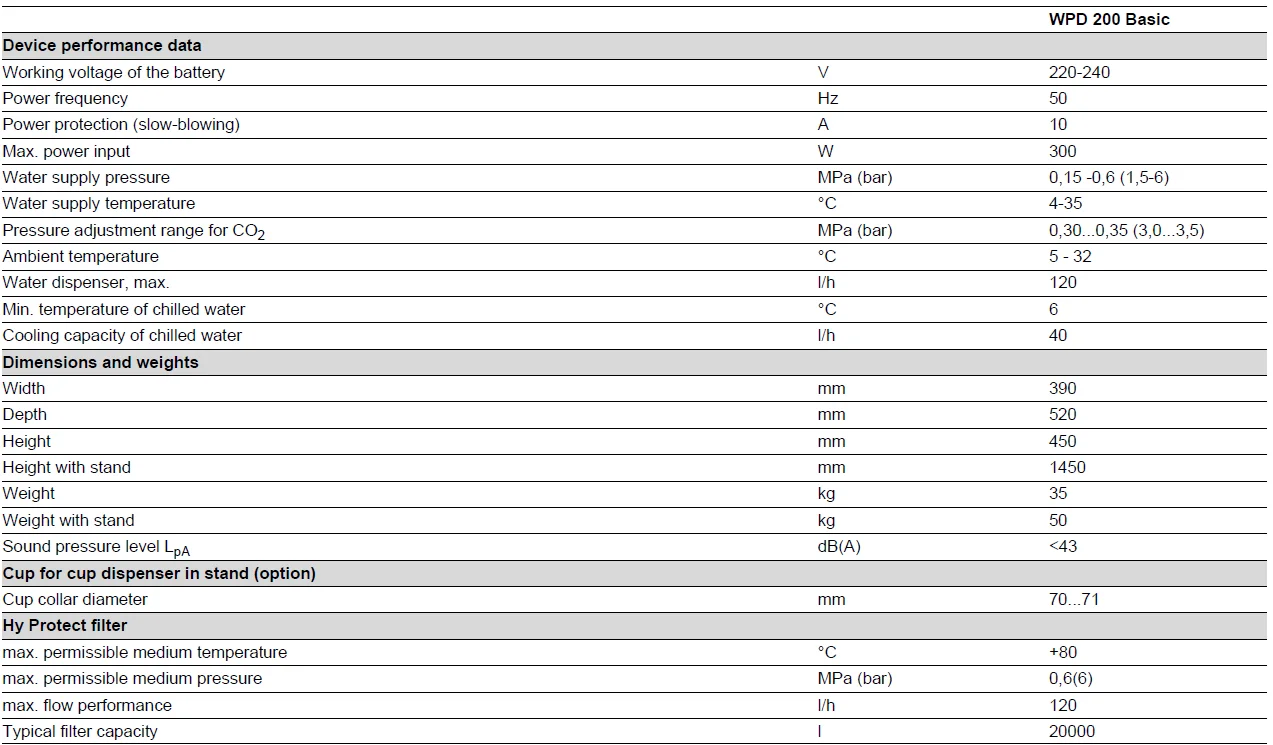
Technical data

Material / Approvals
All parts/components containing water are suited and approved for use in direct contact with drinking water in accordance with current industry standards. The device has been certified for food suitability by the
Fresenius Institute and meets the requirements of the Mineral and Table Water Ordinance.
For more manuals by Karcher, visit ManualsLibraryy
Karcher Water Dispenser WPD 200 Basic-FAQs
Is a water dispenser cheaper than buying bottled water?
Yes, using a water dispenser is generally more economical over time. Regularly purchasing small bottled water can be significantly more expensive compared to refilling large bottles or using a filtration-based system.
Does a water dispenser consume a lot of electricity?
Most modern dispensers are energy-efficient. On average, they consume around 0.7 to 1 kWh per day, depending on how frequently the hot and cold functions are used.
What are the disadvantages of a water dispenser?
A water dispenser requires periodic cleaning and filter replacement, which adds to maintenance costs. It also needs electricity to operate and occupies space in the home or office.
Can bacteria grow inside a water dispenser?
Yes, bacteria can develop if the dispenser is not cleaned regularly. Proper sanitisation and timely filter changes help maintain hygiene and water safety.
What is the average lifespan of a water dispenser?
With proper care and servicing, a water dispenser typically lasts around 7 years or longer, depending on usage and maintenance.
Is RO water safe for the kidneys?
Yes, reverse osmosis (RO) water is safe for healthy individuals. It removes impurities and harmful contaminants, making the water clean and suitable for daily consumption.
Should I turn off my water dispenser at night?
You can turn it off at night to reduce electricity consumption if hot or cold water is not needed. However, many commercial dispensers are designed to operate continuously without issues.
What should I consider before buying a water dispenser?
You should consider the unit’s capacity, cooling and heating performance, energy efficiency, filtration features, available space for installation, and long-term maintenance requirements.
Is it necessary to clean the water dispenser regularly?
Yes, regular cleaning every one to three months is recommended to prevent mould growth, odour, and bacterial contamination.