

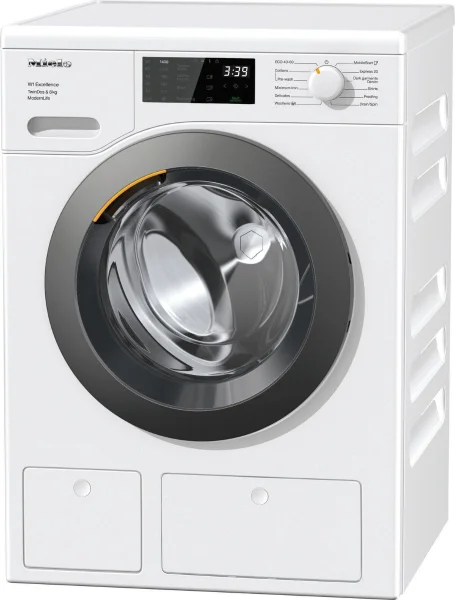
Miele Freestanding Washing Machine
Important safety instructions
Warning: To reduce the risk of fire, electric shock, or injury, persons operating the appliance must adhere to the following safety precautions:
- It is essential to read the operating instructions before using the washing machine.
GROUNDING INSTRUCTIONS
The washing machine must be grounded. Connecting the appliance to ground reduces the danger of electric shock in the event of a malfunction. The grounding is a protective conductor that provides a path of least resistance for the current. The washing machine comes complete with a power cord and plug with the corresponding protective conductor. The power cord plug must be inserted into a suitable outlet that has been installed and grounded in compliance with all applicable local codes.
- WARNING: Incorrect grounding of the appliance will run the risk of electric shock. In case of doubt, get in touch with a qualified electrician and arrange to have your cabling inspected.
- Do not replace or make any changes to the plug supplied. If there is no suitable socket available, a socket must be installed by a qualified electrician.
- Do not use a damaged washing machine.
- Do not expose the washing machine to outdoor weather conditions.
- Do not install the washing machine in an area where there is a risk of freezing conditions. Frozen hoses may burst or split, and the reliability of the electronic control unit may be impaired at temperatures below the freezing point.
- Before connecting the washing machine, make sure that the connection data on the data plate (voltage and connected load) match the domestic electricity supply. If in doubt, request the connection data from a qualified electrician.
- Do not connect the washing machine to the domestic electricity supply by a multi-socket adapter, extension lead or similar. These do not guarantee the required safety of the machine (fire hazard due to the risk of overheating).
- The washing machine is not intended for maritime applications or for use in mobile units such as motor homes or aircraft. However, installation in such scenarios may be possible under certain conditions. Get in touch with Miele’s Technical Service department regarding these specific requirements.
- Do not make any changes or repairs to the washing machine if this is not expressly permitted in these operating instructions.
- Only Miele is permitted to replace a damaged power cord. Miele service technicians use original power cords from Miele.
- If hot-water systems are not used for longer than two weeks, there may be a buildup of hydrogen under certain conditions. HYDROGEN IS EXPLOSIVE. If the hot-water systems have not been in use for longer than two weeks, allow hot water to run from all valves for several minutes before operating the washing machine. This reduces the formation of hydrogen. Refrain from smoking and keep away from naked flames while the water valves are open. The gas will be flammable during this time.
- Remove the door or destroy the door lock before disposing of the washing machine.
Use
- Children are not allowed to play with, on, or inside the washing machine. If you are operating the washing machine in the presence of children, the children must be supervised at all times.
- The temperature of the porthole glass becomes very high during washing. Danger of burning! Refrain from touching the porthole glass. You must therefore keep children away from the porthole glass during the wash cycle.
- Only use the washing machine for washing fabrics with a care label stating that they are suitable for machine washing. Other applications may be dangerous.
- Do not wash any fabrics which have been cleaned, washed, or soaked with cleaning agents containing solvents (e.g. benzine) or other flammable substances. These fabrics release vapours which can ignite or explode. Do not add these kinds of fabric to a load of washing.
- Do not use any solvents or other flammable substances or explosive materials in the washing machine. These materials can release vapours which can ignite or explode.
- Never use solvent-based cleaning agents on or in the washing machine. Surfaces are damaged on contact with cleaning agents.
- Always make sure that the drum is stationary before reaching in to remove laundry. Do not touch the drum whilst it is still rotating.
- Do not make any alterations to the machine.
KEEP THESE OPERATING INSTRUCTIONS IN A SAFE PLACE
Caring for the environment
Disposal of the packaging material
The cardboard box and packaging materials protect the appliance during shipping. They have been designed to be biodegradable and recyclable. Recycling the packaging reduces the use of raw materials in the manufacturing process and also the amount of waste.
Disposal of your old appliance
Electronic and electrical appliances contain many valuable materials. They also contain certain materials, compounds and components which were essential for the proper functioning and safe use of the equipment. These could be hazardous to your health and to the environment if disposed of with general waste or if handled incorrectly. Therefore, please do not dispose of your old appliance with general waste. Consult with local authorities, dealers or Miele in order to dispose of and recycle electrical and electronic appliances. Miele assumes no responsibility for deleting any personal data left on the appliance being disposed. Please ensure that your old appliance is kept away from children until removal. Observe safety requirements for appliances that may tip over or pose an entrapment hazard.
Operating the washing machine
Control panel
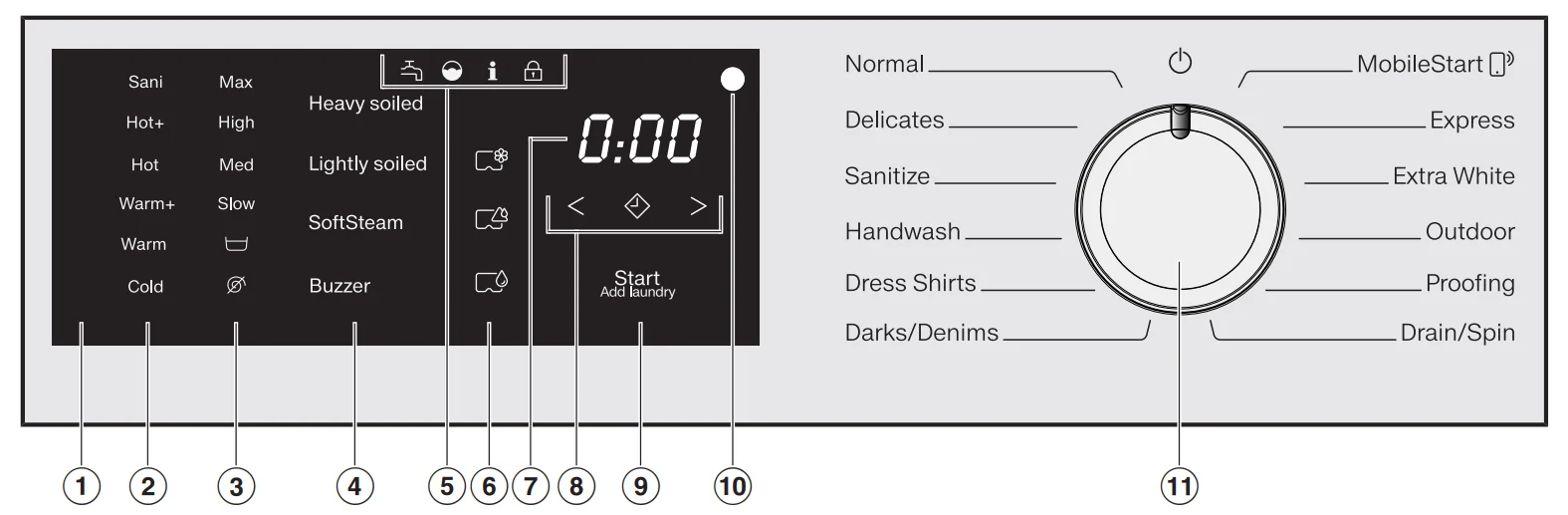
- Control field
The control field consists of a time display and various sensor buttons. The individual sensor buttons are explained in the following sections. - Temperature sensor buttons for selecting the temperature.
- Spin speed sensor buttons for selecting the final spin speed.
- Sensor buttons for extra options
You can supplement the wash programs with extra options. If a wash program has been selected, the sensor controls for the possible extra options light up dimly. - Indicator lights
 Lights up if there are faults affecting the water inlet and drainage.
 Lights up if excess detergent was used.
 Lights up together with i in the time display as a reminder about hygiene information.
 The Add laundry function cannot be selected.
- CapDosing sensor buttons
 CapDosing of fabric care products (e.g., fabric softener, proofing agent)
- CapDosing of additives (e.g., detergent enhancers)
 CapDosing of detergent (for the main wash only)
- Time display
After the program has started, the program duration will appear on the display in hours and minutes. When the Delay start is being used, the program duration will appear after the Delay start time has elapsed.  sensor buttons
The delayed start time selected will appear on the time display. After the program has started, the delayed start time will begin to count down. Once the Delay start time has elapsed, the program begins, and the estimated program duration appears on the time display. After touching thesensor button, a later start time for the program (Delay start) can be selected. Once selected,lights up brightly.
- > The duration of the Delay start time is increased by touching the > sensor button.
- < The duration of the Delay start time is reduced by touching the < sensor button.
- Start/Add laundry sensor button
- A. The program can be started as soon as the sensor button is flashing on and off. Touching the Start/Add laundry sensor button starts the selected program. The sensor button lights up constantly.
- B. Once the program has been started, the Start/Add laundry sensor button allows you to add laundry.
- Optical interface
This is used by the Service department as a transmission point. - Program selector
for selecting programs and for switching the machine off. The washing machine is switched on by selecting a program, and switched off by turning the program selector to the position.
 Lights up if there are faults affecting the water inlet and drainage.
 Lights up if excess detergent was used.
 CapDosing of fabric care products (e.g., fabric softener, proofing agent)
 CapDosing of additives (e.g., detergent enhancers)
 CapDosing of detergent (for the main wash only)
 sensor buttons
 After touching the
 position.
Before using it for the first time
WARNING: Damage from incorrect installation and connection.
Installing and connecting the washing machine incorrectly will cause serious damage to the property. See “Installation”.
Removing the protective foil and stickers
- Remove:
- Any protective film on the door
- Any stickers from the front and the lid.
Please do not remove any labels (e.g. the data plate) which are visible when you open the door.
Remove the drain hose elbow from the drum
An elbow piece for the drain hose is stored in the drum.
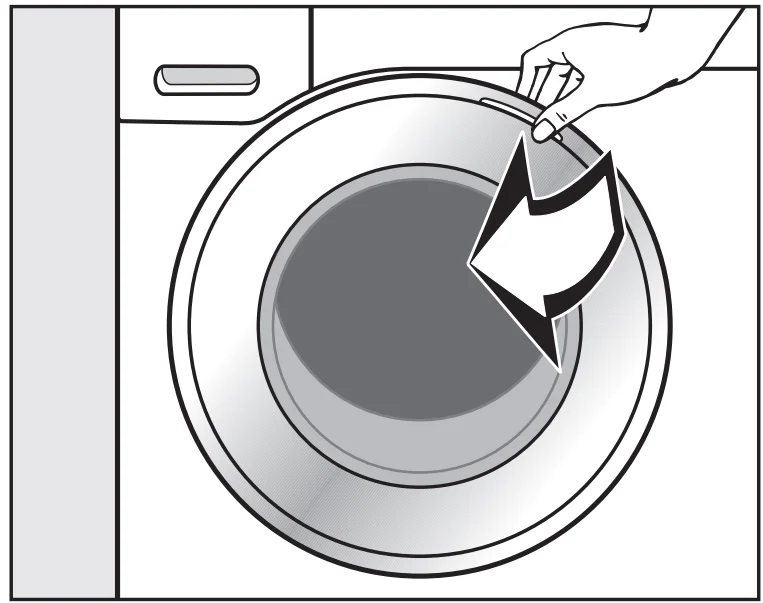
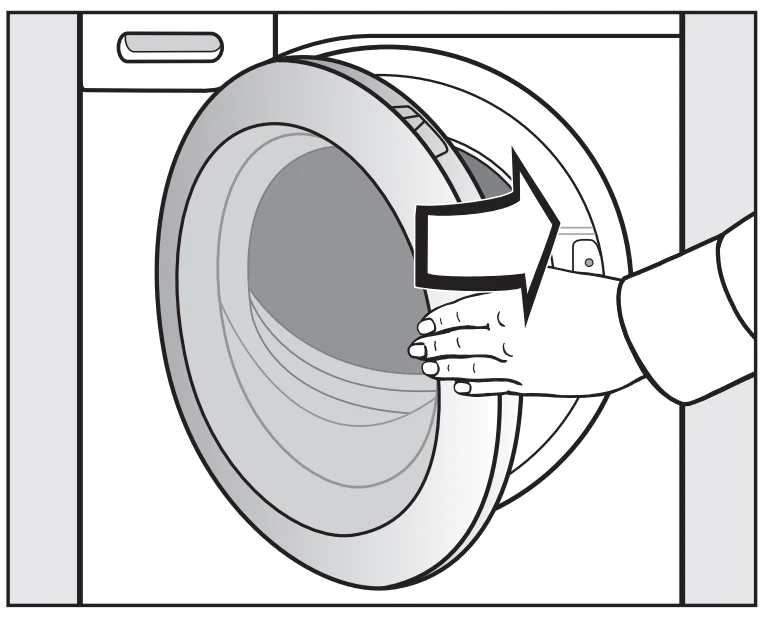
- Pull open the door.
- Remove the elbow piece.

- Shut the door with a gentle swing.
This washing machine has undergone a complete functional test at the factory, and some residual water will therefore remain in the drum from this process.
Before using it for the first time
Availability of the WiFi connection
The WiFi connection shares a frequency range with other appliances (including microwave ovens and remote control toys). This may result in sporadic or even complete connection failures. Therefore, the availability of featured functions cannot always be guaranteed.
Miele@home availability
The ability to use the Miele app depends on the availability of the
Miele@home service in your country. The Miele@home service is not
available in every country. For information about availability, please visit www.miele.ca.
Miele app
The Miele App is available to download free of charge from the Apple App Store® or from the Google Play™ store.

Removing the shipping struts
Warning: Damage resulting from failure to remove the transit bars. Failure to remove the shipping struts can result in damage to the washing machine and to adjacent cabinetry or
appliances. Remove the shipping struts as described in “Installation and connection”.
Setting up Miele@home
There are 2 ways of connecting:
- via the Miele app (default)
- via WPS
To do so, you will need a WPS-compatible router.
Logging in via the Miele app
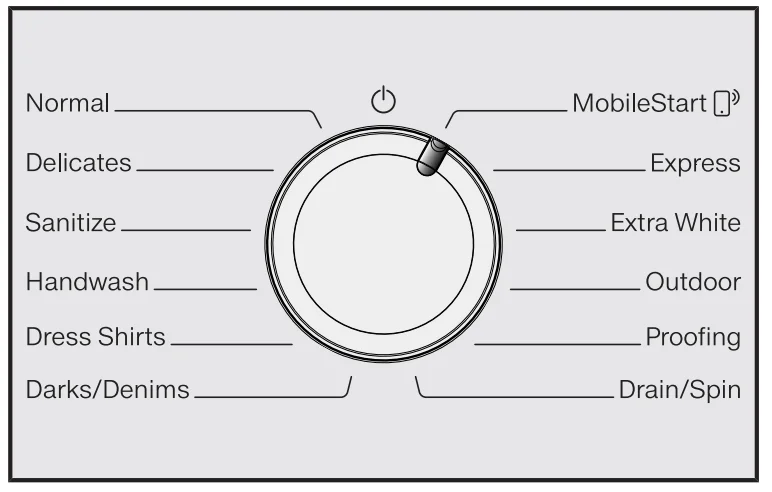
- Turn the program selector to the
 program.
 program.
APP appears on the time display, and the timeout starts to count down from 10 minutes. The Miele app will guide you through the remaining steps. When you have successfully connected, Con will appear on the time display.
Logging in via WPS
- Turn the program selector to theprogram.
- Touch thesensor button until WPS appears on the time display and a short keypad tone sounds.
The timeout then starts to count down from 2 minutes on the time display.
- Activate the WPS function on your router within 2 minutes.
When you have successfully connected, Con will appear on the time display.
Useful tip: If the connection has not been set up when the timeout has finished counting down, repeat the process.
Starting the calibration program
For optimum water and energy consumption and excellent wash results, it is important to calibrate the washing machine. To do this, the Normal program must be run without laundry and without detergent.
- Turn on the faucet.

- Turn the program selector to the Normal position.
The washing machine is now switched on, and the temperature Warm+ and spin speed Max light up. - Touch the Start/Add laundry sensor button.
The wash program will start.
After 15 minutes, the indicators dim.
Opening the door at the end of the program
The door remains locked during the Anti-crease phase. The control field lights up for the first 10 minutes. The control field then goes out, and the Start/Add laundry sensor button flashes.
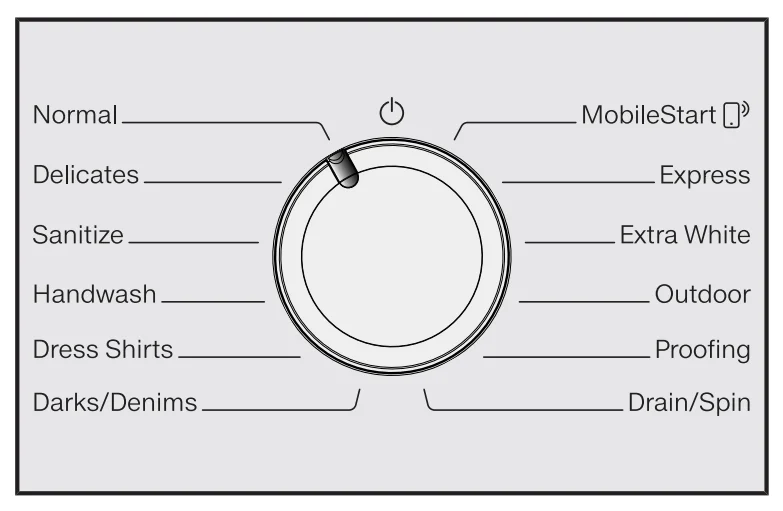
- Turn the program selector to theposition.
 appears on the time display, and the
 indicator light goes out. The door will be unlocked.
Useful tip: After the Anti-crease phase, the washing machine will switch off, and the door will unlock automatically. The control field is
completely dark.
- Take hold of the door and pull it open.
Useful tip: Leave the door slightly open to allow the drum to dry.
The appliance is now ready for use.
Environmentally friendly washing
Energy and water consumption
- To get the most out of your machine, load the maximum dry load for the program you are using. The energy and water consumption will then be the lowest in relation to the size of the load.
- When smaller amounts of laundry are washed, the washing machine’s automatic load control system will reduce the amount of water and energy used.
- Use the Express program for small, lightly soiled loads.
- Modern detergents make it possible to wash at lower temperatures (e.g., 20°C). Using the corresponding temperature settings will save energy.
- Washing at low temperatures and/or using liquid detergents can cause bacteria and odours to build up in the washing machine. Miele therefore recommends cleaning the washing machine once every month.
When the indicator light lights up on the control field, and I appears on the time display, the washing machine must be cleaned.
Detergent consumption
- Do not exceed the amounts of detergent recommended on the
packaging. - Adjust the dosage to the level of soiling of the laundry.
- Reduce the amount of detergent with smaller loads (approx. ⅓ less than the amount recommended can be used when washing a half load).
When drying with a tumble dryer
Select the highest possible spin speed for the wash program to save energy in the subsequent tumble dryer cycle.
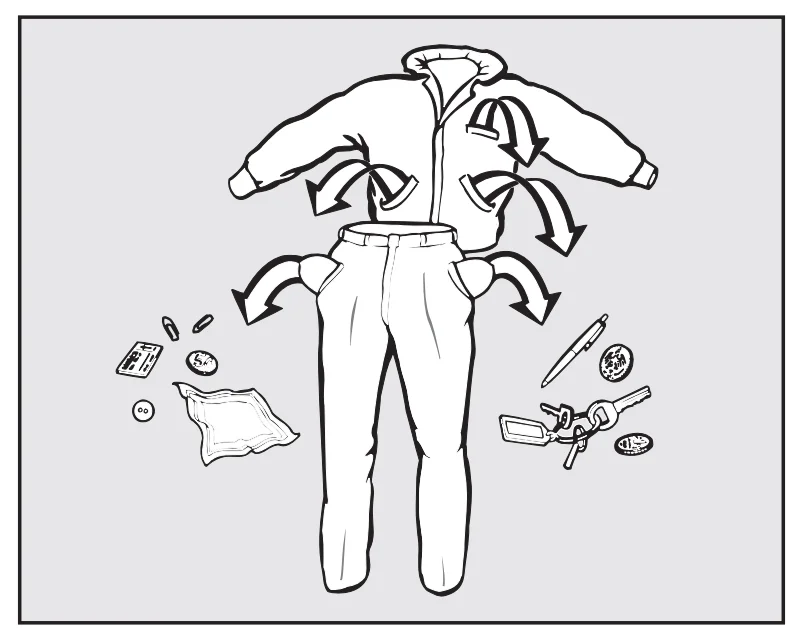
- Empty all pockets.
Warning: Damage due to foreign objects. Nails, coins, paper clips, and so on can cause damage to garments and components in the machine. Check the laundry before washing and remove any such foreign objects.
Sorting the laundry
- Sort the laundry by colour and by care label. Most garments have a fabric care label in the collar or side seam.
Useful tip: Dark fabrics often contain excess dye and should be washed several times separately before being included in a mixed load. Wash light and dark coloured items separately.
Pre-treating stains
- Badly soiled areas and stains should be cleaned as soon as possible, preferably whilst still fresh. Stains should be carefully dabbed off using a soft, colourfast cloth. Do not rub!
Preparing the laundry
Useful tip: Stains (e.g. blood, egg, coffee, tea) can be pre-treated using some handy tricks which can be found in the Miele guide to laundry care. Please contact Miele directly or submit a request via the Internet page to obtain or view a copy of this manual.
Warning: Damage due to solvent-based cleaning agents. Cleaning agents containing benzene, stain removers, etc., can damage plastic parts. When pre-treating a stain, make sure that plastic parts do not come into contact with cleaning agents.
Warning: Risk of explosion due to solvent-based cleaning agents.
When using solvent-based cleaning agents, an explosive mixture may
develop. Never use solvent-based cleaning agents in the washing machine.
General tips
- Curtains: Remove lead weights first or place in a laundry bag.
- Remove or sew in any loose underwiring in bras or shirt collar
stiffeners. - Close any zips, attach Velcro fasteners, fasten hooks and eyes etc., before washing.
- Fasten duvet covers and pillow cases to prevent small items from being rolled up inside them.
Selecting a program
Switching on the washing machine
- Turn the program selector to a program.
- Selecting wash programs using the program selector
 Turn the program selector to the required program.
- The program duration appears on the time display.
- Selecting programs via theprogram selector position and the Miele app
Useful tip: To use, the washing machine must be logged on to the WiFi network and the remote control must be switched on.
- Turn the program selector to theposition.
Once the program has started, the washing machine can be operated with the Miele app.
- Turn the program selector to the
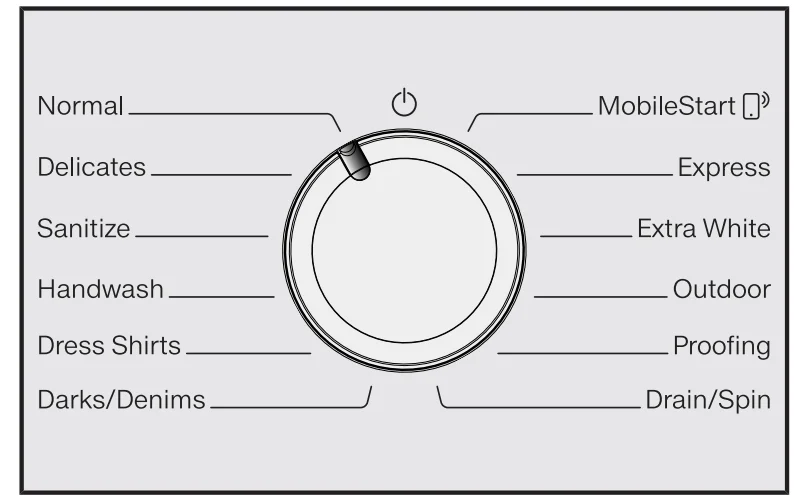 Turn the program selector to the required program.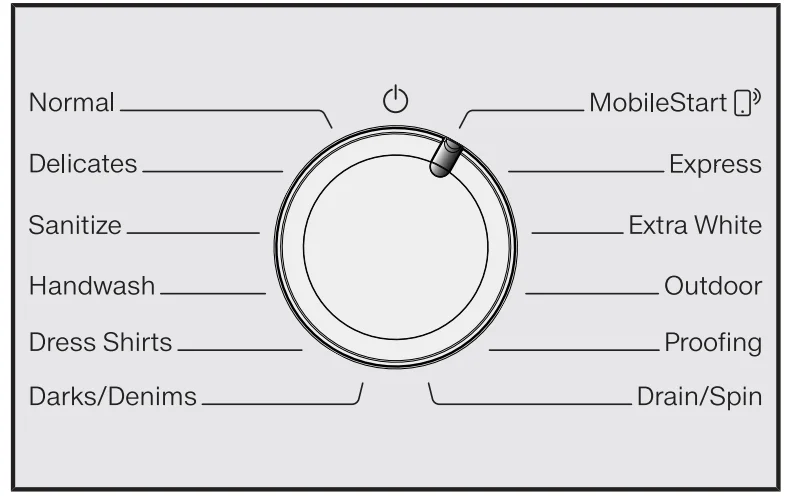
Loading the washing machine
Opening the door
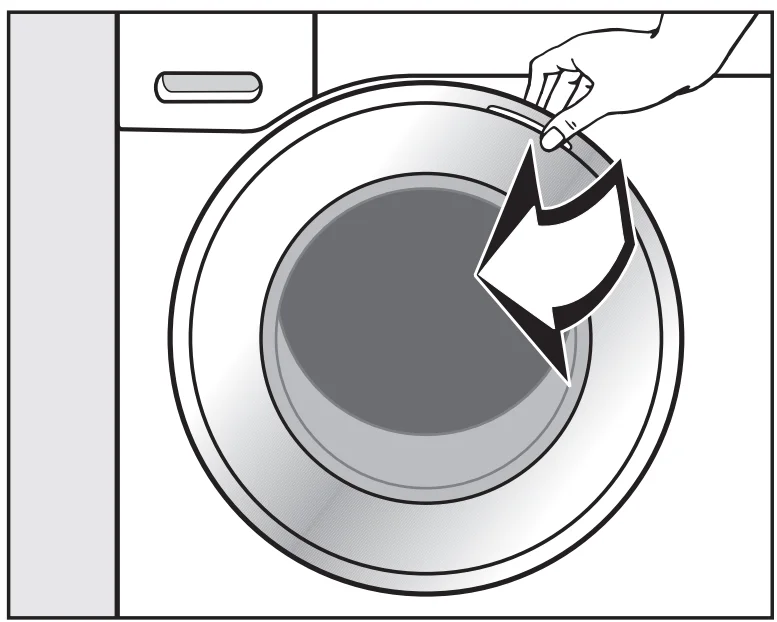
- Take hold of the door and pull it open.
Check the drum for pets or foreign objects before loading it with laundry.
The most efficient use of energy and water is achieved when a full load is washed. However, do not overload as this reduces cleaning efficiency and causes creasing.
- Unfold the laundry and load loosely in the drum.
Mixing both large and small items gives better wash results and also helps distribute the load evenly during spinning.
Useful tip: Please note the maximum load for different wash programs.
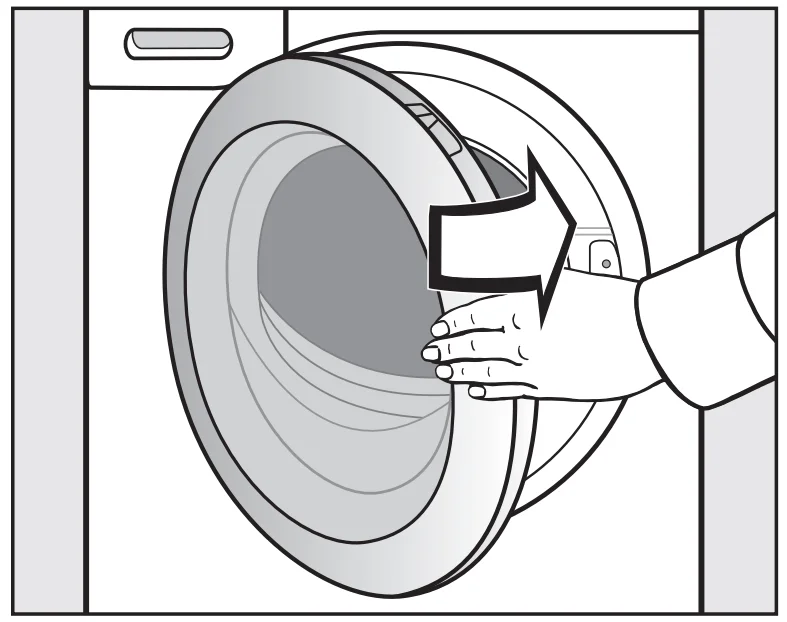
Closing the door
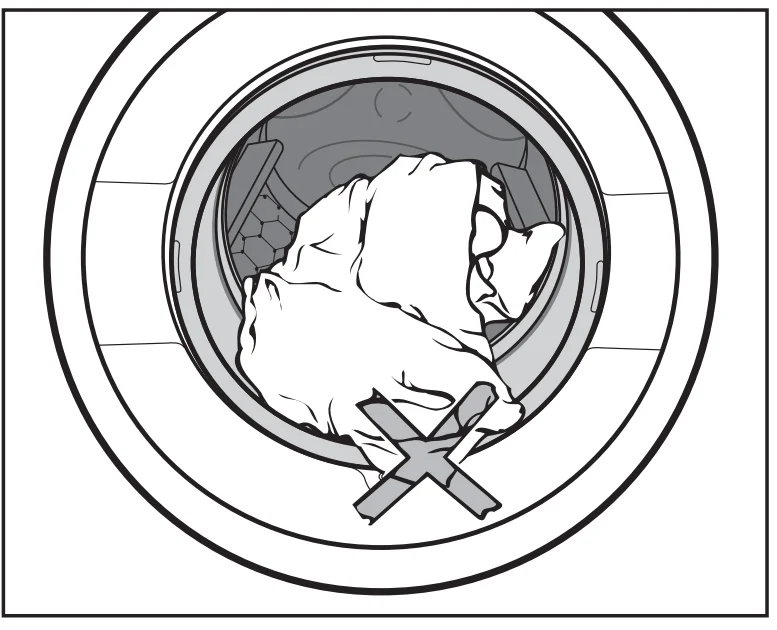
- Make sure that no items are caught between the door and the seal.

- Shut the door with a gentle swing.
Selecting program settings
Selecting a temperature and spin speed
The wash program’s pre-set temperature and spin speed light up brightly. The choice of temperatures and spin speeds selectable for the
wash program lights up dimly.
The temperatures reached inside the washing machine might not be the same as the temperatures selected. Perfect wash results are achieved through a combination of energy use and wash duration.
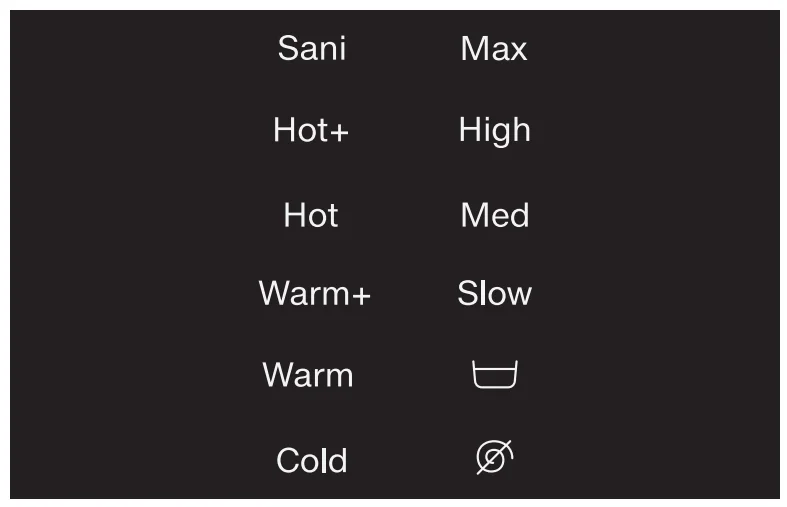
- Touch the sensor button for the desired temperature. It will then light up brightly.
- Touch the sensor button for the spin speed desired. It will then light up brightly.
Selecting extra options
The selection of extra options available for the wash program lights
up dimly.
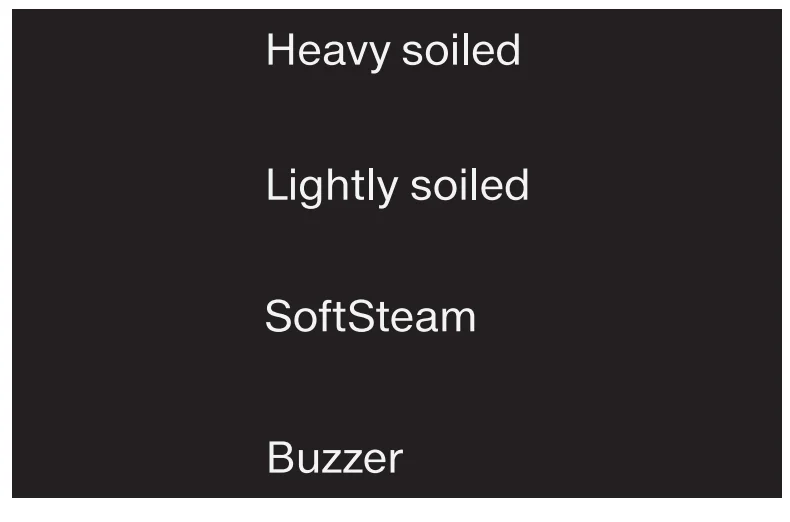
- Touch the sensor button for the required extra option. It will then light up brightly.
Useful tip: You can select multiple extra options for a wash program. Please refer to “Extra options” for more information.
Switching on Delay start/SmartStart
The start of the program can be delayed from 30 minutes up to 24 hours. This allows you to make use of night-time economy electricity rates, for example (see “Delay start/SmartStart”).
Adding detergent
Using chlorine bleach
WARNING: Damage due to chlorine bleach. Textiles may be discoloured or their fibres damaged. Only use chlorine bleach on suitable fabrics.
Chlorination must be activated in the programmable functions before chlorine bleach is first used.
Chlorine bleach may be used in the following programs:
- Normal
- Sanitize
- Dress Shirts
- Extra White
Cleaning and care
Hygiene info (Cleaning the drum)
Washing at low temperatures and/or using liquid detergents can cause
bacteria and odours to build up in the washing machine. Use the Sanitise program to clean the washing machine. Clean the drum no later than the point at which theindicator light and I light up on the time display.
Cleaning the water inlet filter
The washing machine has 2 filters to protect the inlet valve. Check these filters every 6 months or so. Check the filters more often if there are frequent interruptions to the external water supply.
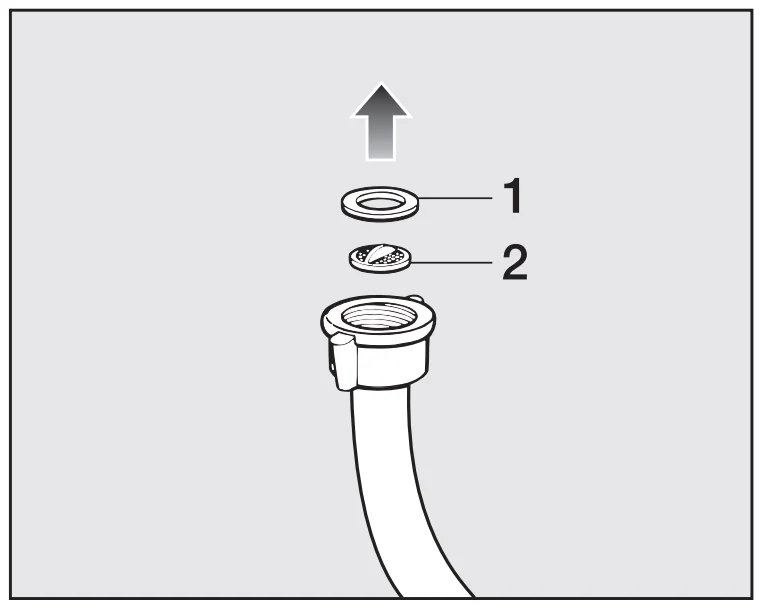
Cleaning the filter in the inlet hose
- First, turn off the faucet.
- Unscrew the inlet hose from the faucet.

- Remove the rubber seal 1 from the connector.
- Using needle-nose pliers, take hold of the plastic filter bar 2 and remove the plastic filter.
- Clean the filter.
- Reassemble in reverse order.
Cleaning the filter in the inlet valve
- Using pliers, carefully loosen the ribbed plastic nut on the inlet valve and unscrew it.

- Use needle-nose pliers to withdraw the filter by the bar.
- Clean the filter.
- Reassemble in reverse order.
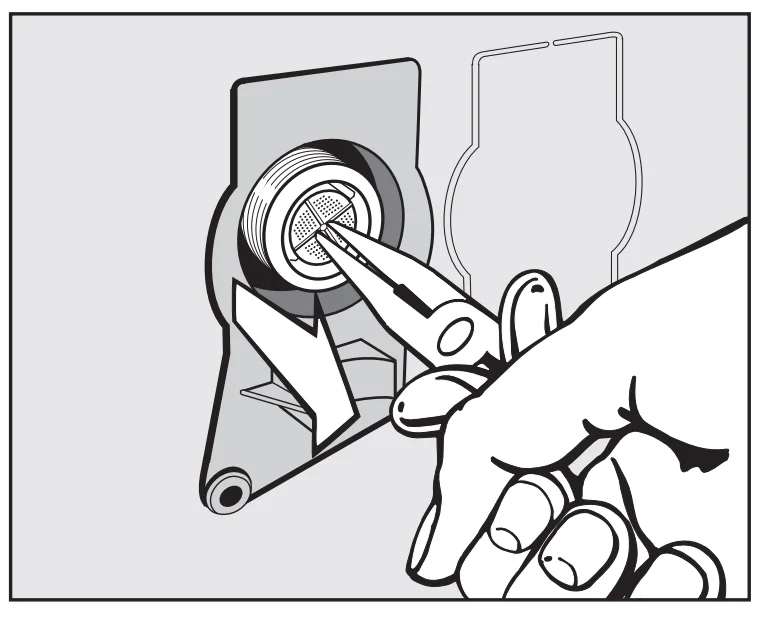
The filters must be put back in place after cleaning.
- Screw the screw thread securely back onto the faucet.
- Turn on the faucet.
Make sure there is no water leaking from the screw thread. Tighten the screw thread.
For more manuals by Miele, visit ManualsLibraryy
Miele Freestanding Washing Machine-FAQs
What makes a Miele freestanding washing machine a good choice?
Miele freestanding washing machines are known for durability, efficient cleaning, and premium build quality. They feature advanced wash programs, energy-saving technology, and a gentle drum design that protects fabrics. These machines are ideal for users who want long-term reliability and consistent washing performance.
How long does a Miele washing machine typically last?
A Miele washing machine is built for longevity and can last up to 20 years with proper care. Regular maintenance, correct detergent use, and avoiding overloading help extend its lifespan. This makes it a cost-effective option despite its higher initial price.
What are common problems with Miele washing machines?
Some common issues include the machine not starting, improper draining, excessive vibration, or error codes appearing on the display. These problems are often caused by blocked filters, unbalanced loads, or minor technical faults. Regular cleaning and maintenance usually prevent most of these issues.
Is a Miele washing machine better than other brands?
Miele machines are often considered premium due to their durability, quiet operation, and advanced features. While other brands may offer lower prices, Miele stands out for long-term performance and build quality. It’s a good option if you value reliability over initial cost savings.
What is the difference between freestanding and integrated washing machines?
Freestanding washing machines can be placed anywhere with proper connections and are easier to install and move. Integrated machines are built into cabinetry for a seamless look. In terms of washing performance, both types deliver similar results, so the choice depends on space and design preference.
How much space is needed for a freestanding washing machine?
Most freestanding washing machines require standard space with enough room for ventilation and connections. You should allow extra clearance around the sides and back for hoses and airflow. Proper spacing helps prevent overheating and ensures smooth operation during wash cycles.
Are Miele washing machines energy efficient?
Yes, Miele washing machines are designed to use minimal water and electricity while maintaining excellent cleaning results. Many models include high energy ratings and smart sensors that adjust water usage based on load size, helping reduce utility costs over time.
How do you maintain a Miele washing machine?
Regular maintenance includes cleaning the detergent drawer, checking filters, and running occasional cleaning cycles. Avoid overloading and use the recommended detergent amount. Keeping the door slightly open after use helps prevent odor buildup and keeps the machine fresh.
Is a Miele washing machine worth the price?
Although Miele washing machines are more expensive upfront, they offer long-term value through durability, efficiency, and consistent performance. Their extended lifespan and lower maintenance needs often make them a worthwhile investment for households seeking reliability.
What features are commonly found in Miele freestanding washing machines?
Common features include multiple wash programs, quiet motors, energy-saving modes, and advanced drum technology for gentle fabric care. Some models also offer smart controls and quick wash options, making them convenient for daily use while maintaining high cleaning standards.