DJI Mini 4 Pro Complete
Product Profile
Introduction
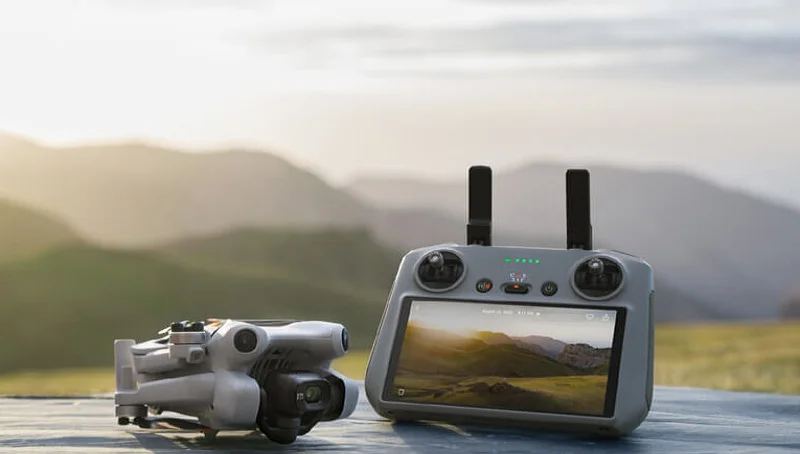
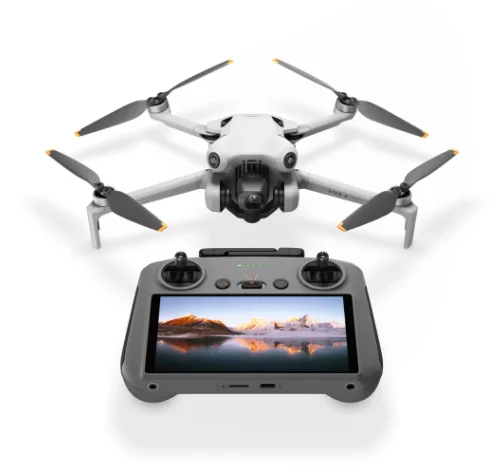
DJI Mini 4 Pro features both an omnidirectional vision system and a 3D infrared sensing system. It is capable of hovering and flying indoors and outdoors and can automatically return to Home while sensing obstacles in all directions. The aircraft also boasts a foldable and compact design, weighing less than 249 g. The aircraft has a maximum flight time of 34 minutes when used with the Intelligent Flight Battery, and 45 minutes with the Intelligent Flight Battery Plus. The aircraft is compatible with both the DJI RC 2 and DJI RC-N2 remote controllers. Refer to the Remote Controller chapter for more information.
Feature Highlights
Gimbal and Camera
With a fully stabilized 3-axis gimbal and a 1/1.3″ sensor camera, the DJI Mini 4 Pro is able to shoot 4K 60fps HDR and 4K 100fps video and 48MP photos. It also supports switching between Landscape mode and Portrait mode with one tap in DJI Fly. The newly added 10-bit D-Log M color mode brings a more convenient experience for post-production color correction, while HLG provides better dynamic range and color display performance.
Video Transmission
With DJI’s long-range transmission O4 technology, the aircraft can offer a maximum transmission range of 20 km and video quality at up to 1080p 60fps from the aircraft to the DJI Fly app. The remote controller works at 2.4, 5.8, and 5.1 GHz and is capable of selecting the best transmission channel automatically.
Intelligent Flight Modes
With the Advanced Pilot Assistance System (APAS), the aircraft can quickly sense and bypass obstacles in all directions while the user is operating the aircraft for a safer flight and smoother footage. Intelligent Flight Modes such as FocusTrack, MasterShots, QuickShots, Hyperlapse, Waypoint Flight, and Cruise Control enable users to capture cinematic videos effortlessly.

- The maximum flight speed was tested at sea level altitude without wind. The maximum flight time was tested in an environment without wind while flying at a consistent flight speed of 13.4 mph (21.6 kph).
- The remote control devices reach their maximum transmission distance (FCC) in a wide open area with no electromagnetic interference at an altitude of about 120 m (400 ft). The maximum transmission distance refers to the maximum distance that the aircraft can still send and receive transmissions. It does not refer to the maximum distance the aircraft can fly in a single flight.
- 5.8 GHz is not supported in some regions, where it will automatically be disabled. Always observe local laws and regulations.
- 5.1 GHz can be used only in countries and regions where it is permitted by local laws and regulations.
- The Intelligent Flight Battery Plus needs to be purchased separately, and it is sold only in some countries and regions. Visit the official DJI online store for more information.
- The maximum takeoff weight will be more than 249 g if the aircraft is used with the Intelligent Flight Battery Plus. Make sure to observe local laws and regulations about the takeoff weight.
Using for the First Time
Preparing the Aircraft
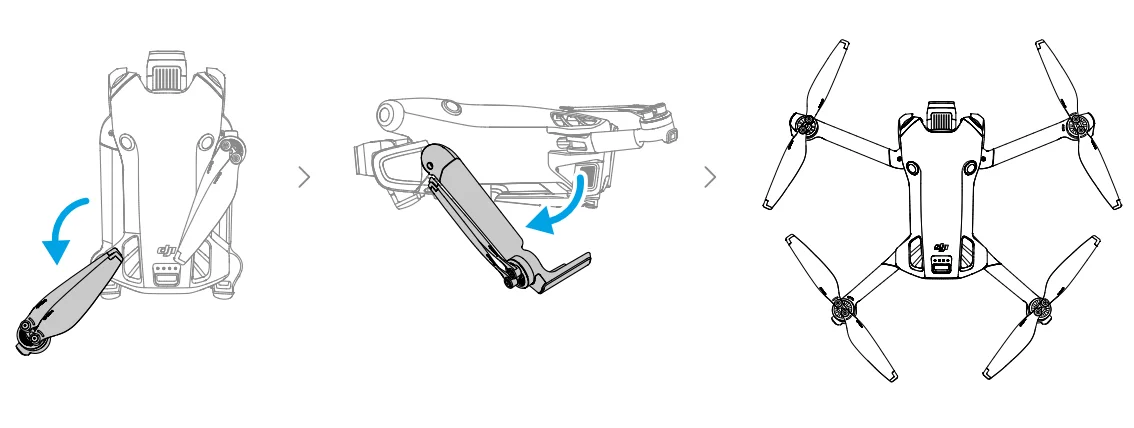
All aircraft arms are folded before the aircraft is packaged. Follow the steps below to unfold the aircraft.
- All Intelligent Flight Batteries are in hibernation mode before shipment to ensure safety.
Charge to activate the batteries for the first time. Connect the USB charger to the USB-C port on the aircraft to charge. The battery is activated when it begins charging.
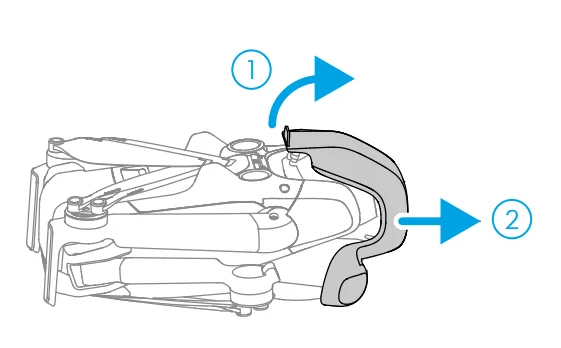
- Remove the propeller holder.

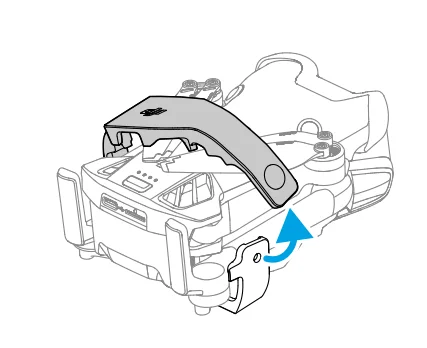
- Remove the gimbal protector from the camera.

- Unfold the rear arms, followed by the front arms, and then all of the propeller blades.

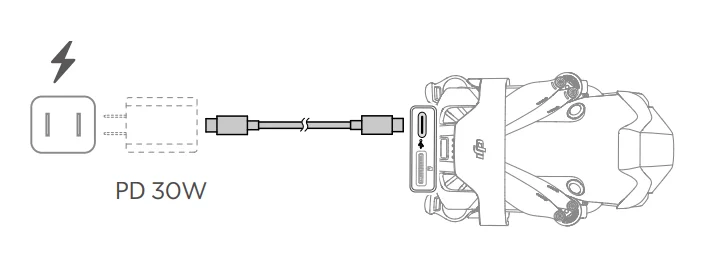
- It is recommended to use the DJI 30W USB-C Charger or other USB Power Delivery chargers.
- The maximum charge voltage for the aircraft charging port is 12 V.
- Make sure the gimbal protector is removed and all arms are unfolded before powering on the aircraft. Otherwise, it may affect the aircraft’s self-diagnostics.
- It is recommended to attach the gimbal protector and propeller holder when the aircraft is not in use.
Preparing the Remote Controller
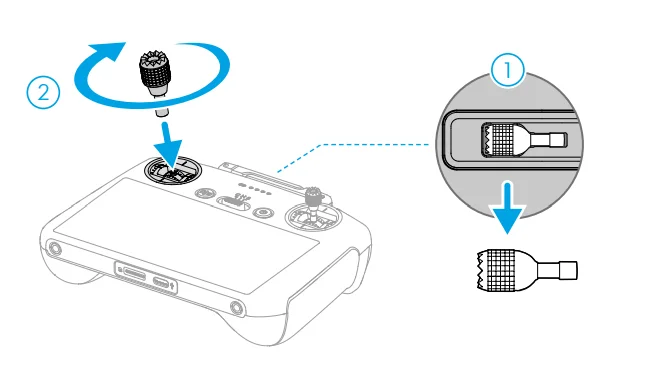
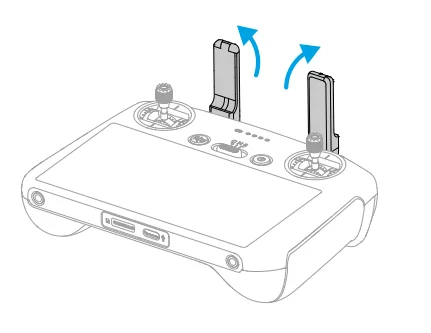
DJI RC 2
- Remove the control sticks from the storage slots and mount them on the remote controller.

- Unfold the antennas.

- The remote controller needs to be activated before first use, and an internet connection is required for activation. Press, and then press and hold the power button to power on the remote controller. Follow the on-screen prompts to activate the remote controller.
DJI RC-N2
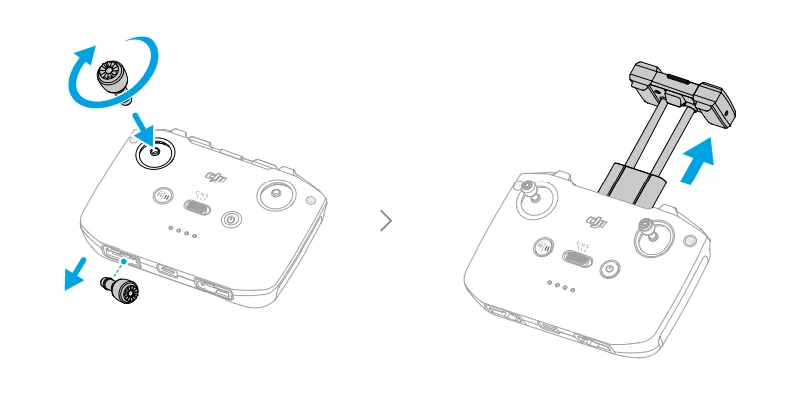
- Remove the control sticks from the storage slots and mount them on the remote controller.
- Pull out the mobile device holder. Choose the appropriate remote controller cable based on the port type of your mobile device (a Lightning connector cable and a USB-C cable are included in the packaging). Place your mobile device in the holder, then connect the end of the cable without the remote controller logo to your mobile device. Make sure your mobile device is securely in place.
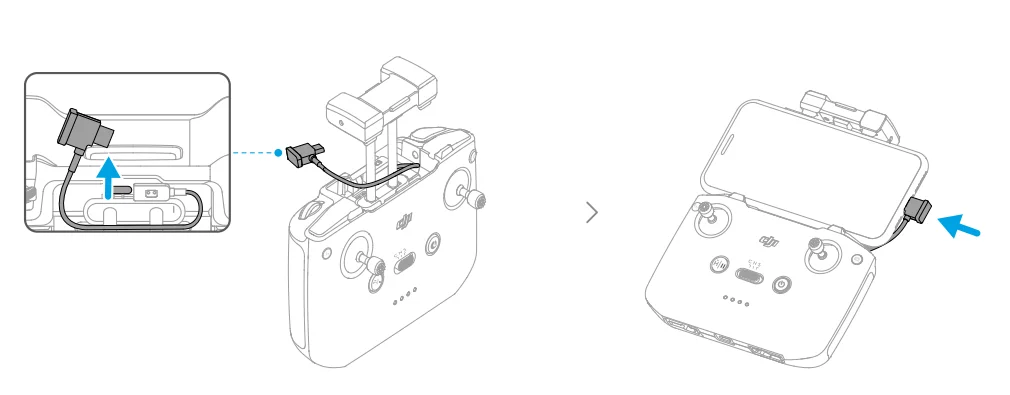
- If a USB connection prompt appears when an Android mobile device is used, select the option to charge only. Other options may cause the connection to fail.
Activating the Aircraft
The aircraft requires activation before first use. Press, and then press and hold the power button to power on the aircraft and remote controller, respectively, and then follow the onscreen prompts to activate the aircraft using DJI Fly. An internet connection is required for activation.
Binding the Aircraft and Remote Controller
After activation, the aircraft is bound to the remote controller automatically. If automatic binding fails, follow the on-screen prompts on DJI Fly to bind the aircraft and remote controller for optimal warranty services.
Firmware Update
A prompt will appear in DJI Fly when new firmware is available. Update the firmware whenever prompted to ensure optimal user experience.
Diagram
Aircraft
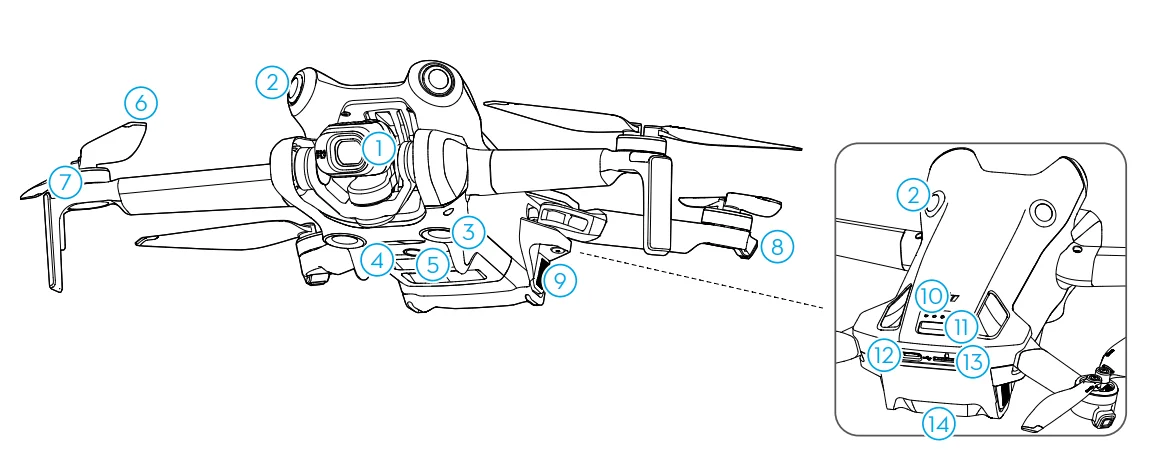
- Gimbal and Camera
- Omnidirectional Vision System [1]
- Downward Vision System
- 3D Infrared Sensing System
- Auxiliary Light
- Propellers
- Motors
- Aircraft Status Indicators
- Battery Buckles
- Battery Level LEDs
- Power Button
- USB-C Port
- microSD Card Slot
- Intelligent Flight Battery
[1] The omnidirectional vision system can sense obstacles in horizontal directions and above.
DJI RC 2 Remote Controller
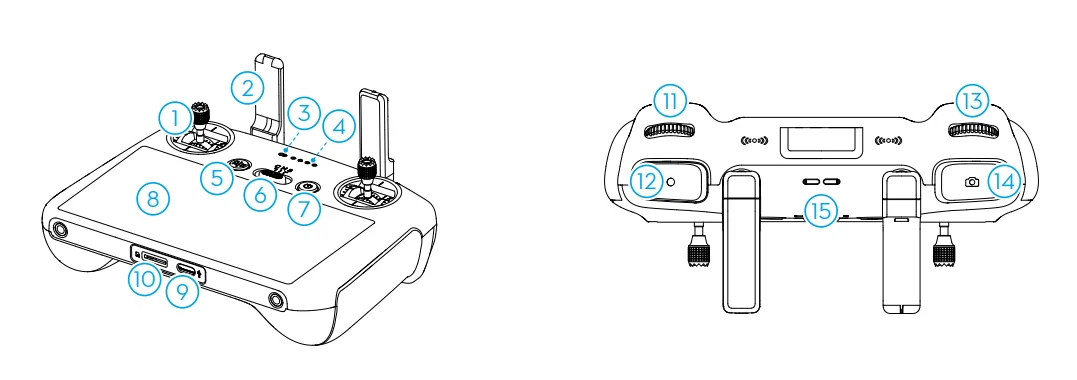
- Control Sticks
Use the control sticks to control the aircraft’s movements. Set the control stick mode in DJI Fly. The control sticks are removable and easy to store. - Antennas
Transmit aircraft control and video wireless signals. - Status LED
Indicates the status of the remote controller. - Battery Level LEDs
Displays the current battery level of the remote controller. - Flight Pause/Return to Home (RTH) Button
Press once to make the aircraft brake and hover in place (only when GNSS or Vision Systems are available). Press and hold to initiate RTH. Press again to cancel RTH. - Flight Mode Switch
For switching between three flight modes: Cine, Normal, and Sport mode. - Power Button
Press once to check the current battery level. Press, and then press and hold to power the remote controller on or off. When the remote controller is powered on, press once to turn the touchscreen on or off. - Touchscreen
Touch the screen to operate the remote controller. Note that the touchscreen is not waterproof. Operate with caution. - USB-C Port
For charging and connecting the remote controller to your computer. - microSD Card Slot
For inserting a microSD card. - Gimbal Dial
Controls the tilt of the camera. - Record Button
Press once to start or stop recording. - Camera Control Dial
For zoom control. Set the function in DJI Fly by entering Camera View > Settings > Control > Button Customization. - Focus/Shutter Button
Press halfway down on the button to autofocus and press all the way down to take a photo. Press once to switch to photo mode when in record mode. - Speaker
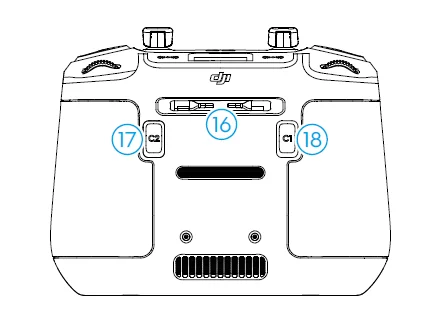
Outputs sound. - Control Sticks Storage Slot
For storing the control sticks. - Customizable C2 Button
Switch between Landscape and Portrait mode. Set the function in DJI Fly by entering Camera View > Settings > Control > Button Customization. - Customizable C1 Button
Switch between recentering the gimbal and pointing the gimbal downward. Set the function in DJI Fly by entering Camera View > Settings > Control > Button Customization.
DJI RC-N2 Remote Controller
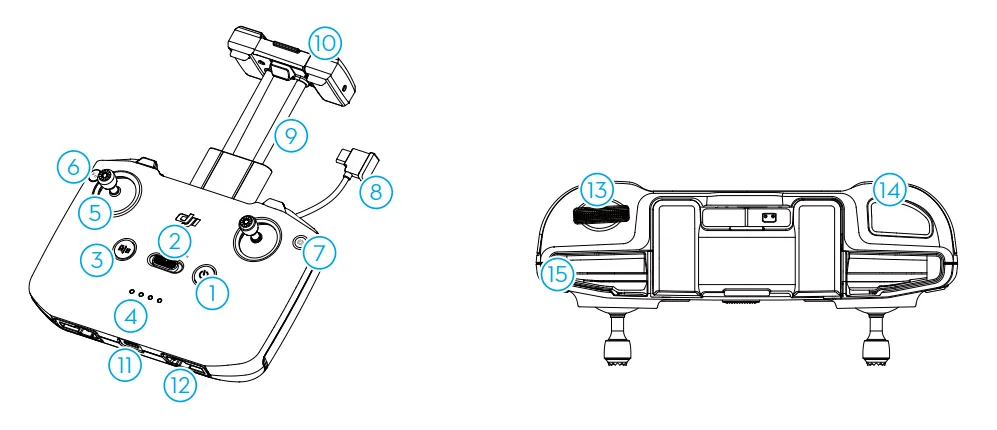
- Power Button
Press once to check the current battery level. Press, and then press and hold to power the remote controller on or off. - Flight Mode Switch
For switching between three flight modes: Cine, Normal, and Sport mode. - Flight Pause/Return to Home (RTH) Button
Press once to make the aircraft brake and hover in place (only when GNSS or Vision Systems are available). Press and hold to initiate RTH. Press again to cancel RTH. - Battery Level LEDs
Displays the current battery level of the remote controller. - Control Sticks
Use the control sticks to control the aircraft’s movements. Set the control stick mode in DJI Fly. The control sticks are removable and easy to store. - Customizable Buttons
Press once to recenter the gimbal or point the gimbal downward. Press twice to switch between Landscape and Portrait mode. Set the function in DJI Fly by entering Camera View > Settings > Control > Button Customization. - Photo/Video Toggle
Press once to switch between photo and video mode. - Remote Controller Cable
Connect to a mobile device for video linking via the remote controller cable. Select the cable according to the port type on your mobile device. - Mobile Device Holder
For mounting the mobile device securely on the remote controller. - Antennas
Transmit aircraft control and video wireless signals. - USB-C Port
For charging and connecting the remote controller to your computer. - Control Sticks Storage Slot
For storing the control sticks. - Gimbal Dial
Controls the tilt of the camera. Press and hold the customizable button to use the gimbal dial for zoom control. - Shutter/Record Button
Press once to take a photo or start/stop recording. - Mobile Device Slot
For securing the mobile device.
Aircraft
This chapter describes safe flight practices, flight restrictions, basic flight operations, and the intelligent flight modes.
Flight and Safety
After completing the pre-flight preparation, it is recommended to train your flying skills and practice flying safely. Pick a suitable area to fly in according to the following flight requirements and restrictions. Strictly abide by local laws and regulations when flying. Read the Safety Guidelines before flight to ensure the safe use of the product.
Flight Environment Requirements
- DO NOT operate the aircraft in severe weather conditions, including wind speeds exceeding 10.7 m/s, snow, rain, and fog.
- Only fly in open areas. Tall buildings and large metal structures may affect the accuracy of the onboard compass and GNSS system. Therefore, DO NOT take off from a balcony or anywhere within 10 m of buildings. Keep a distance of at least 10 m from buildings during flight. After takeoff, make sure you are notified with the voice prompt that Home Point is updated before continuing the flight. If the aircraft has taken off near buildings, the accuracy of the Home Point cannot be guaranteed. In this case, pay close attention to the current position of the aircraft during auto RTH. When the aircraft is close to the Home Point, it is recommended to cancel auto RTH and manually control the aircraft to land at an appropriate location.
- The performance of the aircraft and its battery is limited when flying at high altitudes. Fly with caution. The maximum takeoff altitude of the aircraft is 4,000 m (13,123 ft) when flying with the Intelligent Flight Battery. If the Intelligent Flight Battery Plus is used, the maximum takeoff altitude drops to 3,000 m (9,843 ft). If a propeller guard is installed on the aircraft with the Intelligent Flight Battery, the maximum takeoff altitude becomes 1,500 m (4,921 ft). DO NOT use the propeller guard together with the Intelligent Flight Battery Plus.
- The braking distance of the aircraft is affected by the flight altitude. The higher the altitude, the greater the braking distance. When flying at an altitude above 3,000 m (9,843 ft), the user should reserve at least 20 m of vertical braking distance and 25 m of horizontal braking distance to ensure flight safety.
- Avoid obstacles, crowds, trees, and bodies of water (recommended height is at least 3 m above water).
- Minimize interference by avoiding areas with high levels of electromagnetism, such as locations near power lines, base stations, electrical substations, and broadcasting towers.
- GNSS cannot be used on the aircraft in polar regions. Use the vision system instead.
- DO NOT take off from moving objects such as cars, ships, and airplanes.
- DO NOT take off from solid-colored surfaces or surfaces with strong reflection, such as a car roof.
- DO NOT use the aircraft, remote controller, battery, battery charger, or battery charging hub near accidents, fire, explosions, floods, tsunamis, avalanches, landslides, earthquakes, dust, sandstorms, salt spray, or fungus.
- Operate the aircraft, remote controller, battery, battery charger, and battery charging hub in a dry environment.
- DO NOT operate the aircraft in an environment at risk of a fire or explosion.
- DO NOT operate the aircraft near bird flocks.
Operating the Aircraft Responsibly
To avoid serious injury and property damage, observe the following rules:
- Make sure you are NOT under the influence of anesthesia, alcohol, or drugs, or suffering from dizziness, fatigue, nausea, or other conditions that could impair the ability to operate the aircraft safely.
- When landing, power off the aircraft first, then switch off the remote controller.
- DO NOT drop, launch, fire, or otherwise project any dangerous payloads on or at any buildings, persons, or animals, which could cause personal injury or property damage.
- DO NOT use an aircraft that has been crashed or accidentally damaged, or an aircraft that is not in good condition.
- Make sure to train sufficiently and have contingency plans for emergencies or when an incident occurs.
- Make sure to have a flight plan. DO NOT fly the aircraft recklessly.
- Respect the privacy of others when using the camera. Make sure to comply with local privacy laws, regulations, and moral standards.
- DO NOT use this product for any reason other than general personal use.
- DO NOT use it for illegal or inappropriate purposes such as spying, military operations, or unauthorized investigations.
- DO NOT use this product to defame, abuse, harass, stalk, threaten, or otherwise violate legal rights such as the right to privacy and publicity of others.
- DO NOT trespass onto the private property of others.
Flight Restrictions
GEO (Geospatial Environment Online) System
DJI’s Geospatial Environment Online (GEO) System is a global information system that provides real-time information on flight safety and restriction updates and prevents UAVs from flying in restricted airspace. Under exceptional circumstances, restricted areas can be unlocked to allow flights in. Before that, the user must submit an unlocking request based on the current restriction level in the intended flight area. The GEO system may not fully comply with local laws and regulations. Users shall be responsible for their own flight safety and must consult with the local authorities on the relevant legal and regulatory requirements before requesting to unlock a flight in a restricted area. For more information about the GEO system, visit https://fly-safe.dji.com.
Flight Limits
For safety reasons, flight limits are enabled by default to help users operate this aircraft safely. Users can set flight limits on height and distance. Altitude limits, distance limits, and GEO zones function concurrently to manage flight safety when GNSS is available. Only altitude can be limited when GNSS is unavailable.
Flight Altitude and Distance Limits
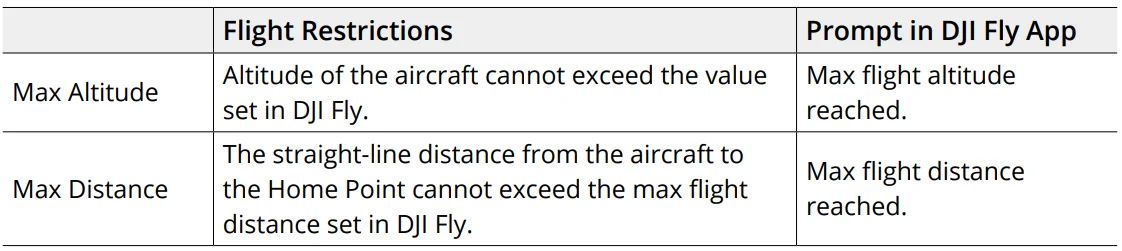
Max altitude restricts an aircraft’s flight altitude, while max distance restricts an aircraft’s flight radius around the Home Point. These limits can be changed in the DJI Fly app for improved flight safety.
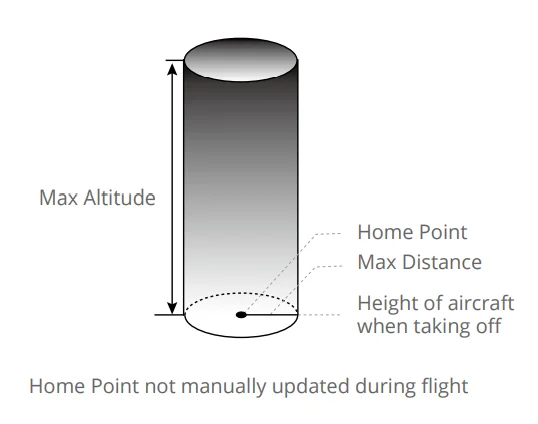
Strong GNSS Signal
Weak GNSS Signal
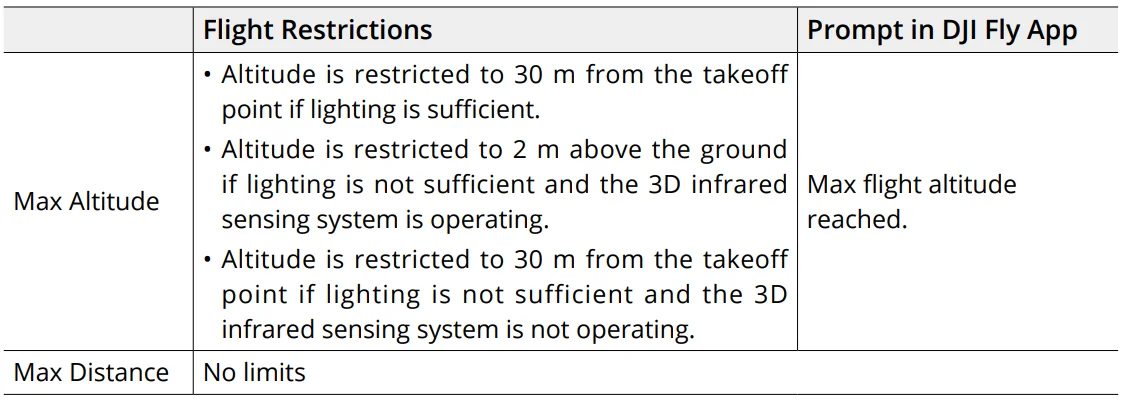
- Each time the aircraft is powered on, the altitude limit of 2 m or 30 m will be automatically removed as long as the GNSS signal ever becomes strong (GNSS signal strength ≥ 2) once, and the limit will not take effect even if the GNSS signal becomes weak afterwards.
- If the aircraft flies out of the set flight range due to inertia, you can still control the aircraft, but cannot fly it any further.
- For safety reasons, DO NOT fly the aircraft close to airports, highways, railway stations, railway lines, city centers, or other sensitive areas. Only fly the aircraft within a visual line of sight.
GEO Zones
DJI’s GEO system designates safe flight locations, provides risk levels and safety notices for individual flights, and offers information on restricted airspace. All restricted flight areas are referred to as GEO Zones, which are further divided into Restricted Zones, Authorization Zones, Warning Zones, Enhanced Warning Zones, and Altitude Zones. Users can view such information in real-time in DJI Fly. GEO Zones are specific flight areas, including but not limited to airports, large event venues, locations where public emergencies have occurred (such as forest fires), nuclear power plants, prisons, government properties, and military facilities. By default, the GEO system limits takeoffs and flights in zones that may cause safety or security concerns. A GEO Zone map that contains comprehensive information on GEO Zones around the globe is available on the official DJI website: https://fly-safe.dji.com/nfz/nfz query.
Unlocking GEO Zones
To satisfy the needs of different users, DJI provides two unlocking modes: Self-Unlocking and Custom Unlocking. Users may request on the DJI Fly Safe website.
Self-Unlocking is intended for unlocking Authorization Zones. To complete Self-Unlocking, the user must submit an unlocking request via the DJI Fly Safe website at https://fly-safe.dji.com. Once the unlocking request is approved, the user may synchronize the unlocking license through the DJI Fly app. To unlock the zone, alternatively, the user may launch or fly the aircraft directly into the approved Authorization Zone and follow the prompts in DJI Fly to unlock the zone.
Custom Unlocking is tailored for users with special requirements. It designates user-defined custom flight areas and provides flight permission documents specific to the needs of different users. This unlocking option is available in all countries and regions and can be requested via the DJI Fly Safe website at https://fly-safe.dji.com.
- To ensure flight safety, the aircraft will not be able to fly out of the unlocked zone after entering it. If the Home Point is outside the unlocked zone, the aircraft will not be able to return home.
Pre-Flight Checklist
- Make sure the propeller holder and the gimbal protector are removed.
- Make sure the Intelligent Flight Battery and the propellers are mounted securely.
- Make sure the remote controller, mobile device, and Intelligent Flight Battery are fully charged.
- Make sure the aircraft arms are unfolded.
- Make sure the gimbal and camera are functioning normally.
- Make sure that nothing is obstructing the motors and that they are functioning normally.
- Make sure that DJI Fly is successfully connected to the aircraft.
- Make sure all camera lenses and sensors are clean.
- Only use genuine DJI parts or DJI authorized parts. Unauthorized parts may cause system malfunctions and compromise flight safety.
- Make sure the Obstacle Avoidance Action is set in DJI Fly, and the max flight altitude, max flight distance, and RTH altitude are all set properly according to the local laws and regulations.
Basic Flight
Auto Takeoff/Landing
Auto Takeoff
Use the Auto Takeoff function:
- Launch DJI Fly and enter the camera view.
- Complete all steps in the pre-flight checklist.
- Tap
 . If conditions are safe for takeoff, press and hold the button to confirm.
 - The aircraft will take off and hover approximately 1.2 m (3.9 ft) above the ground.
 . If conditions are safe for takeoff, press and hold the button to confirm.
Auto Landing
Use the Auto Landing function:
- Tap
 . If conditions are safe to land, press and hold the button to confirm.
 - Auto landing can be canceled by tapping
 .
. - If the Downward Vision System is working normally, Landing Protection will be enabled.
- Motors will stop automatically after landing.
 . If conditions are safe to land, press and hold the button to confirm.
 .
.
- Choose the proper place for landing.
Starting/Stopping the Motors
Starting the Motors
Perform the Combination Stick Command (CSC) as shown below to start the motors. Once the motors have started spinning, release both sticks simultaneously.
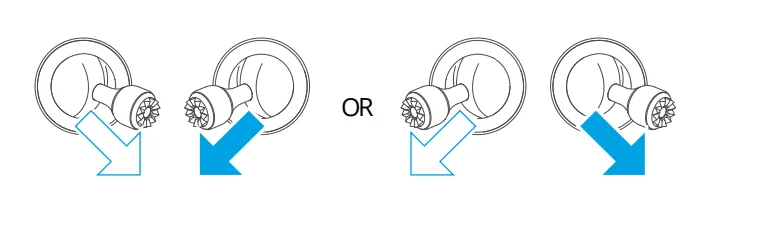
Stopping the Motors
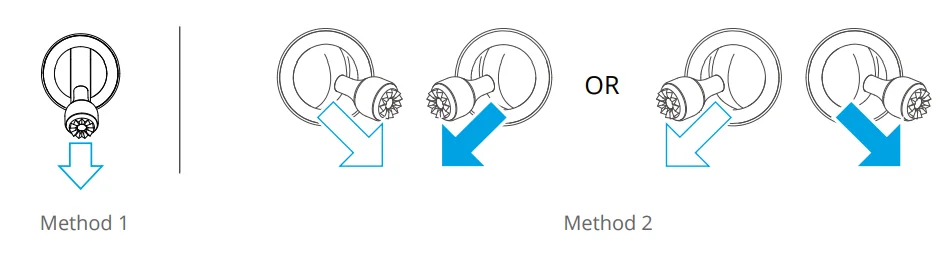
The motors can be stopped in two ways:
- Method 1: When the aircraft has landed, push the throttle stick down and hold until the motors stop.
- Method 2: When the aircraft has landed, perform the same CSC used to start the motors until the motors stop.
Stopping the Motors Mid-Flight
Stopping the motors mid-flight will cause the aircraft to crash. The default setting for Emergency Propeller Stop in the DJI Fly app is Emergency Only, which means that the motors can only be stopped mid-flight when the aircraft detects that it is in an emergency such as the aircraft is involved in a collision, a motor has stalled, the aircraft is rolling in the air, or the aircraft is out of control and is ascending or descending very quickly. To stop the motors mid-flight, perform the same CSC that was used to start the motors. Note that the user needs to hold the control sticks for two seconds while performing the CSC to stop the motors. Emergency Propeller Stop can be changed at any time in the app by users. Use this option with caution.
For more manuals by DJI, visit ManualsLibraryy
DJI Mini 4 Pro Complete- FAQs
Which app is required to fly the DJI Mini 4 Pro?
You’ll need the DJI Fly App. The app is pre-installed on remote controllers with built-in screens, but if you’re using a smartphone controller, download it from the App Store or Google Play.
Is the DJI Mini 4 Pro suitable for beginners?
Yes. The Mini 4 Pro is beginner-friendly, featuring omnidirectional obstacle detection, intelligent flight modes, and auto takeoff/landing, making it ideal for new drone pilots.
Do I need a license to fly the DJI Mini 4 Pro?
No license is required for drones under 250 grams, including the Mini 4 Pro. However, you must still follow local drone flight regulations and safety rules.
Can I fly the DJI Mini 4 Pro without the app?
Yes, basic flight is possible without the app. However, using the DJI Fly App provides access to essential features like camera settings, firmware updates, and flight logs.
Can the DJI Mini 4 Pro fly in the rain or snow?
No. The Mini 4 Pro is not waterproof. Avoid flying in rain, snow, or fog to prevent damage to internal electronics and sensors.
How long can the DJI Mini 4 Pro fly on a full charge?
The Mini 4 Pro offers up to 34 minutes of flight time under ideal conditions with a fully charged battery.
What is the maximum range of the DJI Mini 4 Pro?
It supports up to 20 km (12.4 miles) of FHD video transmission using the advanced DJI O4 system, ensuring stable connection and clear visuals.
What is the 80/20 rule for drone battery care?
Always start flights with at least 80% battery and land before it drops below 20%. This helps prolong battery life and prevents mid-air power loss.
How do I know if my DJI Mini 4 Pro is activated?
You can verify activation by visiting DJI’s Device Info Inquiry page to check your drone’s activation date, warranty status, and service plan details.