
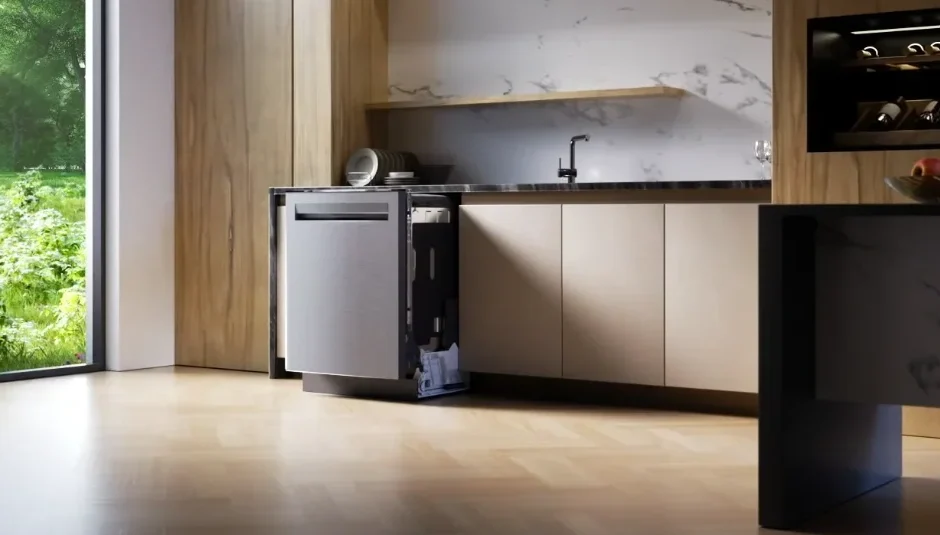

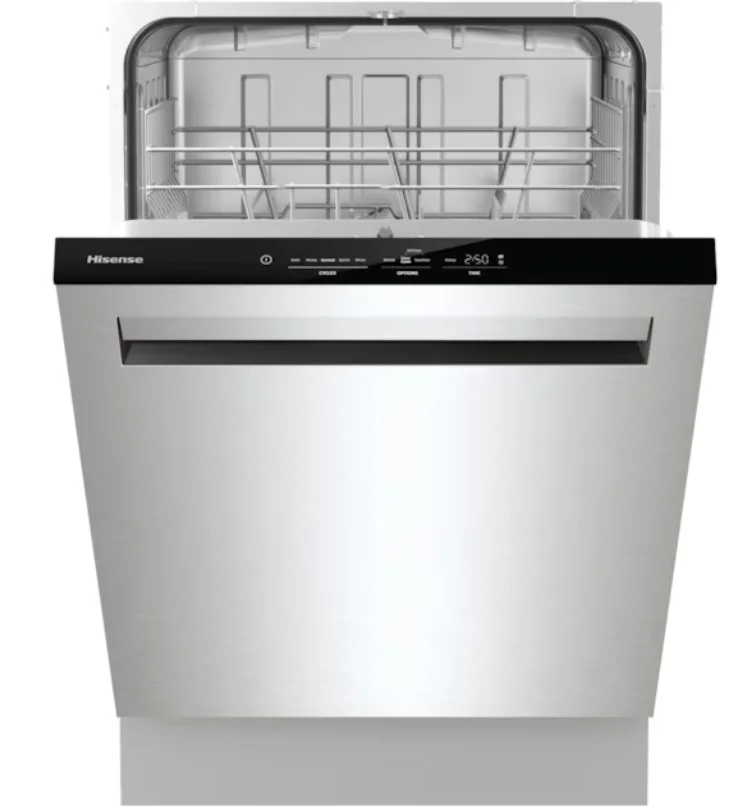
Hisense HUI66330XCUS Dishwasher
Important safety instructions
SAVE THESE INSTRUCTIONS FOR FUTURE REFERENCE
WARNING!
When using your dishwasher, follow basic precautions, including the following:
- Read all instructions before using the dishwasher.
- Use the dishwasher only for its intended purpose.
- Use only detergents or rinse agents recommended for use in a dishwasher, and keep them out of the reach of children.
- When loading items to be washed:
- position sharp items so that they are not likely to damage the door seal, and
- Load sharp knives with the handles up to reduce the risk of cut-type injuries.
- Do not wash plastic items unless they are marked “dishwasher safe” or the equivalent. For plastic items not so marked, check the manufacturer’s recommendations.
- Do not operate the dishwasher unless all enclosure panels are properly in place.
- Do not tamper with controls.
- Do not abuse, sit on, or stand on the door or dish rack of the dishwasher.
- To reduce the risk of injury, do not allow children to play in or on a dishwasher.
- Under certain conditions, hydrogen gas may be produced in a hot water system that has not been used for two weeks or more. HYDROGEN GAS IS EXPLOSIVE. If the hot water system has not been used for two weeks, before using the dishwasher, turn on all hot water faucets and let the water flow from each for several minutes. This will release any accumulated hydrogen gas. As the gas is flammable, do not smoke or use an open flame during this time.
- Remove the door of the dishwasher when removing the dishwasher from service or discarding it (so that children cannot become trapped inside).
- Read the grounding instructions in the installation instructions.
General
- Do not store or use combustible materials, gasoline, or other flammable vapors and liquids in the vicinity of this or any other appliance.
- Disconnect electrical power to the dishwasher before servicing.
- Repairs should be done by a qualified technician.
WARNING!
PROPOSITION 65 FOR CALIFORNIA RESIDENTS
Cancer and Reproductive Harm – www.P65Warnings.ca.gov
Child safety
- Always keep small children away from the machine when it is open. There may be some detergent residue left inside the machine.
- Always close the door and start the dishwasher as soon as you put in the detergent.
- If dishwasher detergent gets in someone’s eyes, rinse them with plenty of water for at least 15 minutes.
- Should a child swallow dishwasher detergent or rinse aid, give plenty to drink immediately, i.e., one or two glasses of milk or water. Do not try to induce vomiting. Seek medical advice immediately: Call the National Poison Control Center at 1-800-222-1222.
Installation
Overflow guard function
The overflow guard starts pumping out the machine and turns off the water supply if the water level in the dishwasher exceeds the normal level. If the overflow guard is triggered, F54 (Overfilling water) appears on the display. Turn off the water tap and contact your nearest service center. (To avoid water leakage outside the dishwasher, do not unplug the electrical supply until the water tap on the supply line has been turned off!)
Winter storage/transport
Store the dishwasher above freezing and avoid long transport distances in very cold weather. Transport the dishwasher upright or lying on its back. Before transporting a used dishwasher or before prolonged storage, water must first be drained from the machine.
Packing material
The outer packaging protects the product during transport. The packaging material is recyclable. Separate the different packaging materials to help reduce raw material use and waste. Your dealer can take the packaging for recycling or direct you to the nearest recycling center. The packaging is comprised of:
- Corrugated cardboard made from up to 100% recycled material.
- Expanded polystyrene (EPS) with no added chlorine or fluorine.
- Supports made from untreated wood.
- Protective plastic made from polyethylene (PE).
Disposal
The dishwasher is manufactured and labeled for recycling. When the machine has reached the end of its service life and is to be disposed of, it should immediately be made unusable. Pull out the power
cord and cut it as short as possible. Contact your municipality for information about where and how your dishwasher can be recycled correctly.
Before washing for the first time
Water hardness
In order to achieve good dishwashing results, the dishwasher needs soft water (water with low mineral content). Hard water leaves a white coating on dishes and the dishwasher.
Checking water hardness
Contact the local water utility to check the water hardness in your area. This is important to determine how much detergent and rinse aid to use. In general, more rinse aid and detergent are needed for hard water.
Basic settings
The first time the dishwasher is switched on, it is important that you choose the right settings to ensure good dishwashing results. See page 19.
Set up:
- Rinse aid
- TAB (All-in-one detergent)
 Fill up with rinse aid
 Fill up with rinse aid
Use rinse aid to improve wash and dry times. Also, use rinse aid to achieve clear and spotless results. Fill up the rinse aid compartment with rinse aid if you have selected Rinse aid 3:01 – 3:05. See page
19.
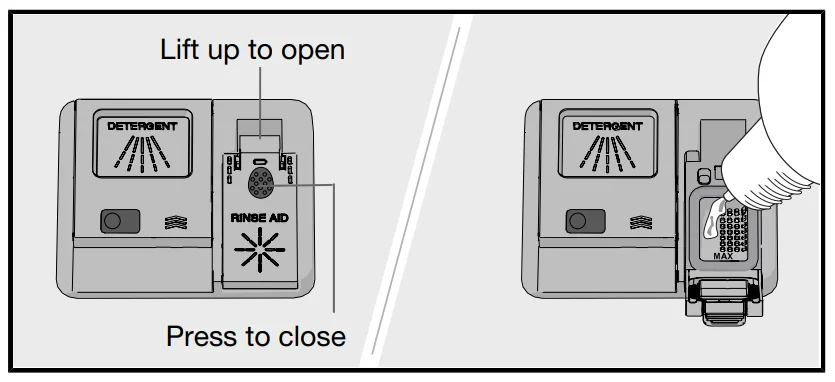
- Open the rinse aid compartment lid.
- Carefully fill up with rinse aid to the level marked MAX.
- Wipe up any spilled rinse aid around the compartment.
- Close the lid firmly.
Greener dishwashing
Save energy and water
When using a dishwasher in a residential setting, less energy and water are generally used compared to washing the dishes by hand.
Do not rinse under running water
Do not rinse the dishes under running water as this will lead to increased energy and water consumption. Simply scrape off large food particles before loading the dishwasher.
Choose a green detergent
Read the environmental declaration on the packaging! Too much detergent and rinse aid can result in less effective dishwashing and lead to a greater environmental impact.
Run a fully loaded dishwasher
Save energy and water by waiting until the dishwasher is full before running a program. Use the 1h program with the Boost option to rinse the dishes if there are any unpleasant odors.
Run programs at a lower temperature
If the dishes are only lightly soiled, you can select a program with a lower temperature. See page 18.
Select option – Door Open
A shorter dishwashing program and better drying results are achieved if you use the Door Open option, which automatically opens the dishwasher door. Wait until the dishwasher indicates that the program has ended and the dishes have cooled before unloading the dishwasher. (If the dishwasher is built-in, the surrounding furnishings must be resistant to any condensation from the dishwasher.)
Loading the dishwasher
Fragile dishes
Some cookware is not dishwasher safe. This can be for several reasons. Some materials cannot withstand high temperatures, while others can be damaged by dishwasher detergent. Use caution with, for example, handmade items, China, crystal/glassware, silver, copper, tin, aluminum, wood, and plastic. Look for the “Dishwasher safe” marking.
Loading affects the results
Load the dishes carefully to ensure the best washing and drying results with the lowest possible energy and water consumption. Give your dishwasher the best chance to reach and clean all surfaces, as well as to dry the dishes as thoroughly as possible.
- All dirty surfaces should face in and down.
- Dishes should not be placed on top of each other.
- Angle dishes with hollows, such as cups, so that the rinse water will run off. This is also important for plastic items.
- Place the upper basket in its highest position when dishwashing very large plates.
- Make sure small items cannot fall through the dishwasher basket; place them in the top cutlery tray.
NOTE!
Check that the spray arms can rotate freely.
The baskets
The dishwasher is equipped with a top cutlery tray, an upper basket, and a lower basket. The basket’s appearance may differ depending on the configuration.
Top cutlery tray
The top cutlery tray accommodates cutlery, ladles, whisks, and other utensils.
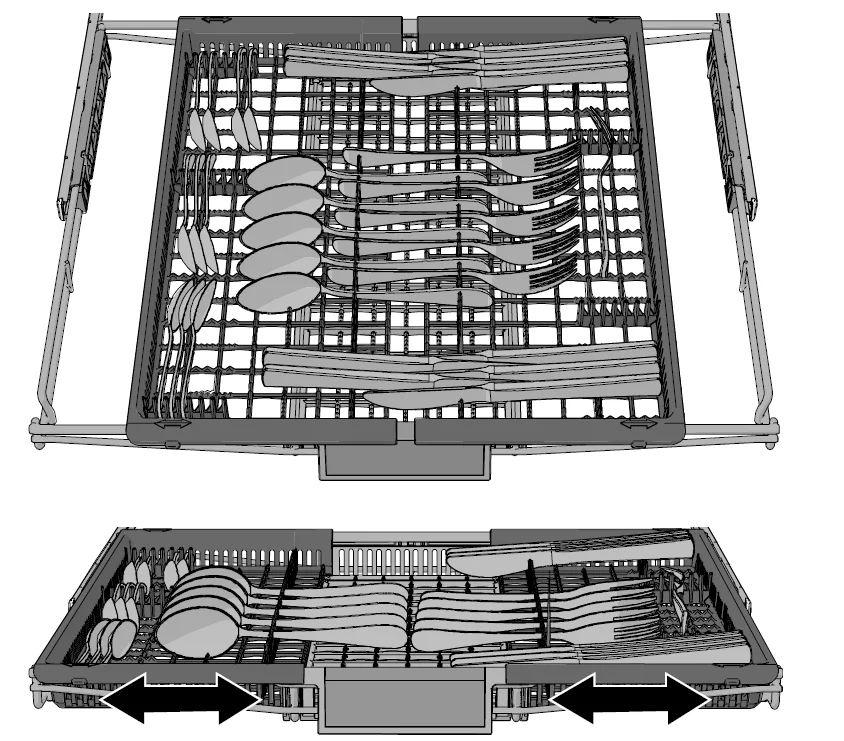
The top cutlery tray is comprised of three parts that can be moved sideways to better accommodate the dishes.
Using the dishwasher
Add detergent
Follow the instructions on the detergent packaging. Too much detergent can result in less effective dishwashing and lead to greater environmental impact.
Detergent compartment
The detergent compartment must be dry when adding detergent.
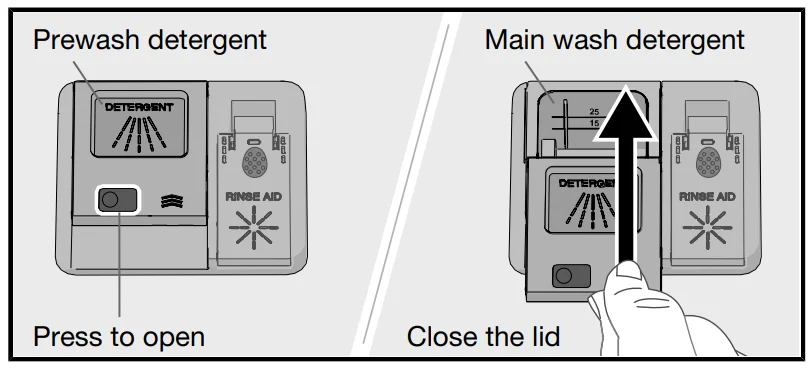
If powder or liquid dishwasher detergent is used, add a small amount of the detergent to the compartment for prewash detergent.
NOTE!
Use only dishwasher detergent. Liquid hand-washing detergent must not be used as the foam that forms prevents the dishwasher from operating effectively.
All-in-one detergent
There are many types of all-in-one detergents on the market. Read through the directions for these products carefully. Activate the TAB setting when using an all-in-one detergent that contains rinse aid. See page 19. Dishwasher tablets are not recommended for short programs (less than 75 minutes). Use powder or liquid dishwasher detergent instead.
NOTE!
Optimal washing and drying results are achieved by using normal dishwasher detergent together with a separately dispensed rinse aid.
Contact the detergent manufacturer if you have questions about the detergent.
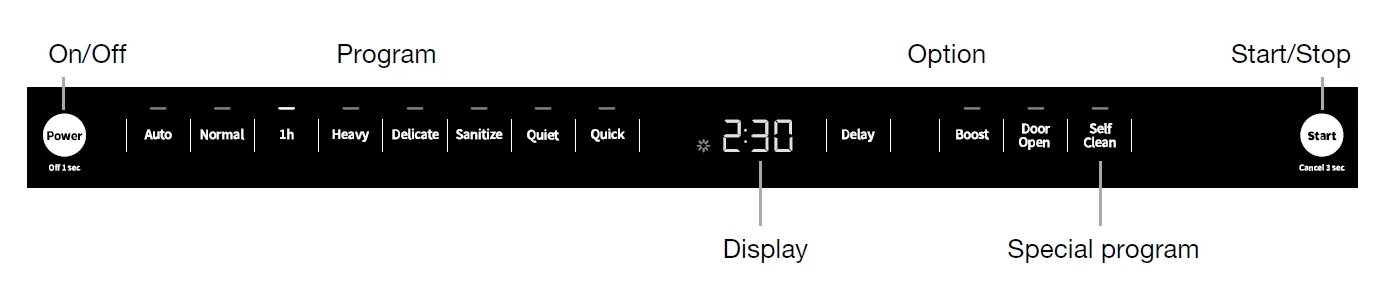
NOTE!
The control panel only reacts when the door is open.
 On/Off
 On/Off
Open the door and press Power. Also, turn on the water supply valve if it is turned off.
Select program
Select a program to suit the type of dishes and how dirty they are. Press the desired program until it is activated, which is indicated by an indicator light.
- Auto
The dishwasher can measure how dirty the dishes are and adjust water consumption and temperature accordingly. When newly installed, the program needs to be run five times before it is fully adapted and can provide the best results. - Normal
This program is recommended for daily, regular, or typical use to completely wash a full load of normally soiled dishes, such as plates, serving dishes, cups, and glasses. - 1h
A quick program for slightly dried leftovers. (This program is not intended for burnt food, such as on oven dishes.) The Door Open option is important for ensuring the best drying results. - Heavy
A program with a high temperature for dissolving grease on heavily soiled dishes, such as pans, casserole dishes, and oven dishes. If these dishes do not completely fill the dishwasher, you can add plates and other dishes. - Delicate
A gentle dishwashing program with a low temperature for washing fragile items made of crystal/glass. Remember to use a small amount of detergent and to place items so that they do not touch each other during the wash. See also Fragile dishes in the chapter Loading the dishwasher. Porcelain that has just been used without dried leftovers can also be washed using this program. - Sanitize
This program is recommended for baby bottles and cutting boards when additional sanitation is required. The temperature is high in the main wash and in the final rinse.
NOTE!
If the program has been run in compliance with the high temperature, the Sanitize program’s indicator light will flash, and “End” will appear on the display when the program ends.
Press any button to clear the message. - Quiet
A quieter dishwashing program, suitable for running at night. The program time is extended. - Quick
A quick program for dishes that have just been used and have no dried leftovers on them. - Self Clean
Self-cleaning program for the dishwasher tub, spray arms, and spray pipes.
This program should be run (with no dishes in the machine) using regular dishwasher detergent or citric acid. Special dishwasher cleaners are also available in stores. For the removal of limescale deposits, see Dishwasher tub in the chapter Care and maintenance instructions.
NOTE! CLn The dishwasher will indicate at regular intervals that Self Clean needs to be run.
Select option
Press the options to activate them. (The available options vary between programs.)
Delay
When you select Delay, the dishwasher will start 1-24 hours after you have pressed Delay and closed the door.
- Press Delay once to activate Delay. Press several times, or hold it in, to set the desired number of hours. The time for Delay is shown on the display.
- Press Start. Close the door. The timer counts down, and the dishwasher starts after the selected delay.
If you want to cancel the Delay option, open the door, then press and hold Delay for three seconds. Not available for: Self Clean
Boost
This option shortens the program time, but uses more energy and water. Press Boost to activate the option. The program time is updated on the display. Not available for: Delicate, Auto, Quick, Quiet, Sanitize, Self Clean
Door Open
The dishwasher door opens automatically, which shortens the program time and improves the drying results. Wait until the dishwasher indicates that the program has ended and the dishes have cooled before unloading the dishwasher. (If the dishwasher is built-in, the surrounding furnishings must be resistant to any condensation from the dishwasher.) The drying time of the Door Open option varies (from 5 to 90 minutes) depending on the model, program, and temperature of the final rinse. Press to activate the option, which is indicated by an indicator light. The Door Open option is pre-selected for some programs. Not available for: Sanitize, Self Clean
NOTE!
For the best drying results, do not close the door before the drying phase has finished and the machine has automatically switched off. See Once the program has finished on page 17.
WARNING!
The dishwasher door must not be blocked or closed when opened automatically. Doing so may damage the door lock mechanism. Wait at least 5 minutes before closing the door.
Once the program has finished
The end of the program is indicated by one short signal from the buzzer. The chapter Settings describes how to change this function.
Moreover, the end of the program is indicated by the status light turning off. Once the dishwasher door is opened and the program has finished, “End” appears on the display. The dishwasher switches off automatically after the program ends. To minimize the risk of leaks, we recommend that you turn off the water supply valve if you are away from
home for an extended period of time.
The best drying results
- Fully load the dishwasher.
- Angle dishes with hollows, such as cups, so that the rinse water will run off. This is also important for plastic items.
- Fill up the rinse aid compartment or increase the rinse aid dosage setting.
- Activate the Door Open option.
- Allow the dishes to cool before unloading the dishwasher.
Unloading the dishwasher
Hot porcelain is more fragile. Leave the dishes to cool in the dishwasher before unloading them. Unload the lower basket first to avoid any water drops from the upper basket falling onto the dishes
in the lower basket.
Program chart
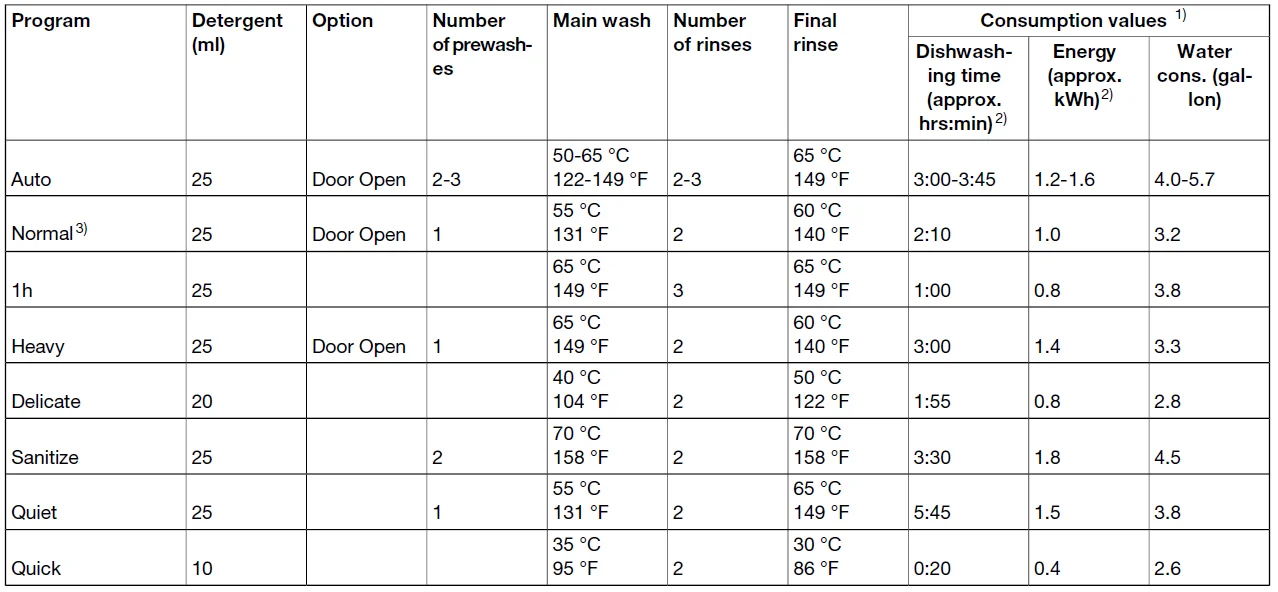
- 1) Consumption values vary depending on the temperature of the incoming water, room temperature, load size, selected additional functions, and more.
- 2) Connection to cold water, approx. 50 °F (10 °C).
- 3) The energy label performance figures are based on this program. Dishwasher connected to cold water, approx. 50 °F (10 °C). This program is recommended for daily, regular or typical use to completely wash a full load of normally soiled dishes, such as plates, serving dishes, cups and glasses.
Care and maintenance instructions
Fill up with rinse aid
When the rinse aid needs filling up, the above symbol lights on the display.
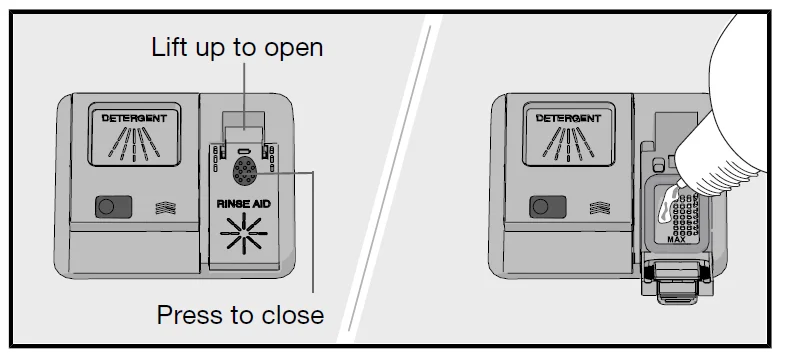
- Open the rinse aid compartment lid.
- Carefully fill up with rinse aid to the level marked MAX.
- Wipe up any spilled rinse aid around the compartment.
- Close the lid firmly.
After filling up, it may take a while before the symbol goes out.
Clean the filters
Coarse filter
The coarse filter traps larger food particles, which cannot get past the drain pump. Empty the coarse filter when necessary.
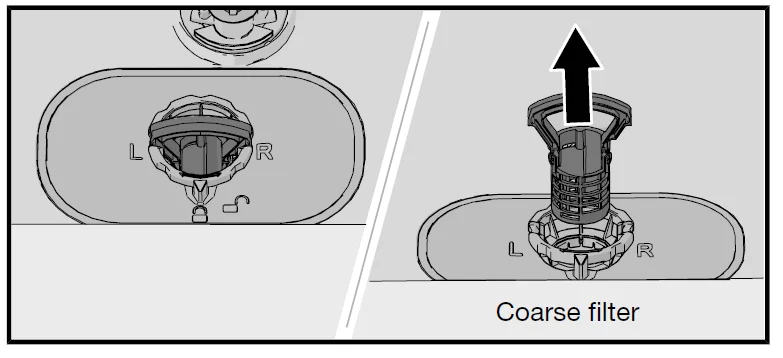
- Lift the coarse filter by the handle.
- Empty the coarse filter.
- Refit the coarse filter. Press it down until it clicks into place.
Fine filter
Debris that collects on the fine filter is automatically rinsed away during each wash. Clean the fine filter when necessary.
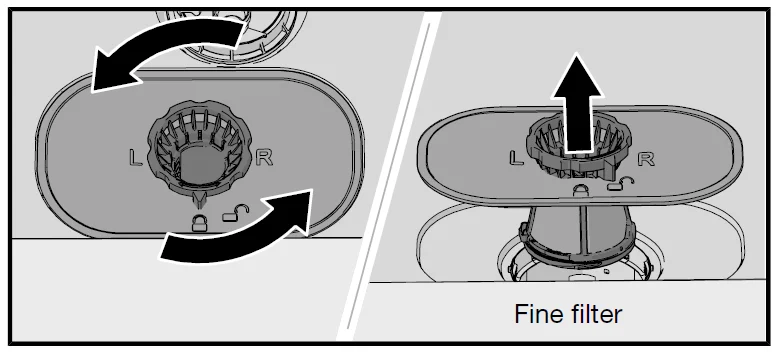
- Turn the lock ring counterclockwise and lift the fine filter straight up.
- Clean the fine filter.
- Refit the fine filter and turn the lock ring clockwise to its stop position. Check that the edges seal properly.
Remember to refit the coarse filter!
NOTE!
Dishwashing results may be affected if the coarse and fine filters are incorrectly fitted. The dishwasher must not be used without the filters in place!
Cleaning the spray arms
Holes and bearings can become blocked. Remove debris using a needle or similar item. The spray arms have holes on the bottom.
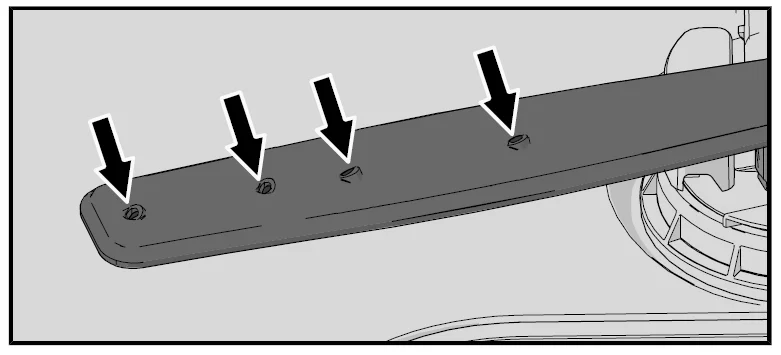
Spray arms can be removed for cleaning. Remember to put them firmly back into place afterward.
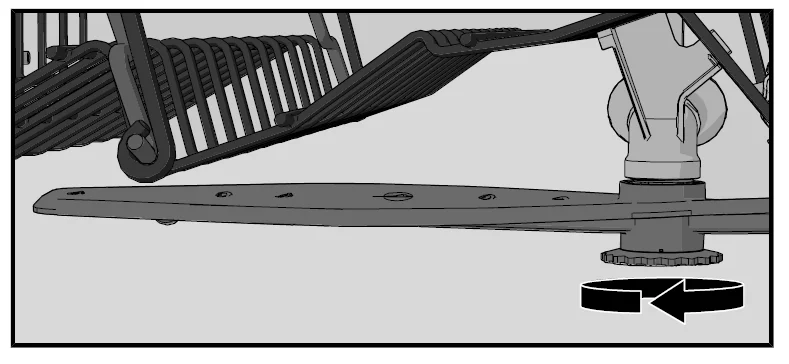
Upper spray arm
- Pull out the upper basket.
- Unscrew the spray arm bearings counterclockwise to remove the spray arm from the upper basket.
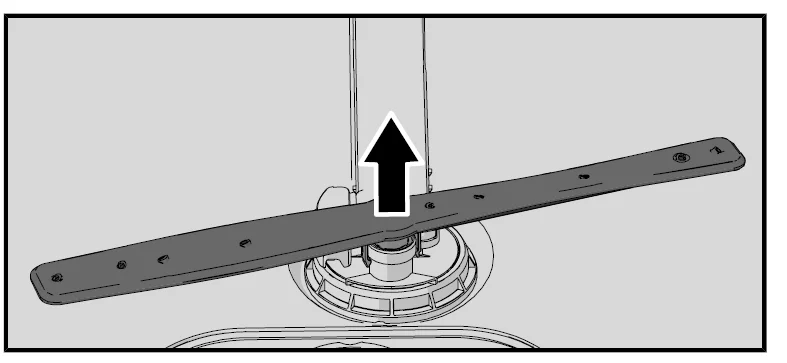
Lower spray arm
- Pull the lower spray arm straight up to release it.
CLn – Run the Self Clean program
Dishwasher tub
The dishwasher tub is made of stainless steel and is kept clean through normal use (when used regularly). If you have hard water, limescale deposits may build up in the dishwasher. If this happens, run the
Self Clean program with two tablespoons of citric acid in the detergent compartment (with no dishes in the machine). Special dishwasher cleaners are also available in stores. Never use anti-freeze, Draino®, CLR®, or other chemical cleaners.
Remove blockages
Unblocking the drain pump
If the dishwasher still contains water after the program has finished, something may be blocking the drain pump, which results in the Water outlet fault error message.
- Turn off the machine using the power and unplug the electrical supply.
- Remove the coarse filter and the fine filter.
- Scoop out the water from the dishwasher tub.
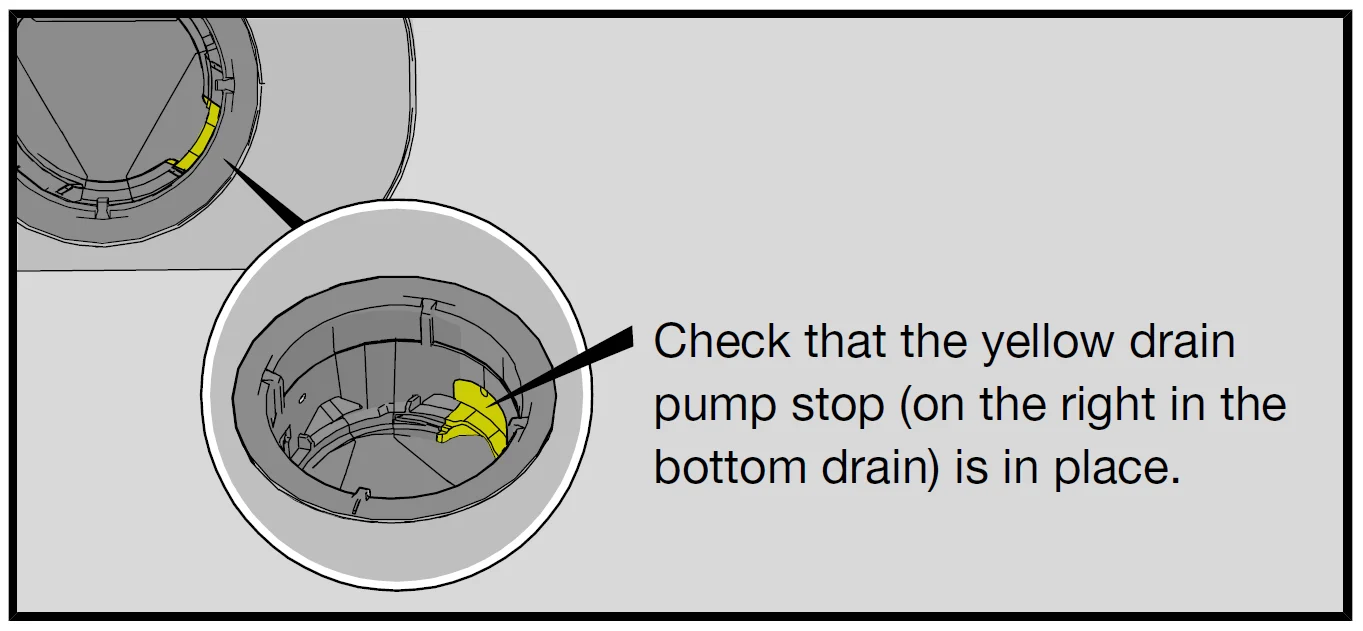
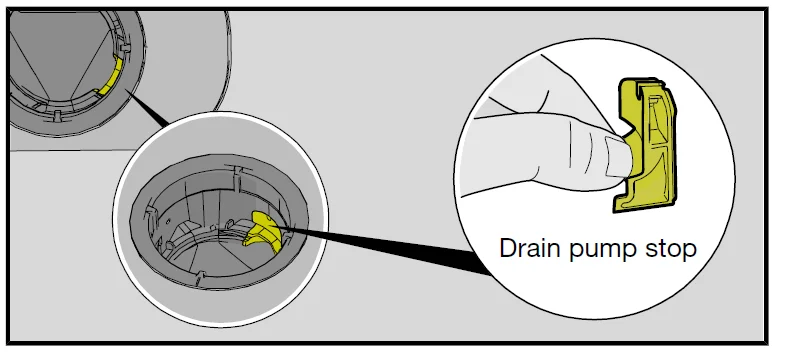
- In order to inspect the drain pump, remove the yellow drain pump stop on the right in the bottom drain. (Use a pair of pliers if necessary.)
- Turn the pump wheel located behind the drain pump stop by hand. Carefully remove any sharp items, such as glass.
- Reinstall the drain pump stop along with the fine and coarse filters.
- Plug the machine in again.
NOTE!
Do not forget to reinstall the drain pump stop.
Troubleshooting
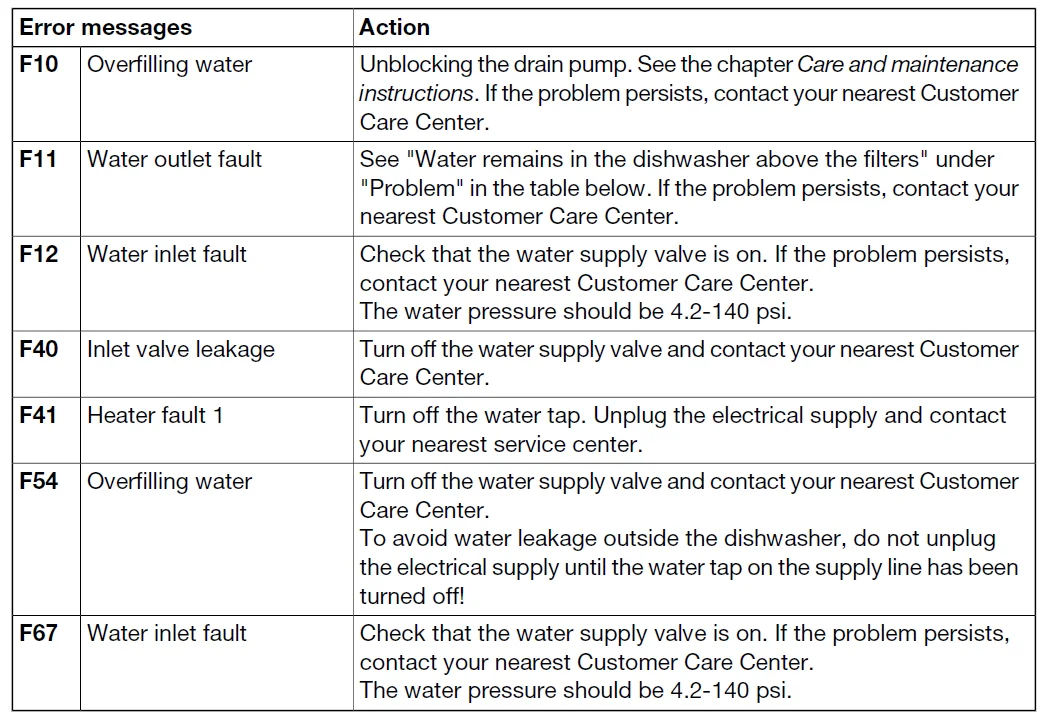
Press any button to clear the error message.
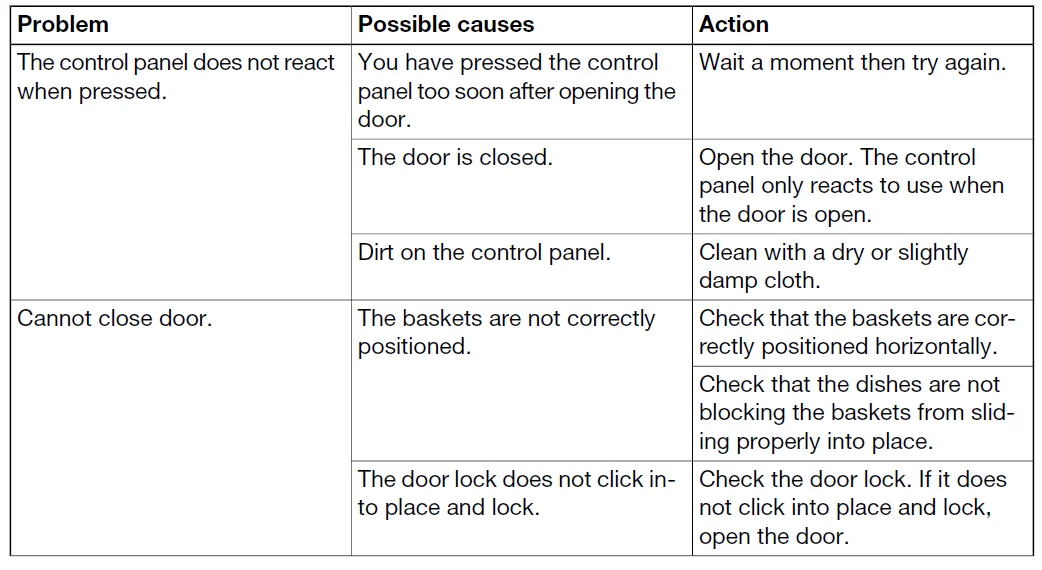
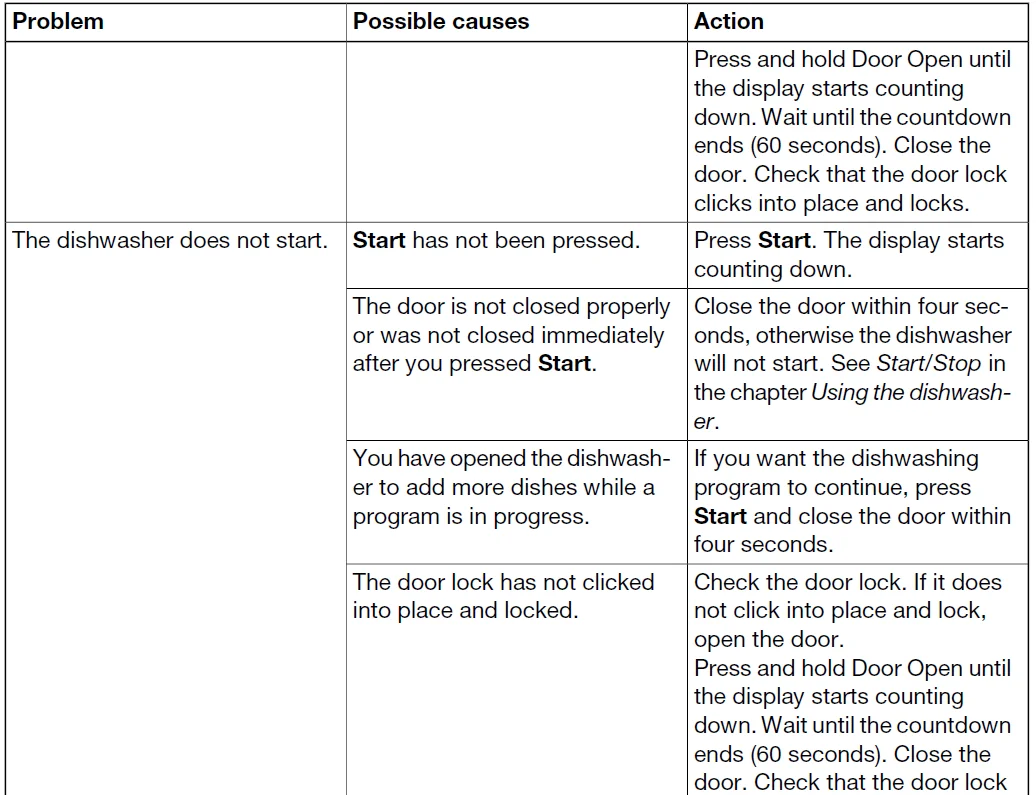
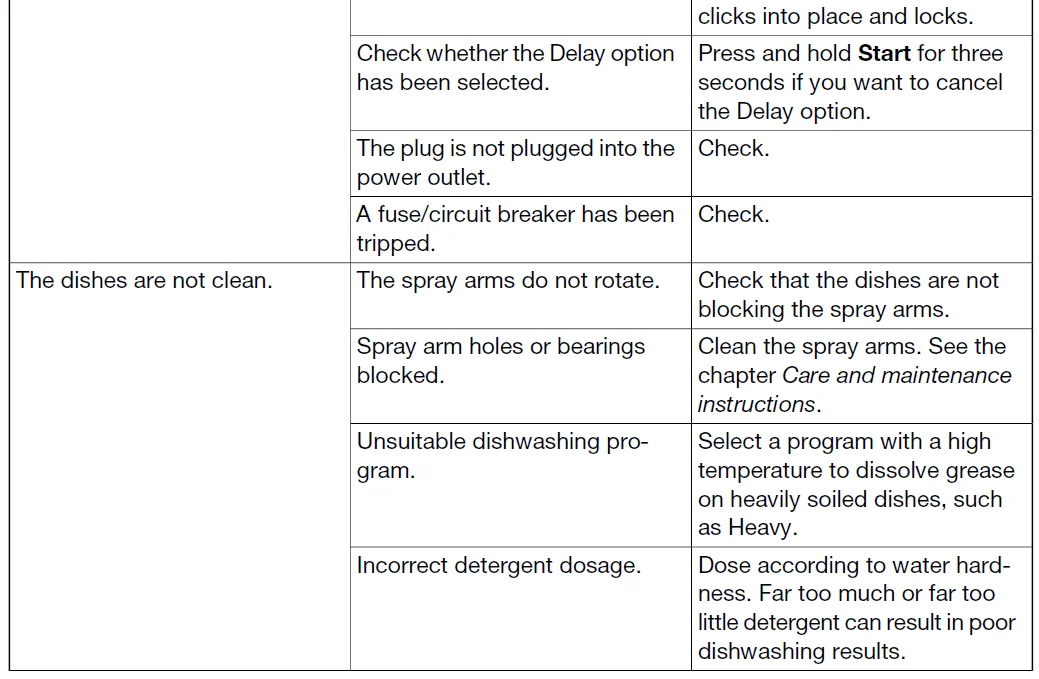
Technical information
Technical data
- Height: 33.70 – 35.67” (856 – 906 mm)
- Width: 23.8” (605 mm)
- Depth: 22.67” (576 mm)
- Weight: 77 lb (35 kg) 1)
- Water pressure: 4.2-140 psi (0.03-1.0 MPa)
- Electrical connection: See serial number plate
- Rated power: See serial number plate
1) Weight can vary due to different specifications.
For more manuals by Hisense, visit ManualsLibraryy
Hisense HUI66330XCUS Dishwasher-FAQs
Who manufactures Hisense dishwashers?
Hisense dishwashers are produced by Hisense Group Corporation, a global electronics and appliance manufacturer headquartered in Qingdao, China. The company is known for producing televisions, refrigerators, air conditioners, and kitchen appliances. Hisense focuses on offering modern features and reliable performance at competitive prices, which makes its appliances attractive to budget-conscious households looking for good value.
Does the Hisense HUI66330XCUS dishwasher require hot or cold water?
The Hisense HUI66330XCUS dishwasher can be connected to either a cold or hot water supply depending on your home’s heating system. In most households, connecting to cold water works well because the dishwasher heats the water internally. However, if your home uses energy-efficient heating systems such as solar or district heating, it may also support a hot water connection (typically up to about 70 °C).
Does the Hisense HUI66330XCUS dishwasher dry dishes completely?
Yes, the dishwasher includes automatic drying features designed to improve drying results. Many Hisense models use an Auto-Dry function that slightly opens the door at the end of the wash cycle. This releases excess steam and allows fresh air to circulate inside the tub, helping dishes, utensils, and glassware dry faster and more thoroughly without requiring additional manual drying.
How do you run a cleaning cycle on a Hisense dishwasher?
To clean the dishwasher, remove any dishes and food debris from the filter first. Place a dishwasher cleaner or a cup of white vinegar on the top rack. Then run a hot or intensive wash cycle with the machine empty. This helps remove grease, detergent buildup, and odors. Performing this cleaning process every few weeks helps maintain strong washing performance.
Is Hisense considered a good appliance brand?
Hisense is generally regarded as a reliable brand that focuses on providing strong value for money. While it may not always compete with premium appliance manufacturers, it offers modern features, solid performance, and competitive pricing. Many consumers choose Hisense appliances because they provide good quality and functionality at a more affordable cost compared to high-end brands.
Is it cheaper to use a dishwasher or wash dishes by hand?
In most homes, using a dishwasher is actually more efficient than washing dishes by hand. A standard dishwasher typically uses only about 3–4 gallons of water per cycle, while hand washing can use significantly more water if the tap runs continuously. Dishwashers also regulate water temperature and energy usage more efficiently, which can reduce overall utility costs.
What is the average lifespan of a dishwasher like the Hisense HUI66330XCUS?
The typical lifespan of a modern dishwasher is around 10 years, although this can vary depending on usage and maintenance. Regular cleaning, proper loading, and using the correct detergent can help extend the life of the appliance. Keeping the filter clean and running periodic maintenance cycles can also improve long-term reliability.
Why might dishes still be wet after a dishwasher cycle?
Dishes may remain wet if the heated dry option is not activated or if the rinse aid compartment is empty. Rinse aid helps water slide off dishes so they dry faster. Overloading the dishwasher or using a short cycle can also reduce drying efficiency. For better results, enable the drying option and ensure items are arranged properly inside the racks.
Where should detergent be placed in the Hisense dishwasher?
Dishwasher detergent should always be placed in the designated detergent dispenser located on the inside of the dishwasher door. This compartment opens automatically during the wash cycle to release the detergent at the correct time. Avoid placing detergent directly at the bottom of the dishwasher unless the manual specifically recommends doing so.
Does a dishwasher consume a lot of electricity?
Dishwashers use electricity mainly to heat water and power the wash pump. On average, a dishwasher consumes roughly 1200–2400 watts per cycle, which is comparable to running a hairdryer for several minutes. However, modern energy-efficient dishwashers are designed to minimize electricity use, making them a practical and convenient option for daily kitchen cleaning.