
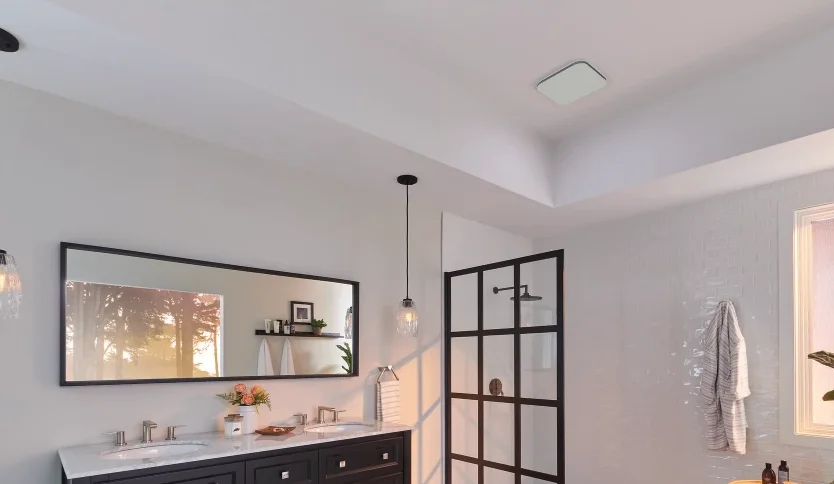

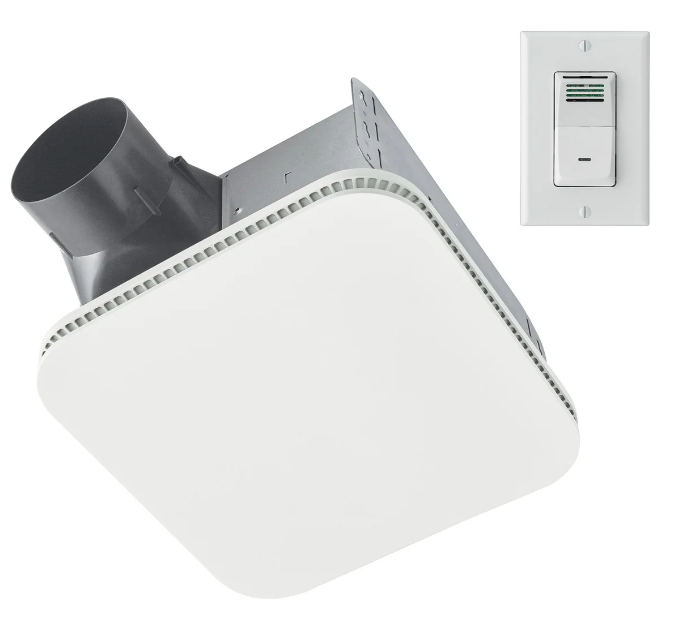
Broan AE80K Bath Ventilation Exhaust Fan
READ AND SAVE THESE INSTRUCTIONS
 WARNING: TO REDUCE THE RISK OF FIRE, ELECTRIC SHOCK, OR INJURY TO PERSONS, OBSERVE THE FOLLOWING:
- Use this unit only in the manner intended by the manufacturer. If you have questions, contact the manufacturer at the address or telephone number listed in the warranty.
- Before servicing or cleaning the unit, switch the power off at the service panel and lock the service disconnecting means to prevent power from being switched on accidentally. When the service disconnecting means cannot be locked, securely fasten a prominent warning device, such as a tag, to the service panel.
- Installation work and electrical wiring must be done by a qualified person(s) in accordance with all applicable codes and standards, including fire-rated construction codes and standards.
- Sufficient air is needed for proper combustion and exhausting of gases through the flue (chimney) of fuel-burning equipment to prevent backdrafting. Follow the heating equipment manufacturer’s guidelines and safety standards, such as those published by the National Fire Protection Association (NFPA), the American Society for Heating, Refrigeration and Air Conditioning Engineers (ASHRAE), and the local code authorities.
- When cutting or drilling into the wall or ceiling, do not damage electrical wiring and other hidden utilities.
- Ducted fans must always be vented to the outdoors.
- Acceptable for use over a tub or shower when connected to a GFCI (Ground Fault Circuit Interrupter)-protected branch circuit (ceiling installation only).
- This unit must be grounded.
 CAUTION
- For general ventilating use only. Do not use it to exhaust hazardous or explosive materials and vapors.
- This product can be installed on a wall if mounted 8 ft. or more above the floor.
- To avoid motor bearing damage and noisy and/or unbalanced impellers, keep drywall spray, construction dust, etc., off the power unit.
- Please read the specification label on the product for further information and requirements.
CLEANING & MAINTENANCE
- For quiet and efficient operation, long life, and attractive appearance, lower or remove the grille and vacuum the interior of the unit with the dusting brush attachment.
- The motor is permanently lubricated and never needs oiling. If the motor bearings are making excessive or unusual noises, replace the blower assembly (includes motor and impeller).
OPERATION
- Use an on/off switch to operate the fan.
- Refer to Broan’s catalog for a complete line of accessories/controls to effectively adapt these fans to your requirements.
 IMPORTANT – The ducting from this fan to the outside of the building has a strong effect on the air flow, noise, and energy use of the fan. Use the shortest, straightest duct routing possible for best performance, and avoid installing the fan with smaller ducts than recommended. Insulation around the ducts can reduce energy loss and inhibit mold growth. Fans installed with existing ducts may not achieve their rated airflow.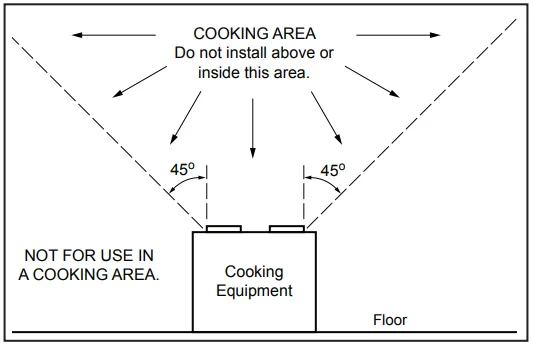
OPTION – To mount housing anywhere between the ceiling framing: Use the optional Hanger Bar Kit (sold separately from local distributors or website). Follow the mounting instructions included with the kit.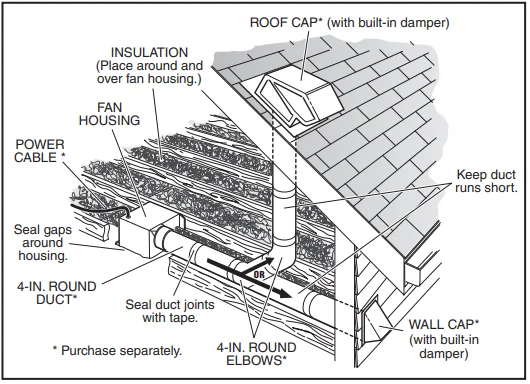
ALL INSTALLATIONS
- Remove all packing material, unplug, and remove the blower from the fan housing.

- Remove wiring panel from fan housing (if already installed).

- Some models only: Select 50, 80, or 110 CFM based on your room size and desired air flow.

- Some models only: A pair of flanges may be attached to the housing if desired or required: Snap both flange pieces under the rolled-over edge of the housing (all four sides).

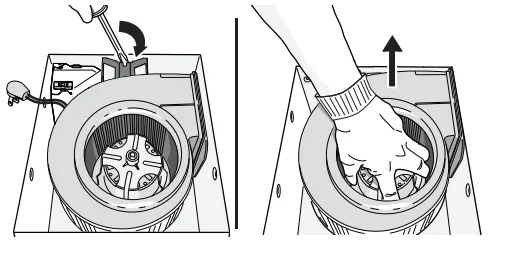
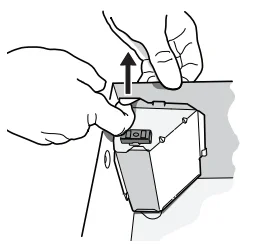
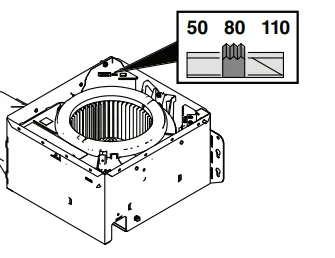
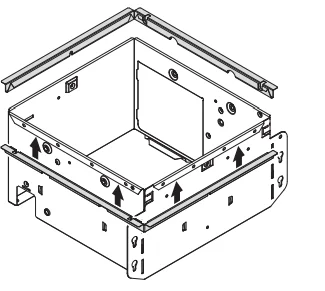
NEW INSTALLATION
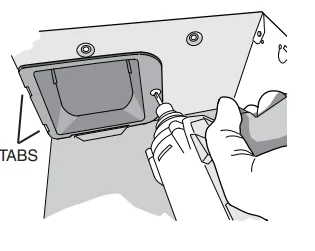
- Attach the damper/duct connector to the fan housing: Push the connector through the opening from inside the housing. Engage tabs and secure with a screw from the parts bag.

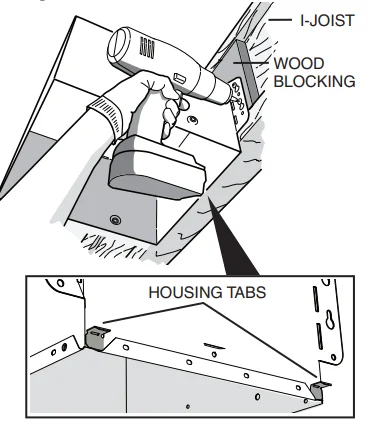
- Mount the housing to the ceiling structure: Make sure the bottom of the housing will be flush with the finished ceiling. For proper location using 1/2″ ceiling material: Bend out housing tabs (on the outside of the housing) to fit against the bottom of the joist. Secure housing through mounting ears with appropriate fasteners. If mounting housing to an I-joist, use wood blocking as shown.

- Connect 4-in. round duct.

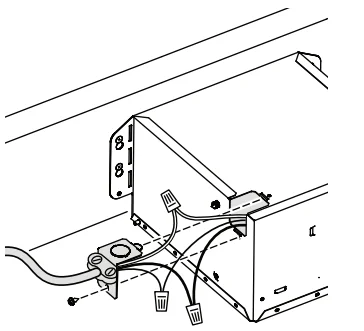
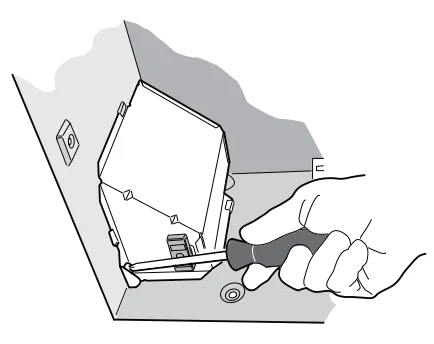
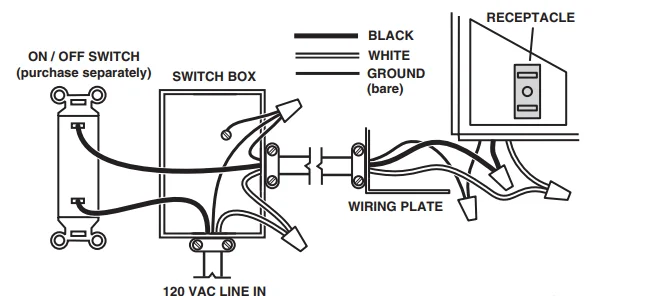
- Connect wiring: Connect the power cable to the wiring plate (from parts bag) using UL approved connector. Connect the house wiring to the fan wiring. Refer to the wiring diagram for connection details. Use a screw (from the parts bag) to secure the wiring plate to the fan housing. Reinstall the wiring panel and secure it with a screw from the parts bag.

- Finish the ceiling: Then continue with Step 10.


RETROFIT INSTALLATION
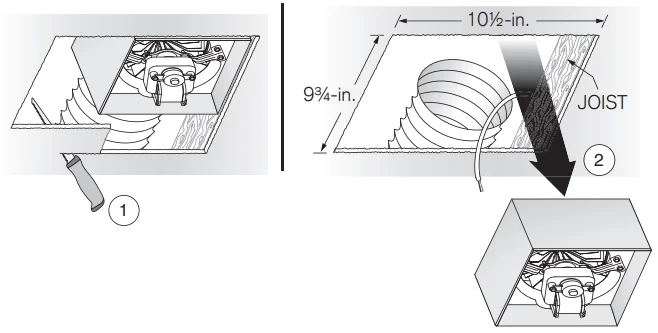
- Remove the old fan and prepare the ceiling: Enlarge ceiling opening (if necessary) to 9¾” (parallel to joist) by 10½” (perpendicular to joist). Some models have a cut-out template on the side of the carton or on the grille of the packaging materials. Existing fan housings are typically attached to the structure:
- with screws, nails, or staples, which must be removed.
- with hangers or rails that are fastened to joists and must be removed along with the housing.
- A pry bar may be needed to remove the old housing.
- Leave ductwork and wiring in place.

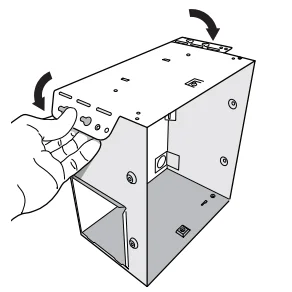
- Fold the mounting ears flat against the housing.

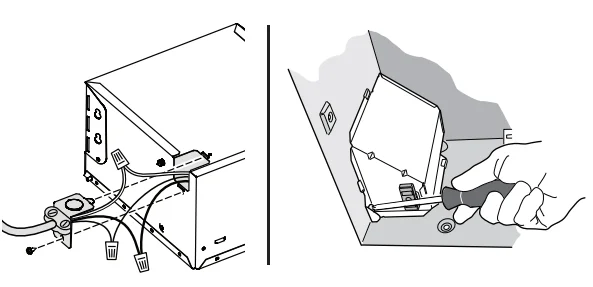
- Connect wiring.: Connect the power cable to the wiring plate (from parts bag) using UL approved connector. Connect the house wiring to the fan wiring. Refer to the wiring diagram for connection details. Use a screw (from the parts bag) to secure the wiring plate to the fan housing. Reinstall the wiring panel and secure it with a screw from the parts bag.

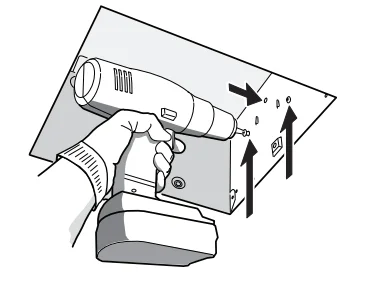
- Mount the fan to the ceiling structure: Mount the housing to the ceiling structure with appropriate fasteners in locations shown.

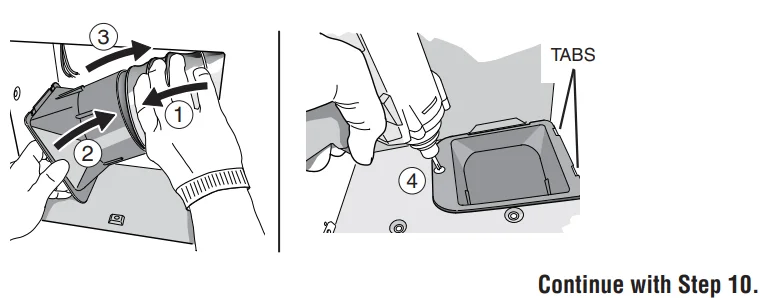
- Connect 4-in. round duct: ① Pull existing ducting through the housing discharge opening and ② tape ducting to the duct connector. ③ Push the connector/ducting back through the opening. Engage tabs and ④ secure with a screw from the parts bag.

ALL INSTALLATIONS
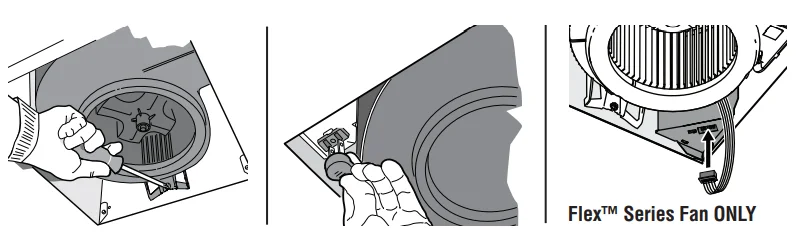
- Install blower: Re-install the blower removed in Step 1. Secure the blower with 2 screws from the parts bag. Plug the blower into the black receptacle. Flex™ Series Fan ONLY: Plug the 5-wire plug into the controller module.

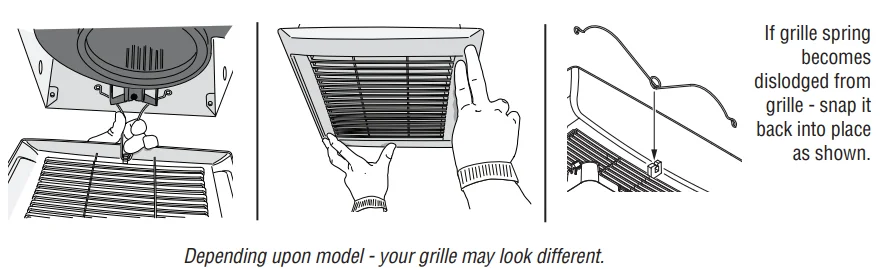
- Install grille: Squeeze the grille springs and insert them into the slots in the blower. Push the grille up against the ceiling.

WIRING DIAGRAM
For Warranty Statement, Service Parts, Technical Support, or to Register your product, please visit our website or call: In the United States – Broan-NuTone.com 800-558-1711. In Canada – Broan-NuTone.ca 800-567-3855.
For More Manuals By Broan-NuTone, Visit ManualsLibraryy.
Broan AE80K Bath Ventilation Exhaust Fan-FAQS
How does the Broan AE80K bathroom exhaust fan work?
The Broan AE80K removes moist and stale air from the bathroom and vents it outside. Some Broan fans use humidity sensing to turn on automatically during showers and switch off once moisture levels drop.
What is the airflow capacity of the Broan AE80K fan?
The AE80K is designed to deliver efficient airflow suitable for medium-sized bathrooms, helping reduce humidity, odors, and condensation.
Does the Broan AE80K turn on automatically?
Depending on the wall control used, the fan can operate manually, on a timer, or through a humidity-sensing function.
How do I adjust the humidity setting on a Broan bathroom fan?
Humidity settings are usually adjustable on the wall control or humidistat, typically between 60% and 90% relative humidity.
What does “sones” mean for bathroom fans?
Sones measure sound level. Lower sones mean quieter operation. Fans with 1.0 sone or less are considered very quiet.
Why is my Broan fan so loud?
Noise can result from loose parts, dust on the motor, worn bearings, or an aging fan motor that may need replacement.
Why does my Broan exhaust fan turn off after a few minutes?
This usually indicates overheating due to dust accumulation, motor wear, or an aging fan assembly.
Why is my Broan bathroom fan not working?
Common causes include a faulty motor, lack of power, wiring issues, or dust buildup preventing the fan from spinning.