
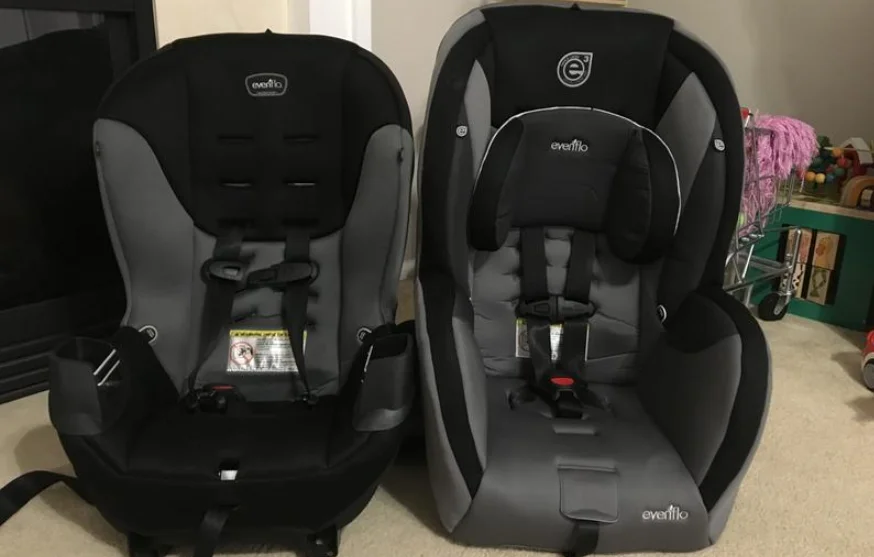

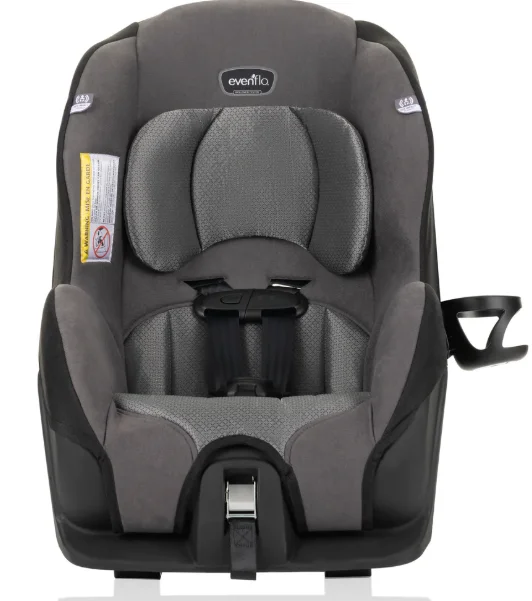
Evenflo SureRide Titan 65 Child Car Seat
Safe Practices
- Everyone rides buckled up, or the vehicle does not go. Make no exceptions for adults or children. If someone unbuckles, stop the vehicle. Being firm and consistent from the start will mean fewer discipline problems as children get older. An unrestrained person can be thrown into and injure other passengers.
- Many safety advocates and healthcare professionals recommend that children ride rear-facing for as long as possible. See limitations recommended on rear-facing use on page one.
- NEVER try to tend to a crying baby’s needs while driving. NEVER take a baby out of a child restraint for comforting while the vehicle is moving.
- DO NOT allow a child in a vehicle to have objects such as lollipops or ice cream on a stick. The object can injure the child if the vehicle swerves or hits a bump.
- DO NOT feed an infant who is riding in a child restraint.
- Put sharp or heavy items in the trunk. Anything loose can be deadly in a crash.
- Dress the child in clothing with legs. Since the harness must pass between the child’s legs, clothing with legs permits a tighter fit.
- In hot, sunny weather, cover the seat and buckle with a light-colored blanket when you leave the vehicle.
- For child restraints equipped with leather seat pads, cover your seat with a blanket in warm weather. Leather can become very hot in direct sunlight.
- In cold weather, a child may need an extra blanket for warmth. Secure the child in the child restraint and cover both the child and the restraint with a blanket.
Recall Information for U.S. Customers
- Child restraints could be recalled for safety reasons. You must register this restraint to be reached in a recall. Send your name, address, and the restraint’s model number and manufacturing date to Evenflo Company, Inc., 1801 Commerce Dr., Piqua, OH 45356, or call 1-800-233-5921. You may also register online at www.evenflo.com/registercarseat.
- For recall information, call the U.S. Government’s Vehicle Safety Hotline at 1-888-327-4236 (TTY: 1-800-424-9153) or go to http://www.NHTSA.gov.
Public Notice for Canadian Customers
- Child restraints could be recalled for safety reasons. You must register this restraint to be reached in a recall. Send your name, address, and the restraint’s model number and manufacturing date to Evenflo Company, Inc., 1801 Commerce Dr., Piqua, OH 45356, call 1-937-773-3971, or register online at www.evenflo.com/registercarseatcanada.
- For public notice information, call Transport Canada at 1-800-333-0510 (1-613-993-9851 in the Ottawa region).
Motor Vehicle/Aircraft Usage
When used with the internal harness and properly installed pursuant to these instructions, this restraint is certified for use only in passenger and multi-purpose passenger motor vehicles, buses, and trucks equipped with Type I or II seat belts and in aircraft. Airplane installation is the same as Type I vehicle installation. Turn the top of the airplane seat belt buckle away from the restraint for easy release and removal. Refer to pages 46 to 50 for instructions on installing your child restraint in an aircraft.
LATCH Information
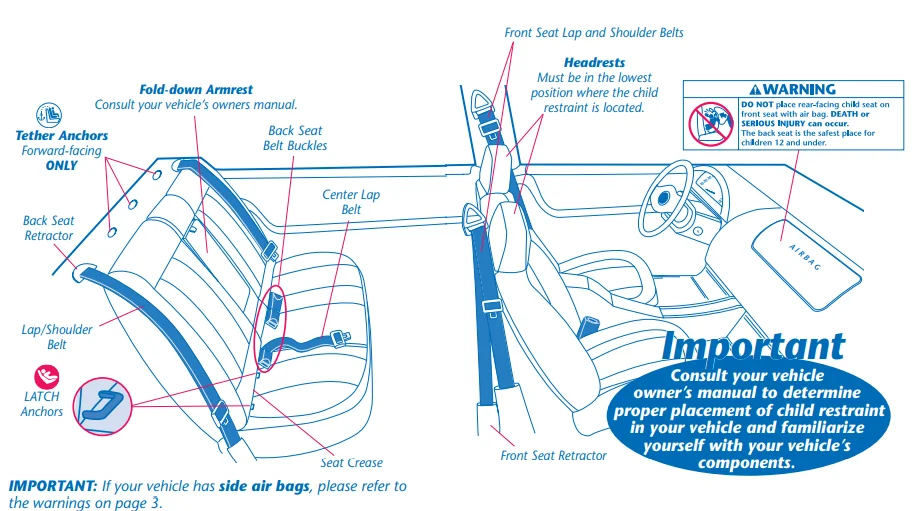
“LATCH” (Lower Anchors and Tethers for CHildren) is a system for attaching the child restraint to your vehicle seat. It can be used in place of the seat belts in vehicles with LATCH anchors. Refer to your vehicle owner’s manual for the locations of LATCH anchors.
Note: Your vehicle owner’s manual may refer to this system as “Universal Anchorage System,” “Lower Universal Anchorage System,” or “ISOFIX.”
Care and Cleaning
- To help protect the vehicle upholstery, place a towel beneath and behind the child restraint.
- Plastic and metal parts may be wiped clean with mild soap and water and dried with a soft cloth. Do not use abrasive cleaners or solvents.
- Take care not to damage any labels.
- The harness can be wiped clean with mild soap and water. Allow the harness to air dry. DO NOT immerse the buckle in water or lubricate the buckle.
- Machine wash the seat pad separately in cold water, delicate cycle, and tumble dry 10 to 15 minutes on low heat.
- NEVER use a child restraint without the seat pad.
- Leather pads (not available on all models) may be cleaned. For best results, spot clean with mild soap and water or with a mixture of 10 parts water to 1 part mild alcohol. Allow to air dry. DO NOT machine wash.
Storing Your Instructions
After thoroughly reading and following these instructions, store the instructions in the clips on the sides of your child restraint.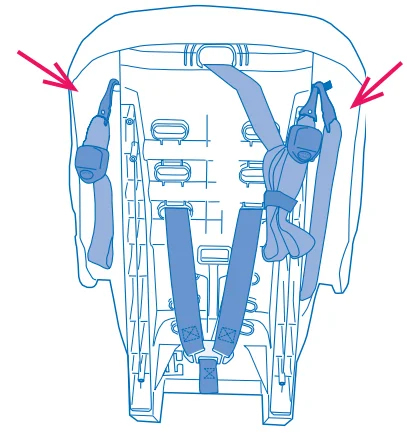
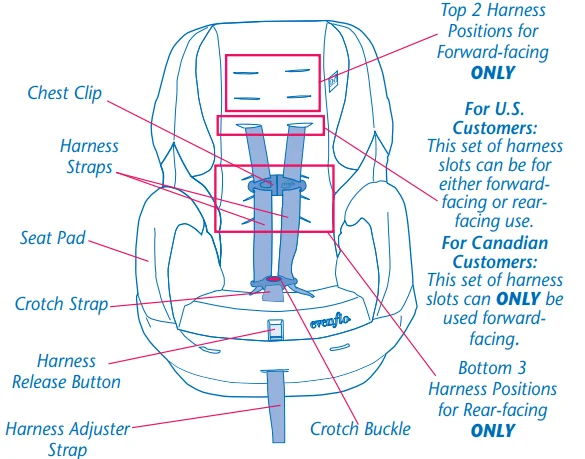
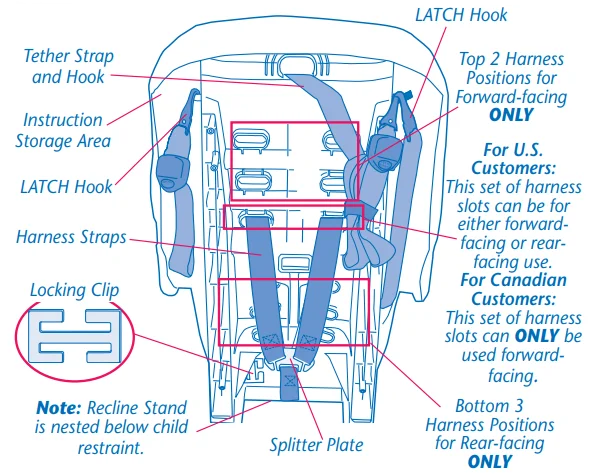
Visual Glossary
- Front View

- Back View

Using the SureRide™ Rear-facing
Child Requirements:
- Weight: 2.3 to 18 kg (5 to 40 lbs)
- Height: 48 to 102 cm (19 to 40 inches) AND the top of the child’s head is at least 25 mm (1 inch) below the top of the child restraint seat back.

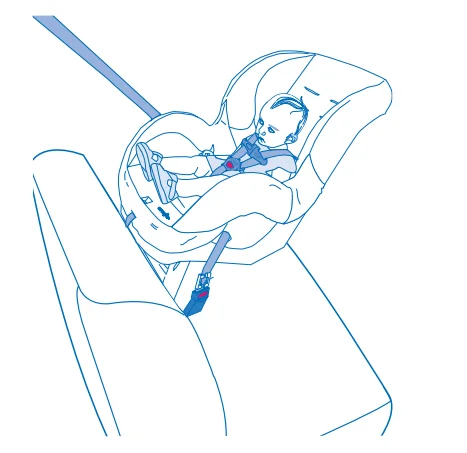
Note: Once your child exceeds 18 kg (40 lbs) OR the top of their head is within 25 mm (1 inch) of the top of the child restraint seat back, you MUST use this child restraint in the forward-facing position.
WARNING
When using this restraint rear-facing, DO NOT loosen the vehicle seat belt to provide more leg room, as this will prevent the child restraint from protecting your child.
- Secure the child restraint to the vehicle seat.
- The Recline stand is flipped to the recline position (page 34).
- Install with vehicle seat belt (page 18) or LATCH system (page 21).
- Towel rolled up and placed beneath the recline stand, if necessary (page 36).
- Install locking clip, if necessary (page 36).
- Set the child in the child restraint. The top of the head is at least 25 mm (1 inch) below the top of the child restraint seat back (page 1).
- Fasten the buckle. Refer to page 38.
- Make necessary adjustments.
- Crotch strap is snug against the child (page 39).
- Harness straps MUST be snug against the child’s shoulders, with no slack (page 38).
- Position and connect the chest clip. Chest clip/harness tie MUST be at armpit level (page 38).
- Check your work.
- The Recline stand is flipped to the recline position (page 34).
- The child restraint DOES NOT move more than 25 mm (1 inch) forward or side-to-side (pages 20 and 24).
- The child’s back and bottom are flat against the back and bottom surfaces of the child restraint (page 38).
- Shoulder harness straps MUST start at or below shoulder height using the strap slots closest to your child’s shoulders (page 32).
- Buckle tongues are fully engaged (page 38).
- The level arrow is level with the ground (pages 18 and 22).
Using the SureRide™ Forward-facing
Child Requirements:
- Weight: 10 to 29.4 kg (22 to 65 lbs)
- Height: 71 to 137 cm (28 to 54 inches), and the tops of the child’s ears are at or below the child restraint seat back.
- Age: At least one year of age.

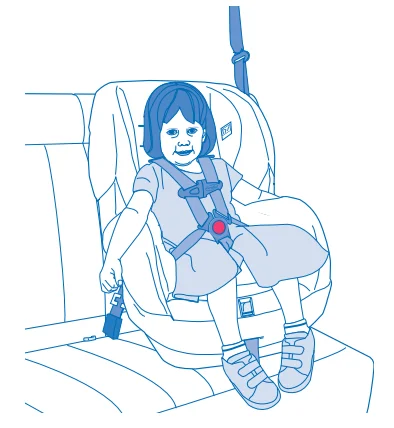
Note: Once your child exceeds 29.4 kg (65 lbs) OR is taller than 137 cm (54 inches), they can no longer safely use this child restraint, and you should consider using a booster seat.
WARNING
If your child weighs more than 29.4 kg (65 lbs) or their shoulders are above the highest harness level, you MUST discontinue use, or the child restraint will not protect your child.
- Secure the child restraint to the vehicle seat.
- The Recline stand is flipped to the upright position (page 34).
- Install with vehicle seat belt (page 25) or LATCH system (page 28).
- Canadian consumers: Install tether strap (pages 27 and 31).
- Install locking clip, if necessary (page 36).
- Set the child in the child restraint. The tops of the child’s ears are at or below the child restraint seat back (page 1).
- Fasten the buckle. Refer to page 38.
- Make necessary adjustments.
- Crotch strap is snug against the child (page 39).
- Harness straps MUST be snug against the child’s shoulders, with no slack (page 38).
- Position and connect the chest clip. Chest clip/harness tie MUST be at armpit level (page 38).
- Check your work.
- The Recline stand is flipped to the upright position (page 34).
- The child restraint DOES NOT move more than 25 mm (1 inch) forward or side-to-side (pages 26 and 30).
- The child’s back and bottom are flat against the back and bottom surfaces of the child restraint (page 38).
- Shoulder harness straps MUST start at or above shoulder height, AND you must use the strap slots closest to your child’s shoulders (page 32).
- Buckle tongues are fully engaged (page 38).
Installing Your Child Restraint Rear-facing Using a Seat Belt
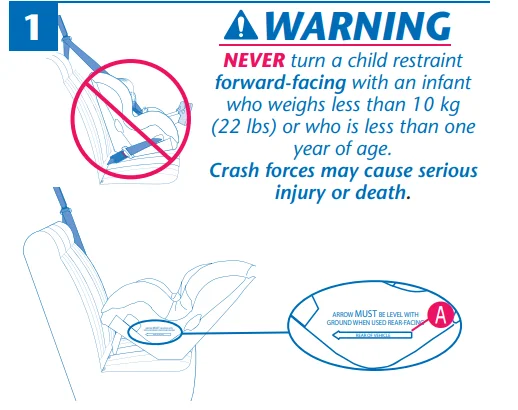
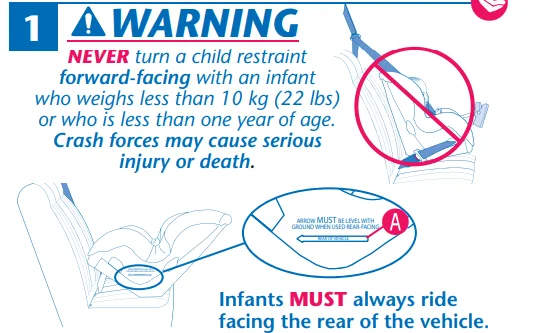
Infants MUST always ride facing the rear of the vehicle. The back of the child restraint supports and protects the baby and absorbs crash forces. Adjust the child restraint to the recline position (page 34). Place the child restraint in your vehicle rear-facing. Adjust the restraint so that the level arrow A is level with the ground.
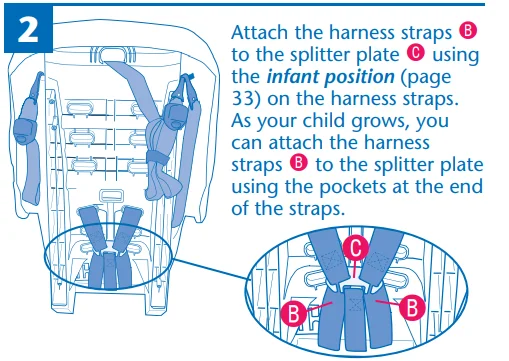
WARNING
DO NOT use the two upper harness slots rear-facing. The harness may not properly restrain the child during a crash.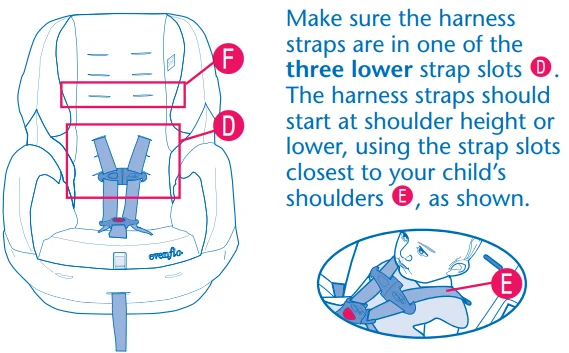
U.S. Customers Only: For a taller child, the fourth set of harness slots F can be used. Note: These slots MUST start at shoulder height or lower and be the closest slots to your child’s shoulders.
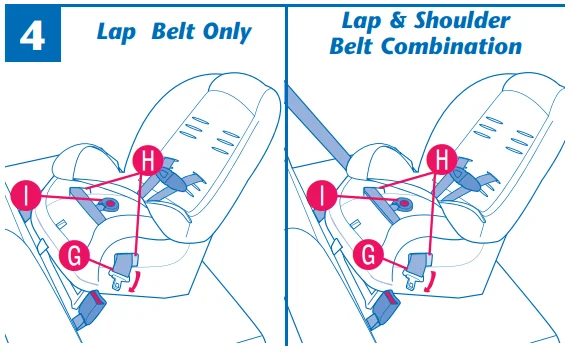
Pull the seat pad off the front of the child restraint. Route the vehicle seat belt G through the rear-facing belt path H and continue through the opposite opening of the child restraint. IMPORTANT: Make sure the seat belt G is in front of the crotch strap I, as shown. Fasten the vehicle seat belt depending on your type of seat belt.
Note: Some ELR vehicle belts can be switched so that they lock when tightened. It may not be necessary to use a locking clip in these situations. To install a locking clip, refer to page 36. Refer to the vehicle owner’s manual to determine which type of belt retractor is in the vehicle.
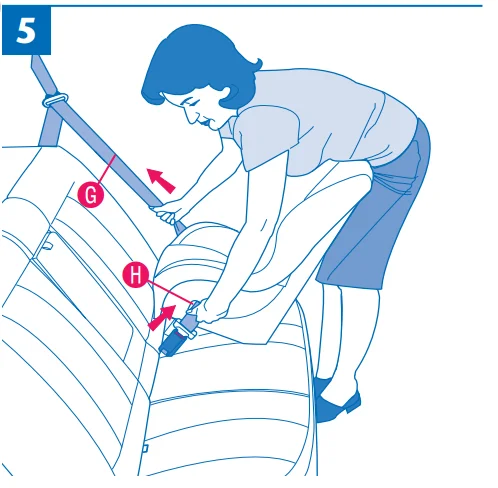
WARNING
- If vehicle seat belts are not routed and fastened correctly, the child restraint may not protect your child in a crash.
- DO NOT use this child restraint if it moves more than 25 mm (1 inch) forward or side-to-side at the vehicle belt path. Serious injury or death may result from poor installation. If you cannot tightly secure the child restraint, try again or move it to another location.
The seat belt must be as tight as possible. Put your full weight onto the child restraint as you tighten the seat belt G. Check your work. If you can move the child restraint more than 25 mm (1 inch) forward or side-to-side at the belt path H, the seat belt is not tight enough, and you MUST try again.
Installing Your Child Restraint Rear-facing Using the LATCH System
LATCH is a system for attaching the child restraint to your vehicle seat. It is to be used in place of your vehicle’s seat belts and can be used in vehicles with LATCH anchors. Your vehicle owner’s manual may refer to this system as ISOFIX, Universal Anchorage System (UAS), or Lower Universal Anchorage System.
WARNING
- ONLY use for securing child restraint to lower LATCH anchor points.
- ALWAYS read and follow exactly the instructions that accompany your vehicle and child restraint.
- NEVER attach two hooks to one vehicle’s lower anchor point.
- DO NOT use the vehicle seat belts to install a child restraint when using the LATCH system.
- ONLY use the LATCH system as described in these instructions. Serious injury or death may result from misuse.
- ALWAYS be sure that the LATCH hook is fully engaged onto the LATCH anchor point by pulling hard on the LATCH strap. If it is not totally engaged, the LATCH system will not secure your child’s restraint. Serious injury or death may result.
- To avoid a strangulation hazard, you MUST store the unused LATCH assembly, with all slack removed, in the storage area on the back of the seat. Roll or fold the excess LATCH strap and secure it with a rubber band to prevent serious injury to vehicle occupants.
- In addition to these instructions, read and follow your vehicle owner’s manual regarding the installation of child restraints and LATCH. If there is a discrepancy, follow your vehicle owner’s manual.
The back of the child restraint supports and protects the baby and absorbs crash forces. Adjust the child restraint to the recline position (page 34). Place the child restraint in your vehicle rear-facing. Adjust the restraint so that the level arrow A is level with the ground.
Pull the seat pad from the front of the child restraint. Route the LATCH strap D through the rear-facing belt path E. IMPORTANT: Make sure the LATCH strap D is in front of the crotch strap F, as shown.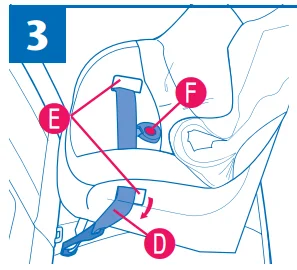
WARNING
DO NOT use the two upper harness slots rear-facing. The harness may not properly restrain the child during a crash.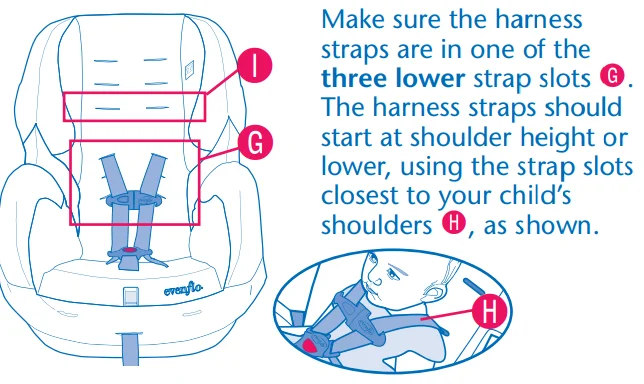
U.S. Customers Only: For a taller child, the fourth set of harness slots can be used. Note: These slots MUST start at shoulder height or lower and be the closest slots to your child’s shoulders.
Know Your LATCH
The LATCH system that comes with your child restraint will be one of the two types below.
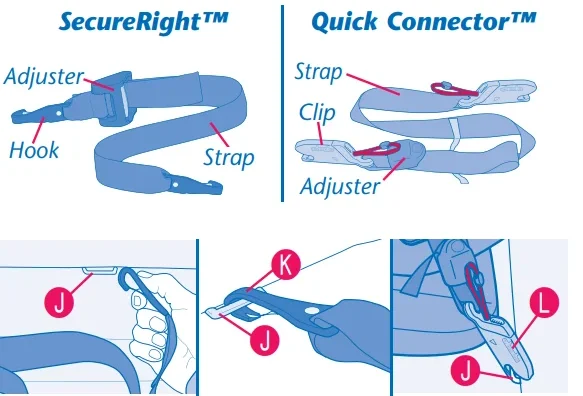
Refer to your owner’s manual to locate the lower anchors J on your vehicle seat. Attach the right hook K, or clip L, to the right anchor J and the left hook, or clip, to the left anchor. DOUBLE CHECK that the LATCH hook is fully engaged by pulling hard on the LATCH strap.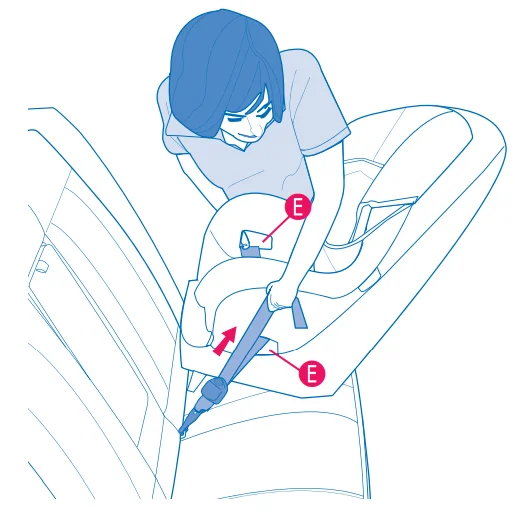
WARNING
DO NOT use this child restraint if it moves more than 25 mm (1 inch) forward or side-to-side at the vehicle belt path. Serious injury or death may result from poor installation. If you cannot tightly secure the child restraint, try again or move it to another location.
The LATCH assembly must be as tight as possible. Using your full weight, push the child restraint firmly onto the vehicle seat while pulling up on the LATCH strap to tighten. Check your work. If you can move the child restraint more than 25 mm (1 inch) forward or side-to-side at the belt path E, the LATCH assembly is not tight enough. You will need to try again or find another location for your child’s restraint. To remove the LATCH system, go to page 42.
Limited Warranty
For a period of 90 days from the original purchase of this product, Evenflo warrants to the original end user (“Purchaser”) this product (including any accessories) against defects in material or workmanship. Evenflo’s sole obligation under this express limited warranty shall be, at Evenflo’s option, to repair or replace any product that is determined to be defective by Evenflo and determined to be covered by this warranty. Repair or replacement, as provided under this warranty, is the exclusive remedy of the Purchaser.
Proof of purchase in the form of a receipted invoice or bill of sale evidencing that the product is within the warranty period must be presented to obtain warranty service. This express limited warranty is extended by Evenflo ONLY to the original Purchaser of the product and is not assignable or transferable to subsequent purchasers or end users of the product. For warranty service, contact Evenflo’s ParentLink Consumer Resource Center.
EXCEPT TO THE EXTENT PROHIBITED BY APPLICABLE LAW, ANY IMPLIED WARRANTY OF MERCHANTABILITY OR FITNESS FOR A PARTICULAR PURPOSE ON THIS PRODUCT IS HEREBY DISCLAIMED. EVENFLO SHALL NOT BE LIABLE FOR ANY INCIDENTAL, CONSEQUENTIAL, SPECIAL, OR
PUNITIVE DAMAGES OF ANY KIND FOR BREACH OF THE EXPRESS LIMITED WARRANTY ON THIS PRODUCT, OR ANY WARRANTY IMPLIED BY OPERATION OF LAW. OTHER THAN THE EXPRESS LIMITED WARRANTY SET FORTH ABOVE, THERE ARE NO OTHER WARRANTIES THAT ACCOMPANY THIS PRODUCT, AND ANY ORAL, WRITTEN, OR ANY OTHER EXPRESS REPRESENTATION OF ANY KIND IS HEREBY DISCLAIMED.
- www.evenflo.com
- USA: 1-800-233-5921 8 AM – 5 PM E.T.
- Canada: 1-937-773-3971
- México: 01-800-706-12-00
For More Manuals By Evenflo, Visit ManualsLibraryy.
Evenflo SureRide Titan 65 Child Car Seat-FAQs
How do I install the Evenflo SureRide Titan 65 car seat?
Place the car seat in your vehicle’s back seat, ensuring it’s tightly secured using either the LATCH system or seat belt—not both. Follow the vehicle and car seat manuals closely, making sure the seat doesn’t move more than an inch side-to-side when installed.
When can I remove the newborn insert from the Evenflo car seat?
Remove the infant insert once your baby exceeds the manufacturer’s limit—usually around 11 lbs (5 kg) or when your baby’s head reaches the top of the insert. Always check your manual to confirm the weight and height requirements for your model.
How do I turn the Evenflo car seat into a booster seat?
The Evenflo SureRide Titan 65 can convert from a rear-facing to a forward-facing seat but is not a belt-positioning booster. When your child outgrows the forward-facing limits (65 lbs or 49 inches), transition to a dedicated booster seat.
How long can my child use the Evenflo SureRide Titan 65?
This seat can be used rear-facing for infants 5–40 lbs (2.3–18 kg) and forward-facing for children 22–65 lbs (10–29.4 kg) or up to 49 inches (124 cm) tall.
When can I turn the Evenflo car seat forward-facing?
Evenflo recommends keeping children rear-facing until at least age 2 or until they reach 40 lbs. After that, the seat can be positioned forward-facing using the harness system.
What is the 2-hour car seat rule?
Newborns should not remain in a car seat for longer than 2 hours at a time. This rule helps prevent restricted airflow and promotes healthy posture. Take breaks on long drives to let your baby stretch and move.
How can I tell if my car seat is installed correctly?
After installation, the seat should not move more than 1 inch in any direction at the belt path. Ensure the harness is snug, the chest clip is at armpit level, and the recline angle indicator is within the correct zone for your child’s age and weight.
Should I use the seat belt or LATCH system to install the seat?
Use either the seat belt or the LATCH system, but never both together. Both methods are equally safe when installed properly. Choose the one that gives the most stable fit in your vehicle.
Should I place the car seat behind the driver or passenger seat?
The center rear seat is typically the safest spot if your vehicle allows a secure installation there. If not, use the rear passenger side for easier access and visibility.