
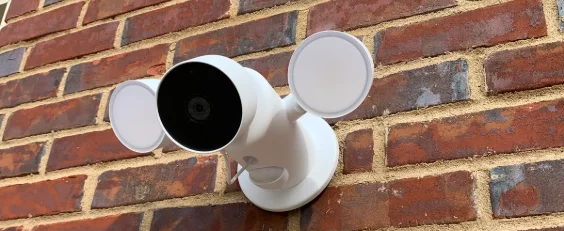

Google Nest Cam Floodlight-Battery
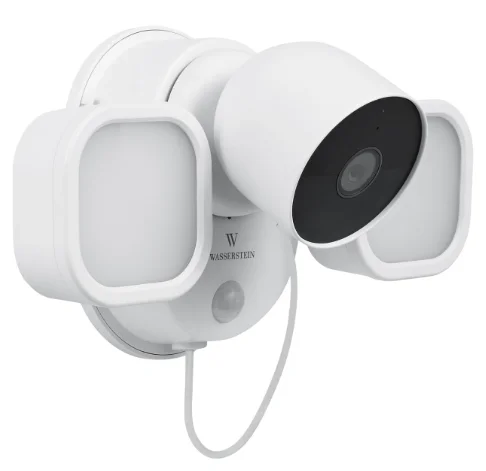
Product Highlights
- 3-in-1 Floodlight, Charger, and Mount.
- The Wasserstein Floodlight gets triggered in the presence of motion at night.
- Its PIR Motion Detection range is between 13 to 33 ft.
- The Wasserstein Floodlight lights up for 30 seconds after detecting motion at night.
- For optimum results, we recommend mounting the floodlight on walls at a high vantage point. The motion sensor works best when movements are detected parallel to the floodlight, not towards it.
Installation
Pre-installation

- Make sure that you have all the included materials.
- You will be working with electrical wires during the installation process. For safety reasons, shut off the power to your floodlight at the circuit breaker.
In the Box
- 1 x floodlight
- 2 x screws
- 2 x small screws
- 1 x crossbar
- 1 x screw cap
- 3 x wire nuts
- 1 x EVA gasket
- 1 x user manual

floodlight
screws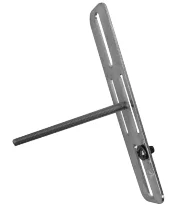
crossbar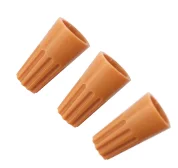
wire nuts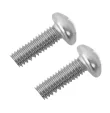
small screws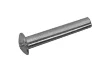
screw cap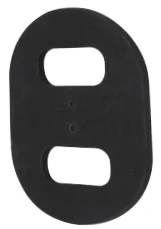
EVA gasket
If you have an existing Floodlight
- Remove your existing floodlight from the junction box it is attached to, and disconnect the wires.

- Remove the crossbar attached to your junction box.

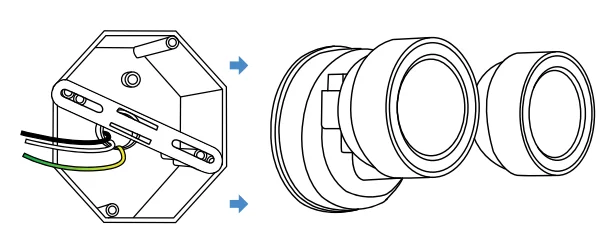
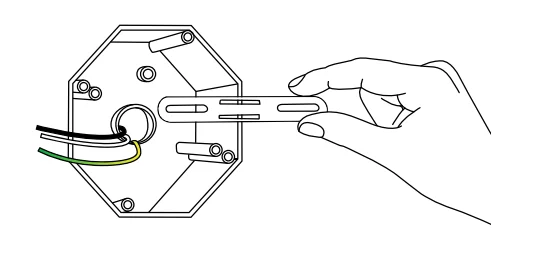
Installing the Floodlight in the Junction Box
- Attach the crossbar included in the package to the junction box with the screws.

- Remove the protective tape from the EVA gasket. Press the adhesive side firmly against the rear of the floodlight.

- Ensure that the center screw hole and wire slot of the foam gasket are aligned with the screw hole and wire slot.

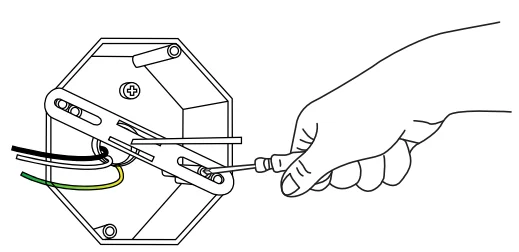

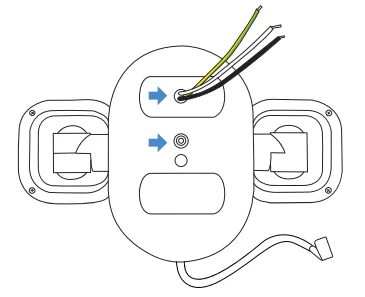
Wiring the Floodlight and Junction Box through the EVA Gasket
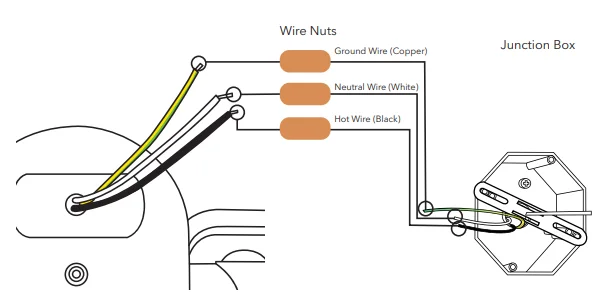
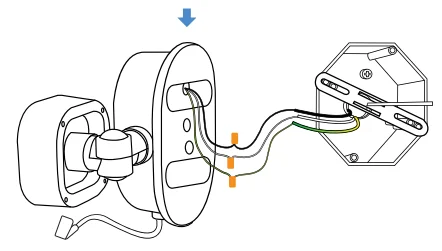
The white wire on your floodlight is neutral. The black wire on your floodlight is hot.
- Connect the green and yellow wires from the floodlight to the existing ground wire inside the junction box. Use the included wire nut to connect the wires properly.
- Using a wire nut, connect the white neutral wire from the floodlight to the neutral wire of the junction box.
- Using a wire nut, connect the black hot wire from the floodlight to the hot wire of the junction box.

- Make sure that the wire connections are secured. Carefully place the
wires into the junction box. Important: Before mounting the floodlight, completely apply the EVA gasket around
the perimeter of the cover plate where the back of the cover plate meets the mounting surface. This prevents water from seeping into the junction box
- Mount the floodlight onto the crossbar and secure it with the screw cap provided.

- Switch on the electricity, checking that the wiring has been done correctly and that the floodlight illuminates.
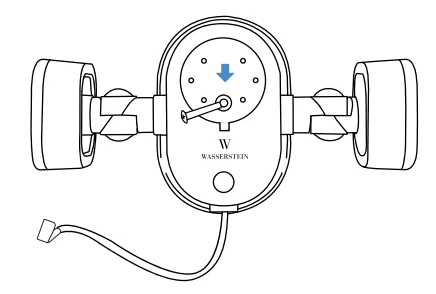
Mounting Your Camera
- To charge your camera via the floodlight, please install the camera wall plate onto the floodlight.
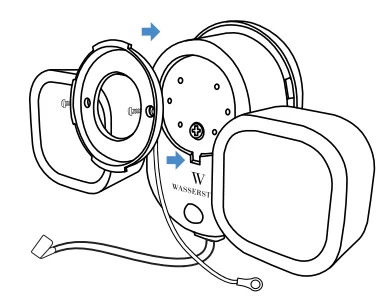
- Install the Nest Cam wall plate on the floodlight using the two short screws included. Screw in tightly

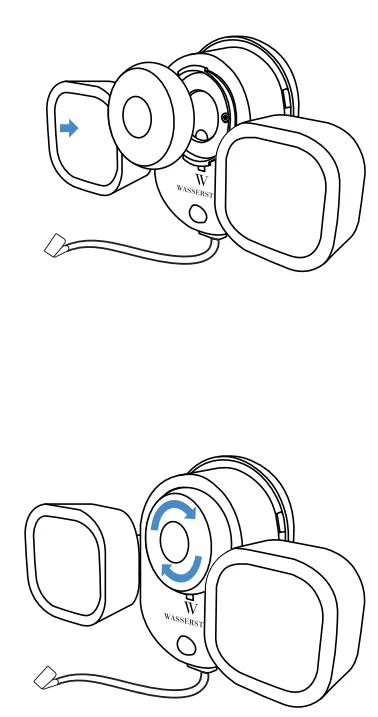
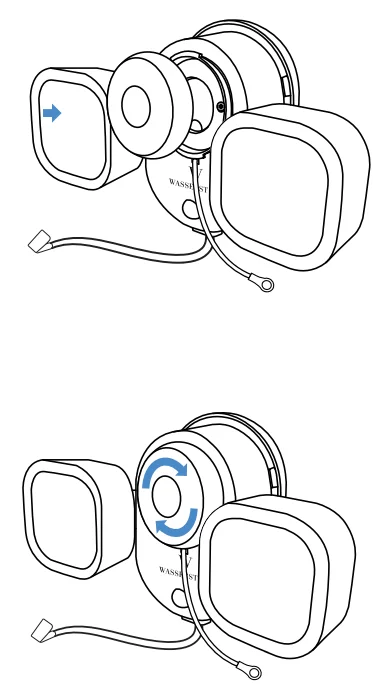
- Attach the magnetic plate to the wall plate and turn it clockwise to lock it in place

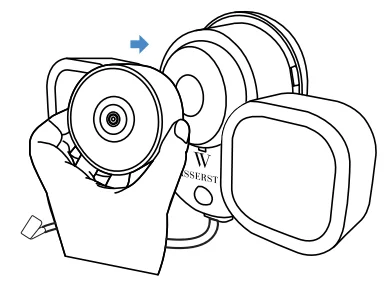
- Attach the camera to the mount, and connect the charging connector to the camera to charge it.

- Adjust your Nest Cam to your preferred viewing angle. You may use the video streaming feature in the Nest app to fine-tune your camera’s position.
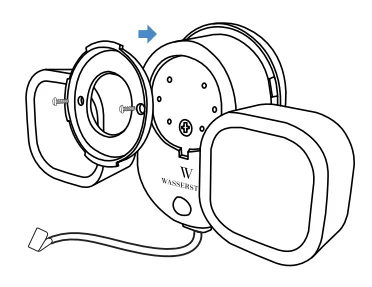
Mounting Your Camera along with the Anti-Theft Mount
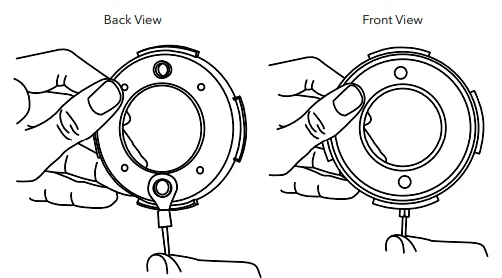
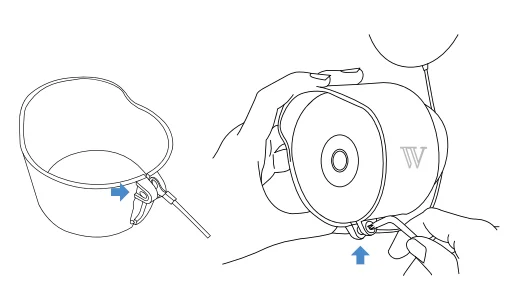
- Place the security chain underneath the wall plate of the camera behind the screw hole.

- Screw in the wall plate tightly using the two short screws provided.

- “Attach the magnetic plate onto the wall plate, and turn it clockwise to lock it in place.”

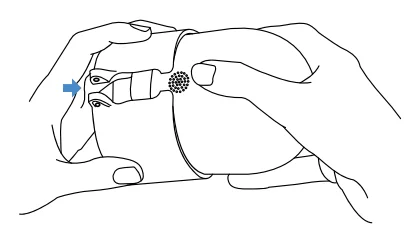
- Slide the anti-theft mount on the camera, making sure to align the speaker/cable opening at the bottom.

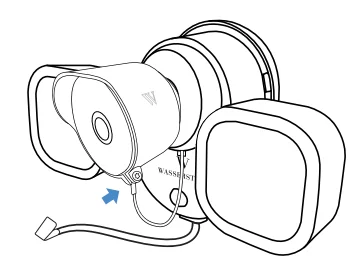
- Make sure that the end of the security chain with the small hole goes in between the screw holes of the mount. Use the hexagon screwdriver to tighten the mount and lock the security chain.

- Attach the camera to the floodlight with the magnetic mount and connect the magnetic connector to it.
Safety Information
- Disassembling the floodlight is not recommended as it may cause damage to internal components. The floodlight may not function properly after disassembly.
- Turn the main circuit OFF before installation.
- Do NOT remove the protective LED lens.
- Do NOT look directly at LEDs that are turned on for any length of time.
- Do NOT leave bare wires exposed outside the wall canopy enclosure.
FOR MORE MANUALS BY GOOGLE NEST, VISIT MANUALSLIBRARYY
Google Nest Cam Floodlight-Battery-FAQs
Is the Aqara Water Leak Sensor waterproof?
Yes. The Aqara T1 Water Leak Sensor is rated IP67 waterproof and dustproof, meaning it can withstand short-term water immersion and works reliably in damp or humid environments.
How do I set up the Aqara T1 Water Leak Sensor?
Open the Aqara Home app, tap “Add Device,” and select Water Leak Sensor. Then press and hold the sensor’s button until the blue light flashes. Follow the in-app steps to complete pairing with your Aqara Hub.
How does a water leak sensor work?
The sensor detects the presence of water by monitoring contact between its metal probes. When water touches these probes, it sends a signal to the hub, triggering an alarm and a mobile notification.
How sensitive is the Aqara T1 Water Leak Sensor?
It is highly sensitive—when the water level reaches just 0.5 mm, the sensor immediately alerts the hub and your smartphone.
Where should I place water leak sensors at home?
Place sensors in areas prone to leaks such as under sinks, behind washing machines, near water heaters, toilets, or in basements and garages where flooding could occur.
What type of battery does the Aqara Water Leak Sensor use?
It uses one CR2032 lithium button cell (3V) battery. Typical battery life is about two years, depending on usage and environment.
How do I replace the battery?
Open the sensor’s back cover, remove the old battery, and insert a new CR2032 cell with the correct polarity. Reconnect it to your hub if necessary.
How long does leak detection take?
Detection is almost instant when water contacts the probes. For system-wide plumbing leak detection, it generally takes less than an hour, depending on setup and conditions.
Does the Aqara T1 require a hub?
Yes. It needs an Aqara Hub (Zigbee 3.0 compatible) for full functionality, including real-time alerts and smart home automation.
Can the Aqara Water Leak Sensor connect to Wi-Fi or Home Assistant?
It connects via Zigbee to the Aqara Hub, which can integrate with Home Assistant, Alexa, Google Assistant, and Apple HomeKit through the hub.