
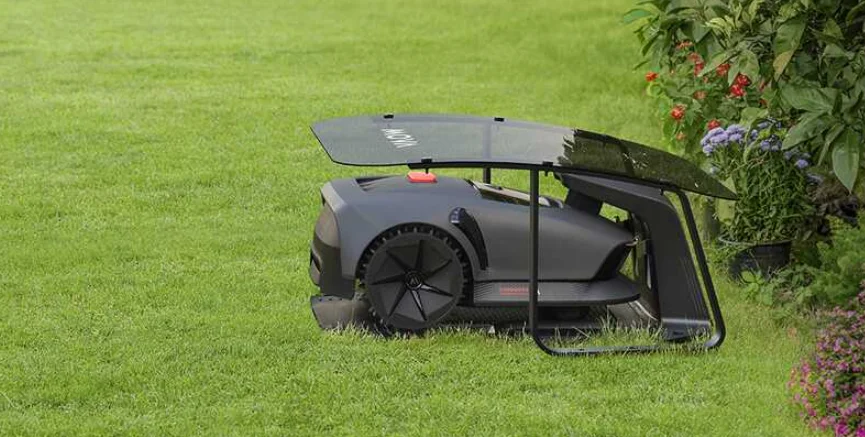

MOVA 600 Robotic Lawn Mower
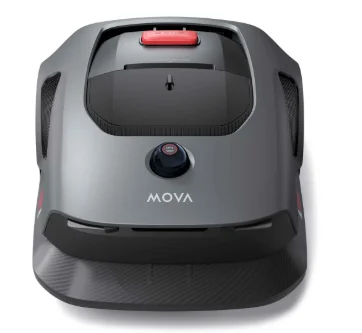
Product Introduction
What’s in the Box
- LiDAR protective cover
- The robot
- Charging tower (with a 10 m extension cable)
- Baseplate
- Power supply
- Cleaning brush
- Screws × 8, hex key
- Spare blades and bolts
- User manual
- Lint-free cloth
- Quick start guide

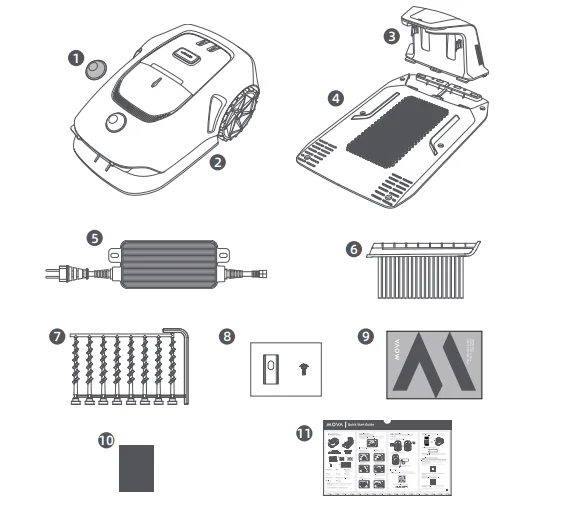
- The MOVA 600 and MOVA 600 Kit are equipped with a 1.5 A power supply. MOVA 1000 is equipped with a 3 A power supply.
- MOVA 600 and MOVA 1000 each come with 9 spare blades and bolts. MOVA 600 Kit includes 81 spare blades and bolts.
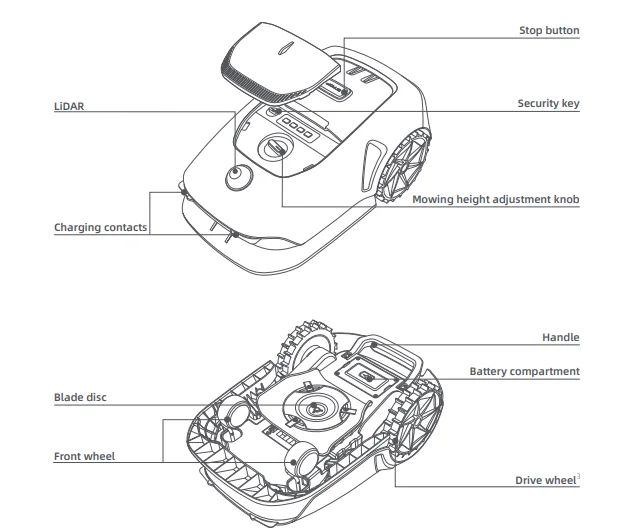
Product Overview
- The type of drive wheels varies by robot model. The MOVA 600 and MOVA 600 Kit are equipped with standard drive wheels. MOVA 1000 is equipped with off-road wheels.

Sensor

Installation
Select a Suitable Location
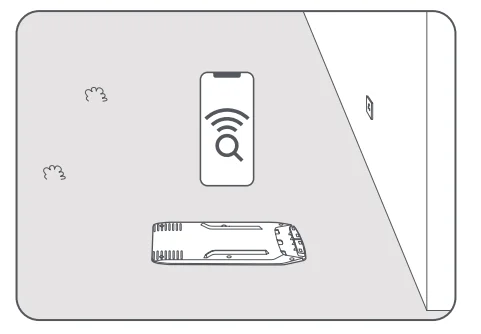
- Place the charging station on a level surface near the edge of the lawn and a power outlet. Please place it in an area with a strong Wi-Fi signal. Note: Use your mobile device to help check the Wi-Fi signal strength of the location. A good Wi-Fi signal strength ensures a stable connection between the robot and the app. Important: Make sure the ground is soft enough to allow screw installation. Important: If the charging station is on a slope, ensure the incline is not too steep to prevent the robot from slipping back and failing to dock.

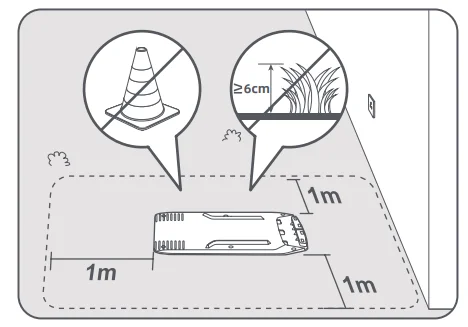
- Keep at least 1 m of free space with no obstacles to the left, right, and in front of the charging station. Ensure that the grass around the location is no more than 6 cm in height. If the grass is taller, please mow it with a push mower first. Tall grass may make it difficult for the robot to return to the charging station.

Install the Charging Station
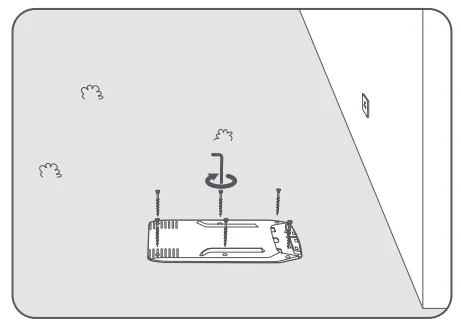
- Secure the baseplate to the ground with the supplied screws and hex key.

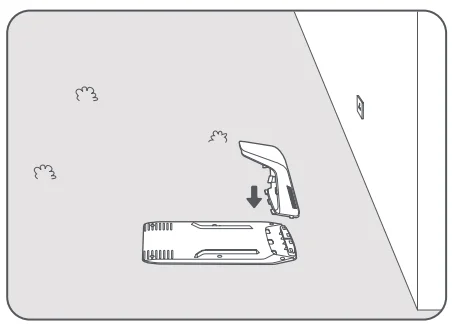
- Insert the charging tower into the baseplate until you hear a click.

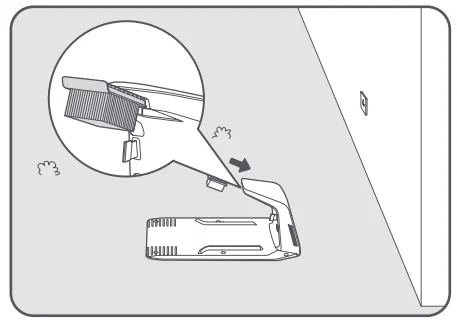
- Insert the cleaning brush into the charging tower by aligning the tab with the slot.

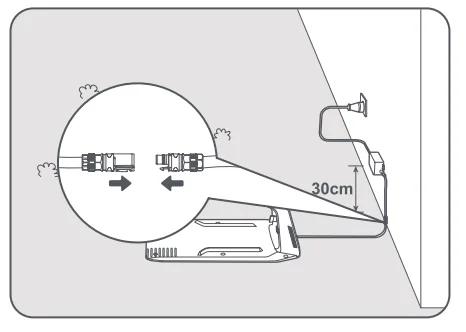
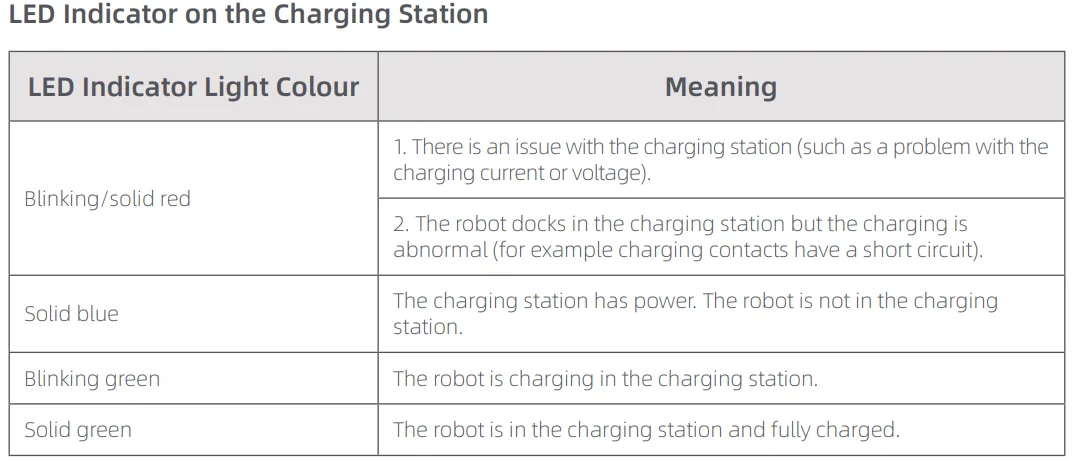
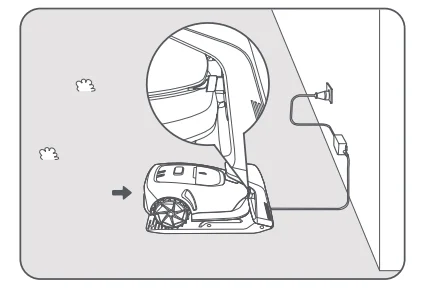
- Connect the power supply to the extension cable and then connect it to a power outlet. Please keep the power supply at least 30 cm above the ground. Note: The LED indicator on the charging station will be constant blue when there is power.

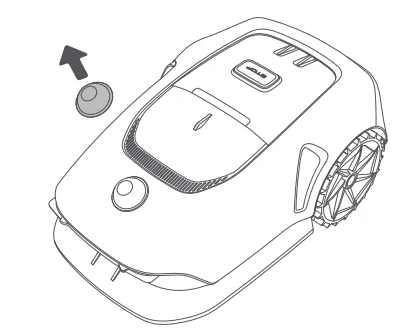
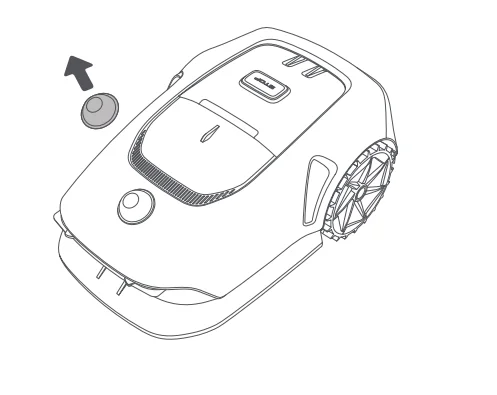
- Remove the LiDAR protective cover.

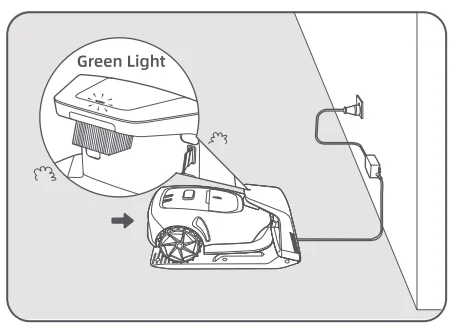
- Put the robot in the charging station to charge. Make sure the charging contacts on the robot and the charging station are connected correctly. Note: The indicator light will blink green when the robot is charging successfully in the charging station. Note: If you’re looking to add a garage for extra protection, please use the matching MOVA Garage available at local stores or online. Using a non-MOVA garage may cause issues during recharging.


Preparation for First Use
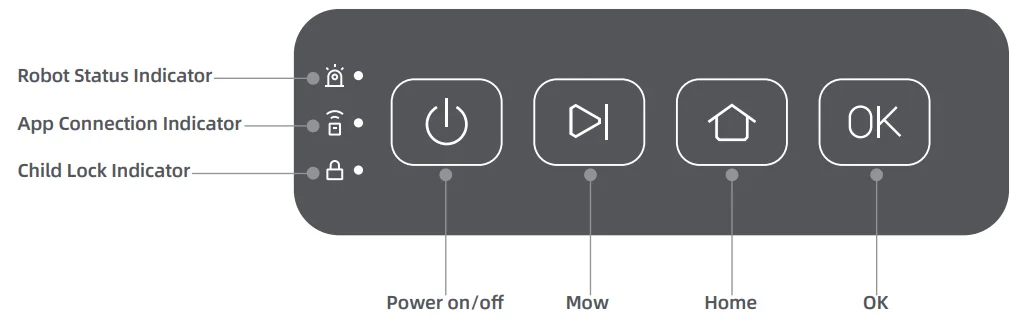
Get Familiar with the Control Panel
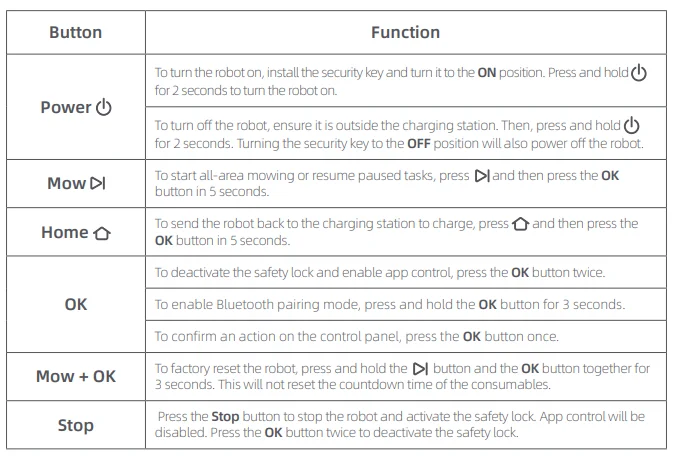
Controls
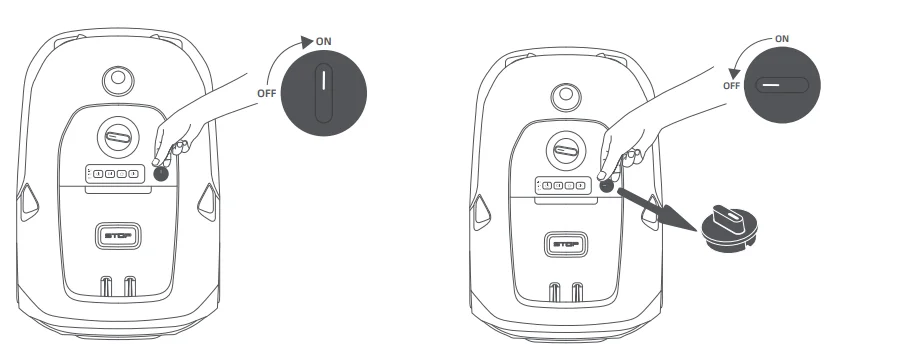
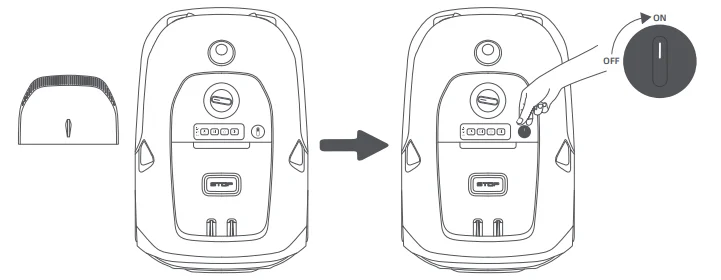
Security Key
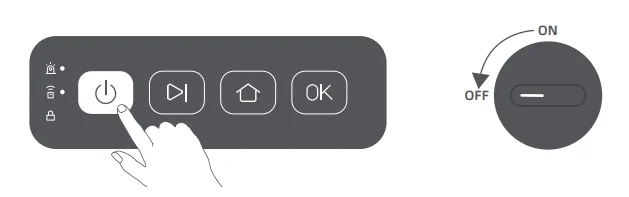
- Rotate the security key to the ON position before turning on the robot.
- Rotate the security key to the OFF position; the robot will shut down automatically.
- You can take out the security key when it’s in the OFF position. The robot cannot be turned on without the key.

Note: If you lose the security key, please reach out to the after-sales team for a replacement.
Indicator Lights on the Control Panel
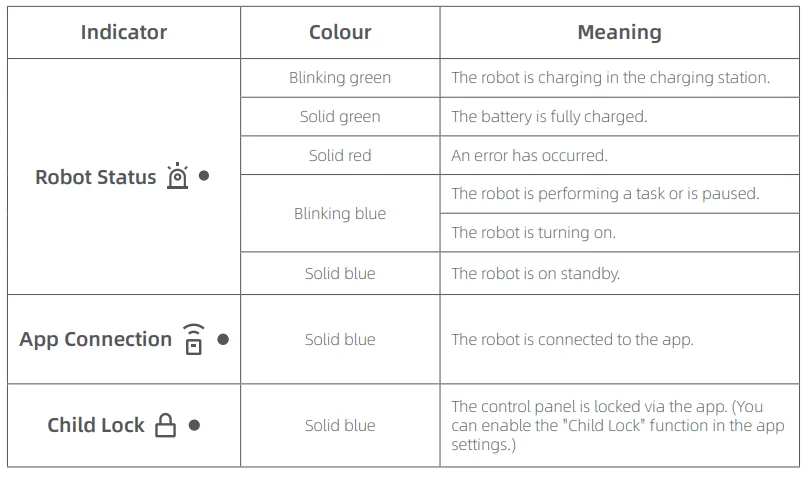
Initial Settings
Before turning the robot on for the first time, there are some basic settings to do before the robot is ready to start working.
- Open the top cover, then rotate the security key to the ON position.

- Press and hold the
 button on the control panel for 2 seconds to turn on the robot.Note: When the robot is on, the status indicator
  on the control panel will show a solid blue light.
 button on the control panel for 2 seconds to turn on the robot.Note: When the robot is on, the status indicator
  on the control panel will show a solid blue light.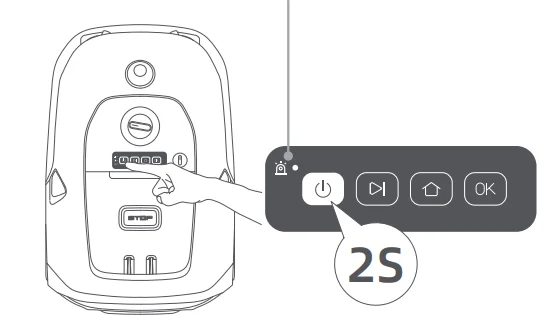
Note: The robot will automatically turn on when it docks in the charging station.
Important: To turn on the robot, ensure the security key is installed and set to the ON position. If not, the robot cannot be powered on.
Connect the Robot to the Internet
Please scan the QR code to download the MOVAhome app on your mobile device. After the installation, please create an account and log in.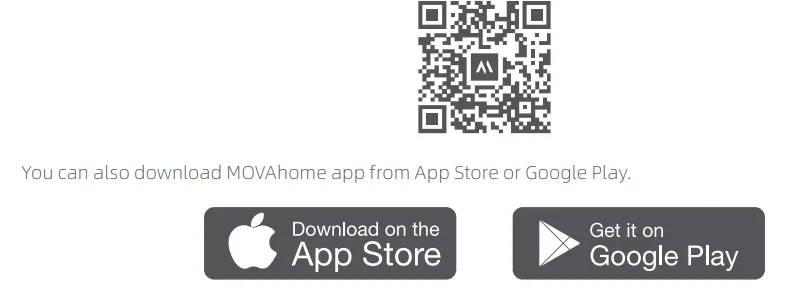
Before network setup:
- Make sure the robot and your mobile device are on the same Wi-Fi network.
- Make sure that your mobile device is within 10 m of the robot.
- Enable Bluetooth function on your mobile device.
- Open the MOVAhome app.
- You can connect via one of the following methods:
- Scan the QR Code: Go to
 Device and tap
  Scan QR code to connect. Scan the QR code located inside the robot’s top cover to connect.
- Add Manually: Go to
 Device and tap Add. Then select your robot model to connect.
 - Automatic Discovery: The robot will search for nearby devices. Tap your robot from the list of discovered devices to connect.
- Please follow the in-app instructions to complete the Wi-Fi network connection. Important: Please use a single-band network of 2.4 GHz frequency or a dual-band network of 2.4/5 GHz frequency. Important: Make sure your Wi-Fi network doesn’t have a firewall and isn’t encrypted. Otherwise, the network setup may fail. Note: You can also purchase the Link Module to remotely control the robot without a Wi-Fi connection.
- Press and hold the OK button on the control panel for 3 seconds. The robot will enter Bluetooth pairing mode.
- Please follow the in-app instructions to complete the pairing. Note: The App Connection indicator
 on the control panel will show a solid blue light when the robot is successfully connected to the app.
 Device and tap
  Scan QR code to connect. Scan the QR code located inside the robot’s top cover to connect.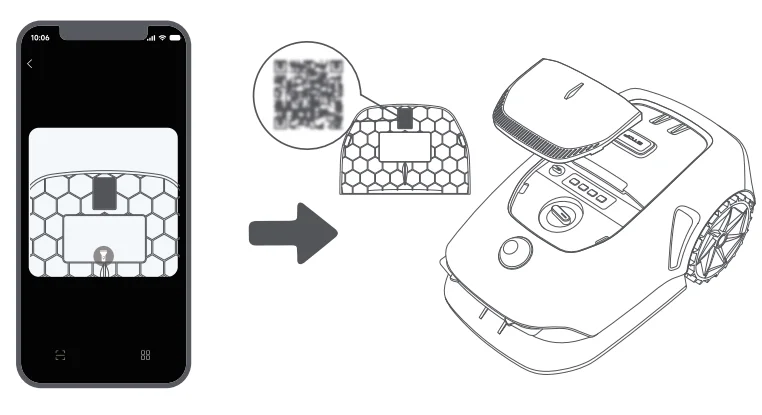
 on the control panel will show a solid blue light when the robot is successfully connected to the app.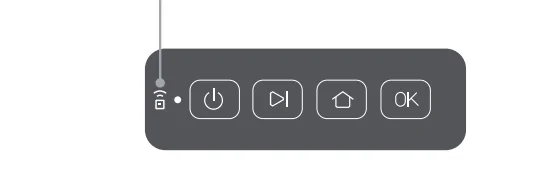
How to unbind the robot?
The robot is automatically bound to the MOVAhome account once pairing is successful. Each device can only be bound to one account. It cannot be bound to another account at the same time. To pair the robot with a new account, you need to unbind it first. To unbind it:
- Open the MOVAhome app. Go to Device
 .
. - Locate your robot’s name under its picture. If you have multiple robots bound to your MOVAhome account, swipe left or right to access the page of the robot you want to edit.
- Tap
 next to the robot’s name.
 - Select Delete.
 next to the robot’s name.
How to log out of your MOVAhome account or delete it?
- Open the MOVAhome app. Go to
 Me > Account.
 - Select Log Out or Delete Account.
 Me > Account.
How to share your robot?
- Open the MOVAhome app and go to Device.
- Locate your robot’s name under its picture. If you have multiple robots bound to your MOVAhome account, swipe left or right to access the page of the robot you want to share.
- Tap next to the robot’s name.
- Select Device Sharing.
Map Your Garden
Before mapping, please check the following:
- The battery level of the robot is more than 50%.
- The protective cover of the LiDAR is removed.

- The robot correctly docks in the charging station.

Create the Virtual Boundary
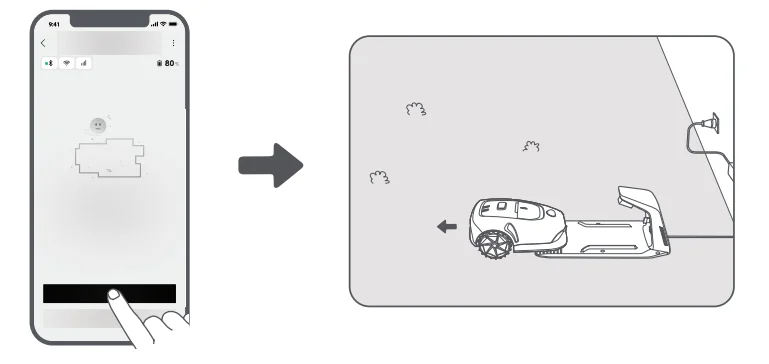
- Tap Start Creating via the app, and the robot will check its status and calibrate. It will automatically leave the charging station to do the calibration. Please be careful.

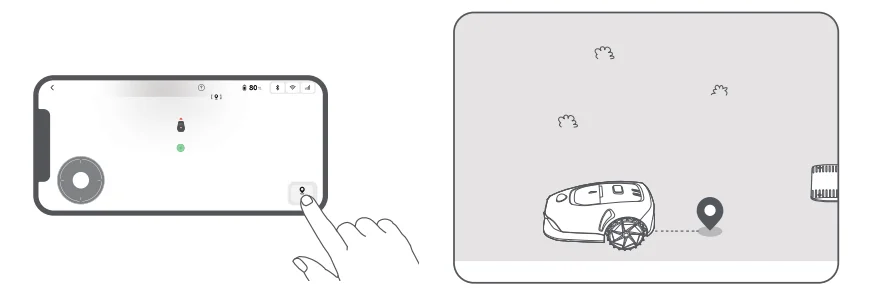
- Remote control the robot to the edge of your lawn and tap Set Starting Point. The starting point of the boundary is set.

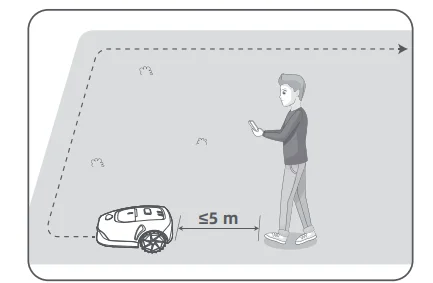
- Remote control the robot to move along the perimeter of your lawn to map out the work area. During the mapping process, please bear in mind: Important: Do not manually move the robot when creating the boundary, as this may cause the mapping to fail. Important: When the mapping begins, do not remotely dock the robot in the charging station until the mapping process is complete. Otherwise, the LiDAR may be blocked, which can cause the mapping to fail.
- Walk within 5 m behind the robot during the remote control.

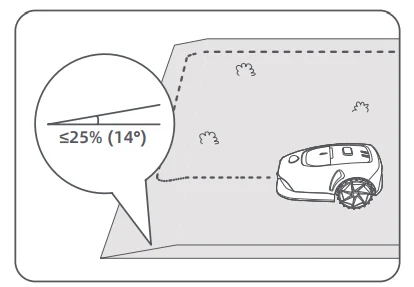
- The robot can navigate slopes with an incline up to 45% (24°). However, for better mowing results, it is recommended to keep the slopes of work areas below 25% (14°).

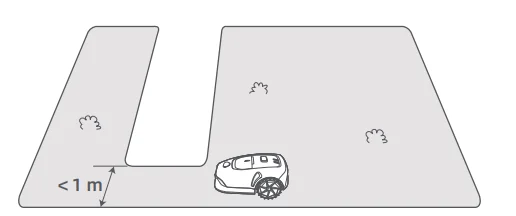
- For areas narrower than 1 m, please set them as paths to allow the robot to pass through (see section 5.4: Set Path).

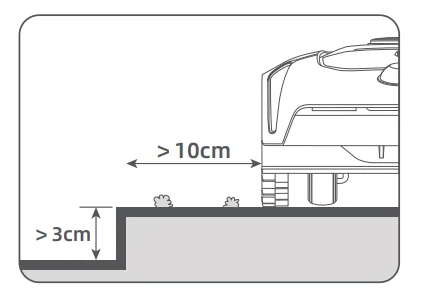
- If your lawn is more than 3 cm higher than the adjacent ground, keep the robot at least 10 cm away from the edge. If your lawn is level with the adjacent ground, the robot can cross the perimeter for optimal mowing results along the edges.

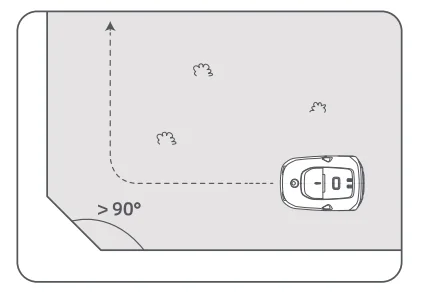
- Make sure the turning angles are greater than 90°. Angles smaller than 90° can make it difficult for the robot to achieve a clean cut.

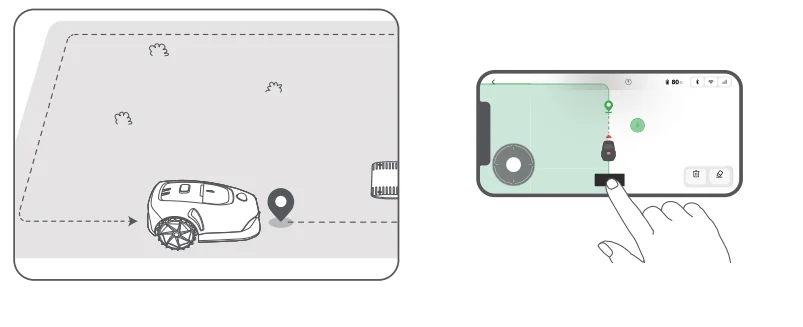
- When the robot returns to within 1 m of the starting point, you can tap Close Boundary, and the boundary will automatically be completed.

Set No-Go Zone
Though the robot can automatically avoid obstacles, it is still necessary to set areas with a risk of falling, such as swimming pools and sandpits, as no-go zones. For objects you want to protect (such as a flowerbed, a trampoline, a vegetable patch, or an exposed tree root), please set them as no-go zones. You can tap No-go zone in the app to continue creating no-go zones. Alternatively, you can go to > Map Editing to create or delete the no-go zones after the map is finished.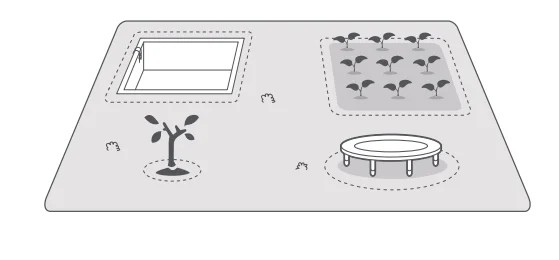
Create More Zones and Expand Existing Zones
To Create More Zones
If your lawn is separated by roads or you have several isolated lawns, you can tap Work zone in the app to continue creating work areas via remote control. You can also add, delete, or modify the zones in  > Map Editing when the map is finished.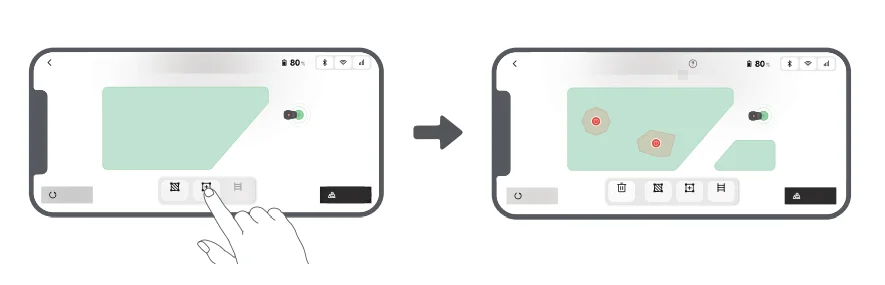
To Expand Existing Zones
To expand an existing zone, tap Work zone in the app to remotely create the area you want to include. If the two areas overlap, they will be automatically merged. Alternatively, you can go to > Map Editing > Work zone after mapping is complete to expand an existing zone.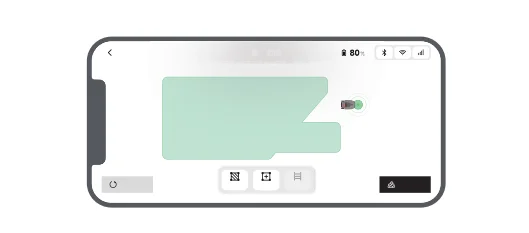
To Separate and Combine Zones
To divide a zone into smaller ones or to merge zones that were divided using the app into a larger one, go to > Map Editing > Zone settings and tap Separate or Combine in the app.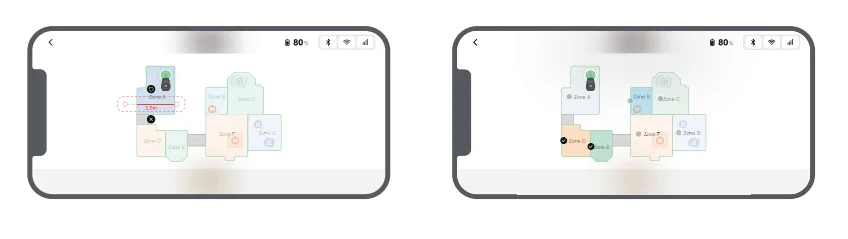
Set Path
For isolated zones, please create a path to connect them. Isolated zones without a path will be inaccessible to the robot. Note: By default, the robot only moves along the path without mowing the grass. Important: If your lawn is divided by passages higher than 3 cm, place an object with a slope equal in height to the passage (such as a ramp).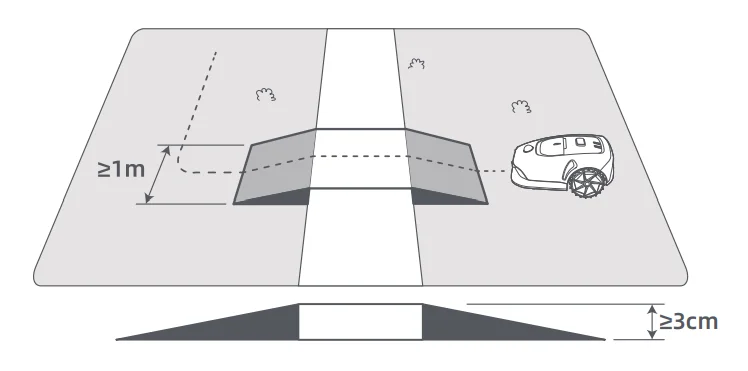
To Connect Two Isolated Work Zones
For isolated areas, please create paths to connect them; otherwise, they will be inaccessible to the robot. Tap Path and remotely control the robot to create a path. Important: Make sure the beginning and end of the path are in the work area.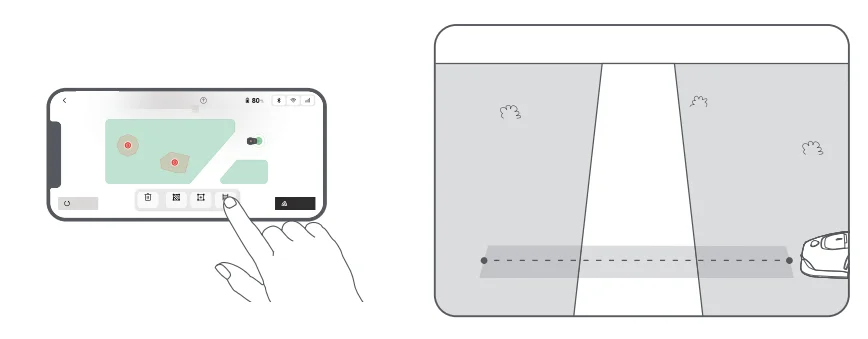
To Connect the Work Area and the Charging Station
If your charging station is not in the work area, a path should be created to connect it to the work area. Tap Path and remotely control the robot to create a path that allows it to return to the charging station.
Important: Ensure that one end is inside the work area, and the other end is right in front of the charging station. It’s advisable to align the path with the charging station. Important: When creating paths to connect the work area and the charging station, do not remotely dock the robot in the charging station. Otherwise, the LiDAR may be blocked, which can cause the mapping to fail.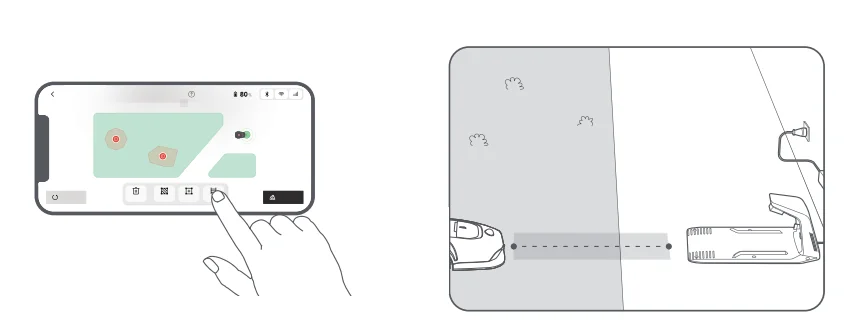
Finish Map
Tap Finish Map when work areas, paths, and no-go zones are completed.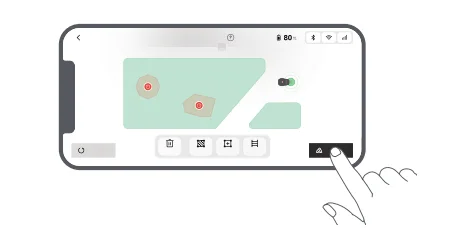
Add a Second Map
If there is no path between your front and back gardens, you can create a second map. After completing the first map, tap Add Map to continue creating the second one. Alternatively, you can navigate to > Map Editing and tap Add Map after mapping is complete. Once you have finished the second map, you can switch between maps through > Map Editing.
Note: After switching the map, the schedules and mowing settings of the current map will be applied.
Note: You can purchase an additional charging station to install in the second map for greater convenience. With a separate charging station installed in the second map, you only need to move the robot manually between the two maps.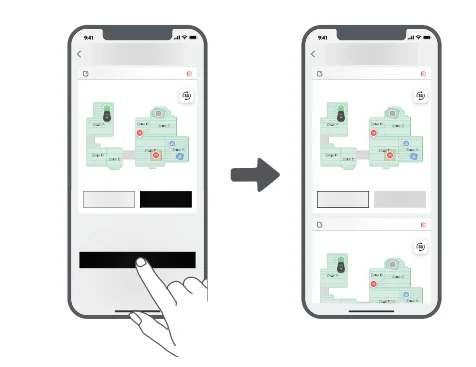
Maintenance
For better performance and lifespan of the robot, please clean it regularly and replace worn parts according to the frequency below: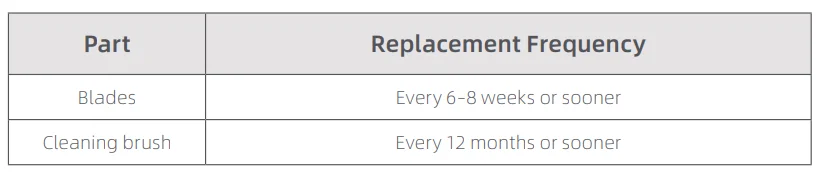
Note: You can check the remaining time for blades and the cleaning brush by navigating to Settings > Consumables & Maintenance in the app. After replacing any consumables as prompted, go to the details page for the consumable and tap I’ve Replaced It to reset the timer.
Note: If you have designated areas in your garden for routine robot cleaning and servicing, you can set Maintenance Points on the map by navigating to Settings > Head to Maintenance Point > Edit Point. Once the maintenance points are set, you can simply tap Go and direct the robot to the designated locations for easy servicing.
Cleaning
Regularly clean your robot to prevent grass clippings and dirt from accumulating and clogging the blade disc and drive wheels, which can affect its mowing, docking, and movement performance. We recommend using a cleaning kit, available at local stores or online.
Warning: Before cleaning, please turn off the robot and rotate the security key to the OFF position. Unplug the charging station.
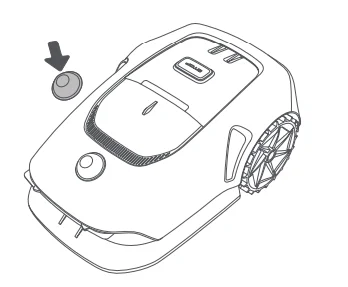
Caution: Please make sure the LiDAR protective cover is on the LiDAR before turning the robot upside down to avoid damage to the LiDAR.
The Housing, Chassis, and Blade Disc:
- Turn the robot off and rotate the security key to the OFF position.

- Cover the LiDAR with its protective cover.

- Turn the robot upside down.

- Clean the housing, blade disc, and chassis with a hose. Warning: Do not touch the blades when cleaning the chassis. Please wear gloves when cleaning. Caution: Please do not use a high-pressure washer for cleaning. Do not use detergents for cleaning.

- Use a lint-free cloth to carefully clean the LiDAR sensor.

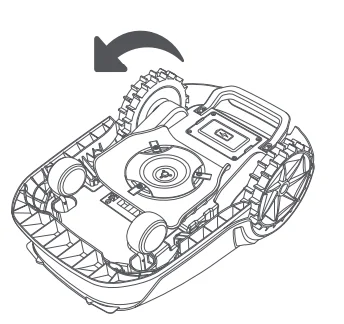
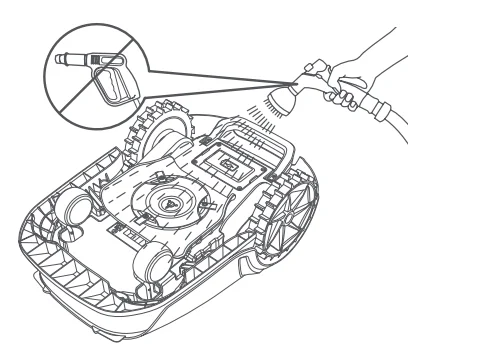
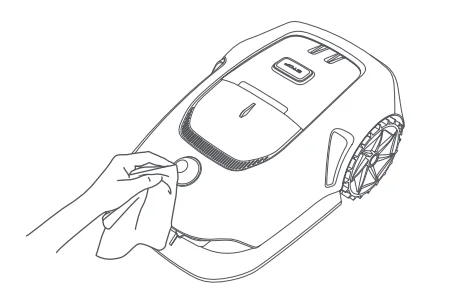
Charging Contacts:
Use a clean cloth to clean the charging contacts on the robot and the charging station. Keep the charging contacts dry after cleaning.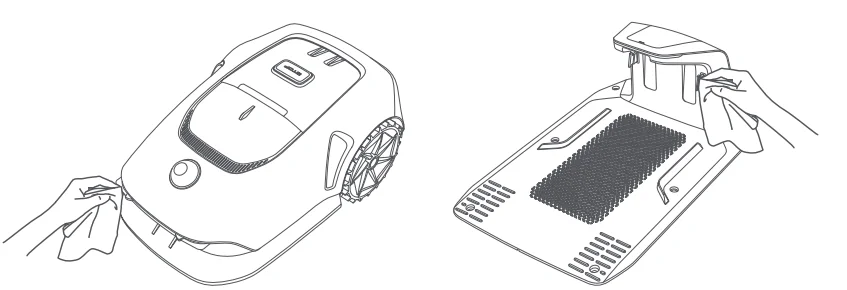
Drive wheels:
Use a brush to remove mud from the wheels to ensure good grip.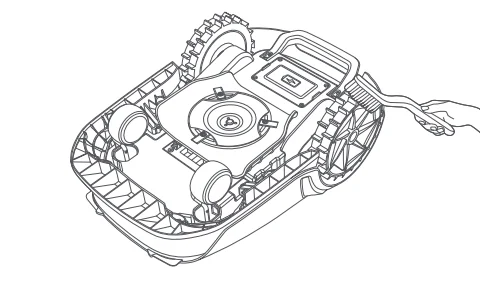
Battery
For long-term storage, charge the robot every 6 months to protect the battery. Battery damage caused by over-discharge is not covered by the limited warranty. Do not charge the battery at an ambient temperature above 45° C or below 6° C. The long-term storage temperature for the battery should be between -10 and 35° C. To minimize the damage, the recommended storage temperature for the battery is between 0 and 25° C.
Note: The lifespan of the robot’s battery depends on the frequency of usage and hours of operation. If the battery is damaged or cannot be charged, do not dispose of the obsolete or faulty battery arbitrarily. Please obey local recycling regulations.
Low-Power Charging Mode:
With low-power charging mode on, functions not related to charging will be disabled (the network will be turned off).
- To enable low-power charging mode, press and hold the
 button and the button simultaneously, and press the OK button 5 times quickly at the same time. You will hear a voice prompt: Low-power charging mode is on.
 - To disable low-power charging mode, restart the robot.
 button and the
 Winter Storage
The Robot
- Charge the battery fully. Turn the robot off and rotate the security key to the OFF position.
- Clean the robot thoroughly before putting it into storage in winter.
- Put on the LiDAR protective cover.
- Store the robot inside in a dry place, at a temperature above 0° C.
Charging Station
Unplug the charging station and store it in a dry and cool place, away from direct sunlight. Note: After winter storage, please reinstall the charging station and place the robot in it to charge. If you reinstall the charging station in a different location, the robot will automatically update the station’s location as soon as it charges and leaves the station. If you encounter positioning errors because of major changes in your garden, it’s recommended to remap the area.
Transport
For long-distance transport, ensure that the robot is turned off and the security key is rotated to the OFF position. It is recommended to use the original packaging. Please put on the LiDAR protective cover. Warning: Please turn the robot off and rotate the security key to the OFF position before transporting it. Warning: Lift the robot by the rear handle, keeping the blade disc away from your body.
Troubleshooting
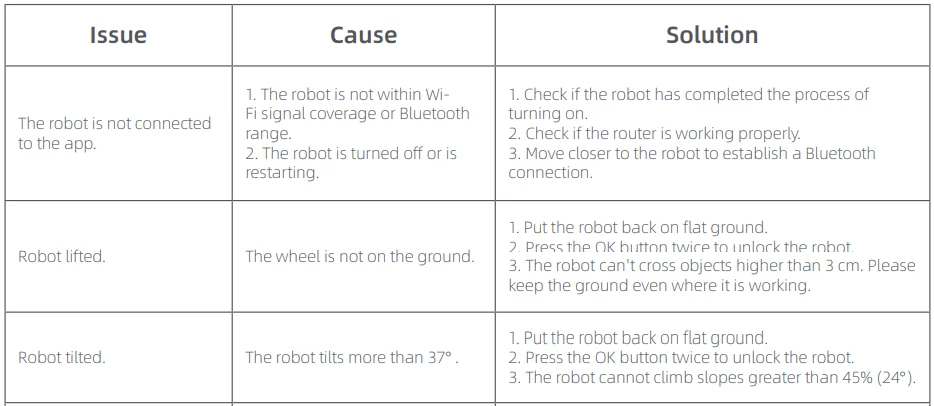
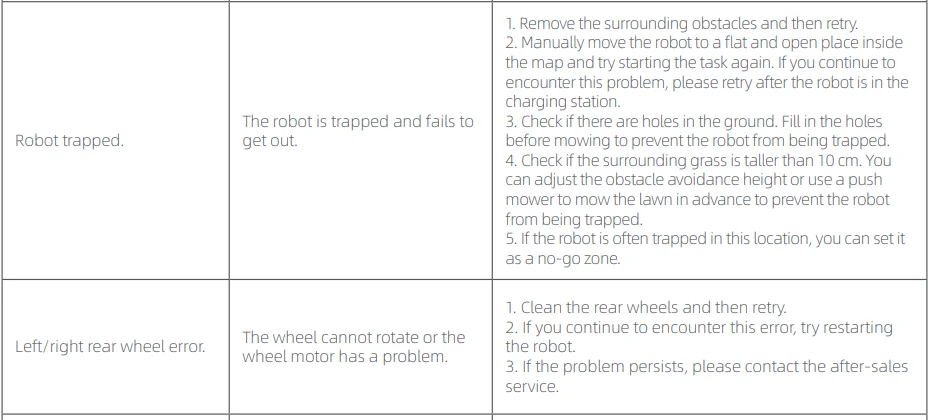
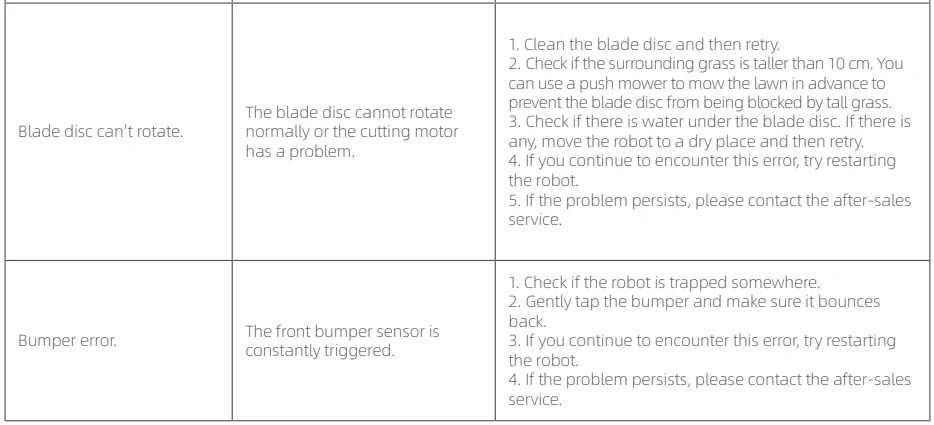
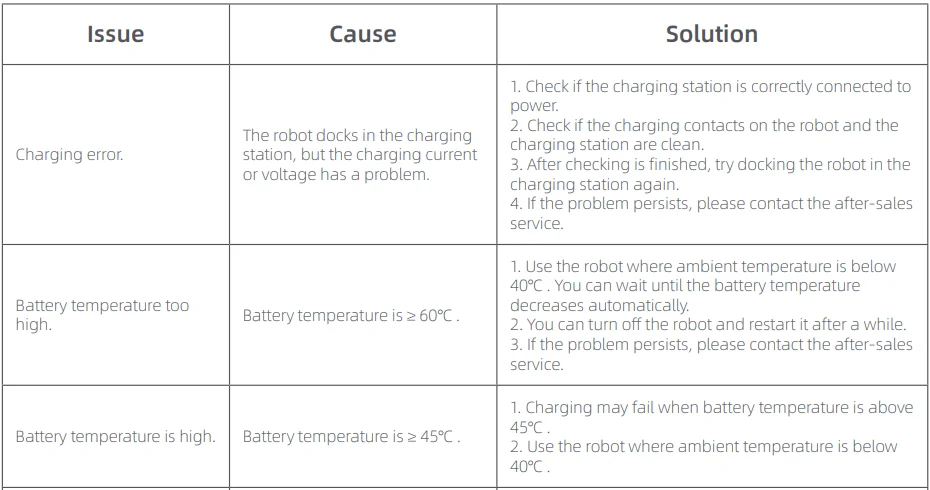
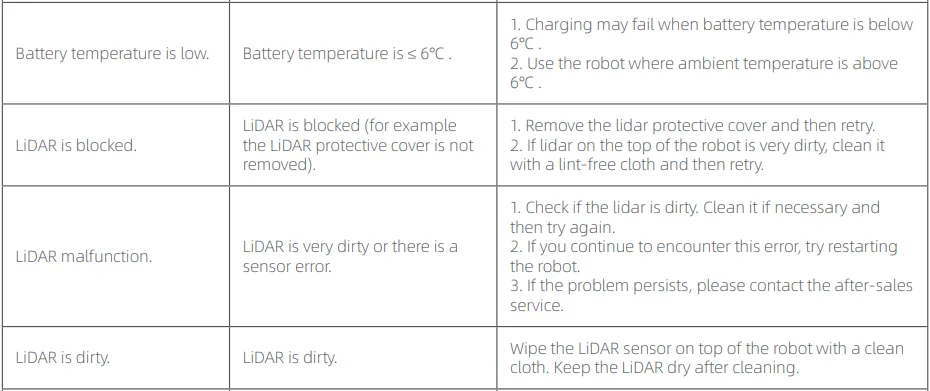
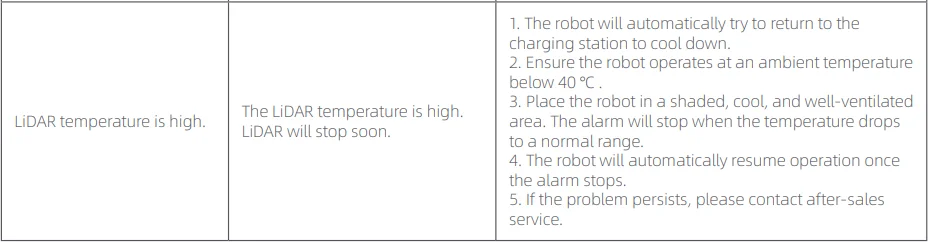
For the latest information, please visit our website at https://mova-tech.com.
For More Manuals By MOVA, Visit ManualsLibraryy
MOVA 600 Robotic Lawn Mower -FAQS
How does a robotic lawn mower work?
A robotic mower uses sensors and navigation systems to move around your lawn automatically. It follows preset cutting schedules, adjusts cutting height, and trims the grass without supervision.
Can a robot mower cut wet grass?
Yes, it can move and cut on slightly wet grass, but mowing during heavy rain or on muddy soil is not recommended because the wheels may slip and damage the lawn.
How is a robotic mower different from a traditional mower?
A robot mower works automatically and can be controlled through an app, while a traditional mower needs manual pushing or driving.
Which brand makes the best robotic lawn mowers?
Top-performing brands include Segway Navimow, Eufy, Sunseeker, and Husqvarna Automower—each offering models for different lawn sizes and budgets.
Why is robotics called robotics?
The term “robot” comes from Karel Čapek’s 1920 play, while “robotics” was introduced later to describe the field of studying and developing robots.
How often should a robot mower cut the lawn?
Most lawns benefit from mowing 3–6 times per week, with daily mowing recommended during peak summer growth.
Can I clean my electric mower with a hose?
No. Spraying water or using a hose can damage the motor and wiring. Use a brush or damp cloth instead.
Are robot mowers waterproof?
They are designed to resist moisture, but long-term exposure to rain can harm components. It’s best to store them in a dry place or a charging shelter.