
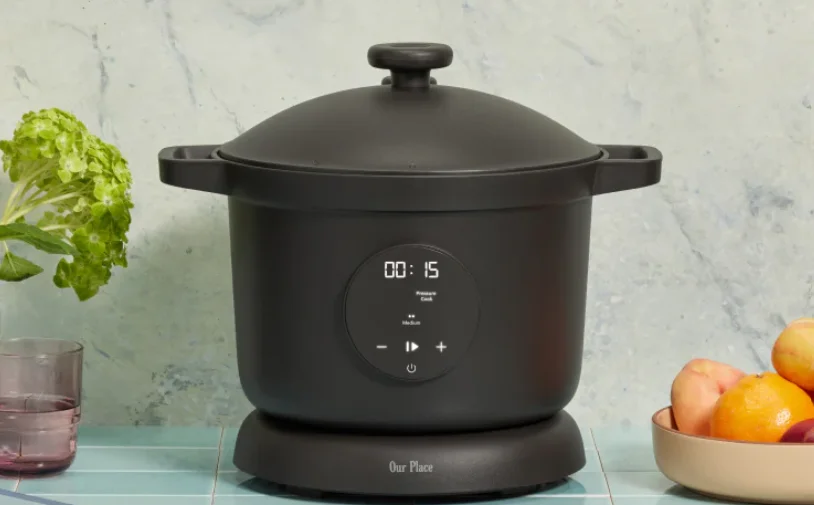

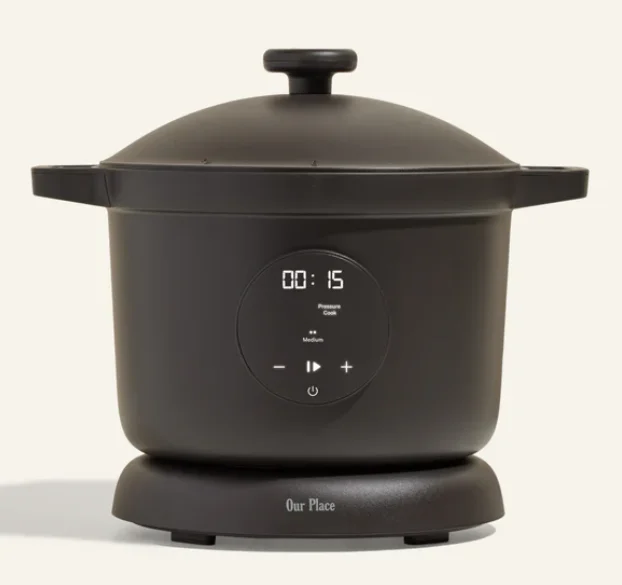
Dream Cooker
IMPORTANT SAFEGUARDS
Read all instructions carefully and thoroughly before first use. When using electrical appliances, basic safety precautions should always be followed, including the following:
- Do not touch hot surfaces. Use handles. Never move the appliance while it’s in use.
- Use on a flat, stable, heat-resistant surface away from heat sources or liquids.
- Close supervision is necessary when any appliance is used by or near children.
- This appliance cooks under pressure. Improper use may result in burn injuries. Make sure to always properly lock and seal the lid before pressure cooking. See INSTRUCTIONS FOR USE.
- To protect against electric shock, do not immerse the cooker base, cord, or plug in water or liquid.
- Do not let the cord hang over the edge of a table or counter, or touch hot surfaces.
- Do not operate the appliance with a damaged cord and/or plug, after the appliance malfunctions or after it has been damaged in any manner. If the appliance malfunctions or has been damaged in any way, email [email protected].
- The use of accessory attachments not recommended by the appliance manufacturer may cause hazard or injury.
- Unplug the appliance from the outlet when not in use, or before cleaning.
- Allow the appliance to cool completely before putting on or taking off any parts and before cleaning.
- To disconnect, press the START/STOP button to return to Standby mode, and then unplug the plug. When unplugging the appliance, always hold the plug to remove it from the outlet. Do not pull the cord. Always attach the plug to the appliance first, then plug the cord into the wall outlet.
- Do not use this appliance for pressure frying with oil.
- Do not lean over or place your hands or face over the appliance while it is in operation. Do not touch the lid cover when the appliance is in operation. This could result in injury.
- WARNING: Spilled food can cause serious burns. Keep the appliance and cord away from children. Never drape the cord over the edge of the counter, never use the outlet below the counter, and never use with an extension cord.
- Do not exceed the maximum fill line.
- Do not place any of the following materials in the pot: cardboard, plastic, paper, or anything similar that may catch fire or melt.
- Do not store any materials, other than the manufacturer’s recommended accessories and the inner cooking pot, in this appliance when not in use.
- Never use your appliance without adding liquid, as this will seriously damage the appliance.
- Be aware that certain foods, such as applesauce, cranberries, pearl barley, oatmeal or other cereals, split peas, noodles, macaroni, rhubarb, or spaghetti, can foam, froth, and sputter, and clog the pressure release device (steam vent). These foods should not be cooked in a pressure cooker.
- Be careful not to be scalded by the hot steam when opening the lid or when placing the food inside the inner cooking pot.
- Do not block any ventilation openings. Hot steam is released through openings.
- Do not touch the steam release valve or the area near the valve while cooking. Do not cover the area with a cloth.
- Do not use outdoors. Do not use the appliance for anything other than its intended use.
- This appliance is for HOUSEHOLD USE ONLY.
- The temperature of the lid cover and the outer surface may be higher when the appliance is working.
- The temperature of accessible surfaces may be high when the appliance is operating.
- This appliance is not intended for use by persons (including children) with reduced physical, sensory or mental capabilities or lack of experience and knowledge, unless they have been given supervision or instruction concerning use of the appliance by a person responsible for their safety.
- Children should be supervised to ensure that they do not play with the appliance.
General Instructions
- Read all instructions carefully and thoroughly.
- To eliminate choking hazards for young children, remove and safely discard any packing materials before using the appliance for the first time.
- Take inventory of all contents to ensure you have all parts needed to properly and safely operate your appliance.
- Unplug the appliance from the outlet when not in use and before cleaning. Allow to cool before cleaning or handling, and putting on or taking off parts.
Placement
- INTENDED FOR COUNTERTOP USE ONLY. Ensure the surface is stable, non-combustible, level, clean, and dry. DO NOT place the appliance near the edge of a countertop during operation.
- DO NOT place the appliance on or near hot surfaces, on or near a gas or electric burner, or in a heated oven.
- DO NOT use near water or flames.
- DO NOT use outdoors. Keep out of direct sunlight. DO NOT use in moving vehicles or boats.
- When using this appliance, provide adequate space (at least 5 inches above and at least 3 inches on all sides) for air circulation.
- To avoid possible steam damage, place the appliance away from walls and cabinets during use. DO NOT use under cabinets or in an enclosed space.
- When the appliance is in operation, hot steam is released through the steam release vent cover. Place the appliance so the steam release vent cover is not directed toward the power cord, electrical outlets, cabinets or other appliances.
- DO NOT block the steam release vent cover. Keep your hands and face a safe distance from the vent.
- Keep the appliance and its cord out of reach of children. DO NOT allow the appliance to be used by children or persons with reduced physical, sensory, or mental capabilities. Close supervision is necessary when the appliance is used by or near children and persons with reduced physical, sensory, or mental capabilities.
Care and Storage
- Let the appliance cool before handling, cleaning, or storing.
- DO NOT place anything other than the lid on top of the appliance. When assembled, when in use, and when stored. DO NOT store any materials other than the inner cooking pot in this appliance when not in use.
- DO NOT place any of the following materials in the appliance: cardboard, plastic, paper, wood, or anything similar that may catch fire or melt.
- Cleaning and user maintenance should not be done by children.
- DO NOT use harsh abrasives, caustic cleaners, or oven cleaners when cleaning this appliance. Refer to the Cleaning and Maintenance section on page 27.
PARTS AND ACCESSORIES
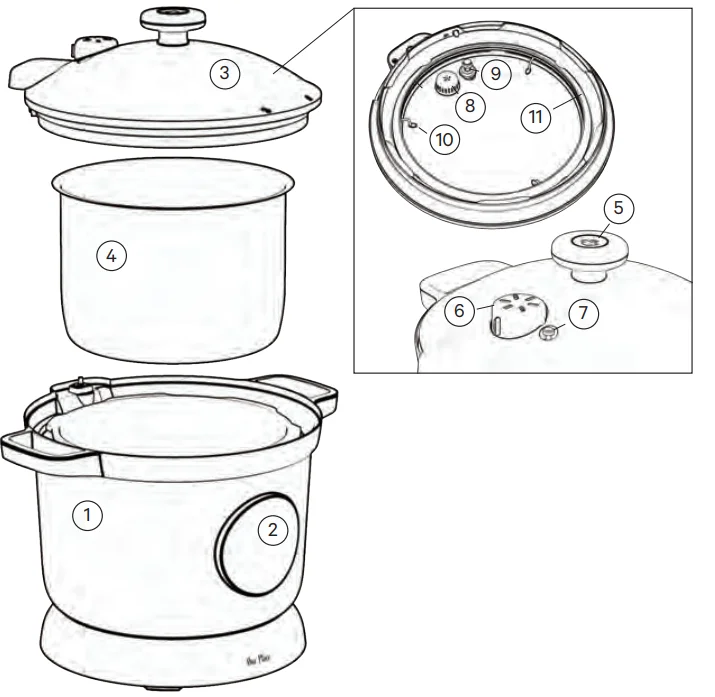
- Cooker Base
- Control Panel
- Lid
- Inner Cooking Pot
- Manual Steam Release Button (Top of Lid)
- Steam Release Vent Cover (Top of Lid)*
- Float Valve Pin (Top of Lid)*
- Anti-Clog Cap (Underside of Lid)*
- Float Valve Pin (Underside of Lid)*
- Sealing Ring Holder
- Silicone Sealing Ring (Underside of Lid)*
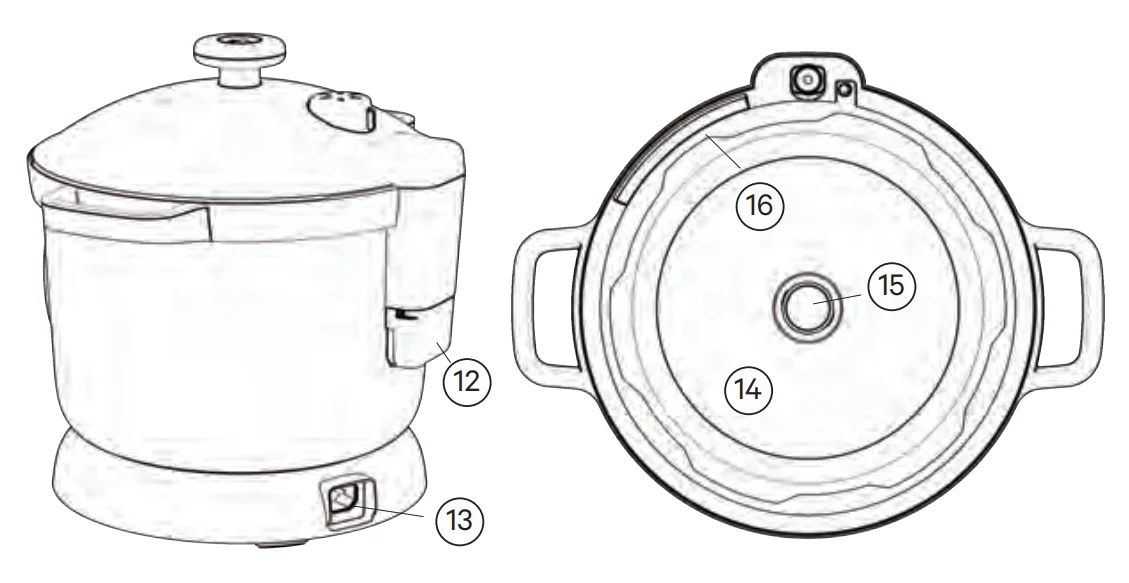
- Condensation Collector*
- Power Cord Connection**
- Heating Plate (Inside Cooker Base)
*These parts come pre-installed with the appliance.
**Detachable power cord not shown.
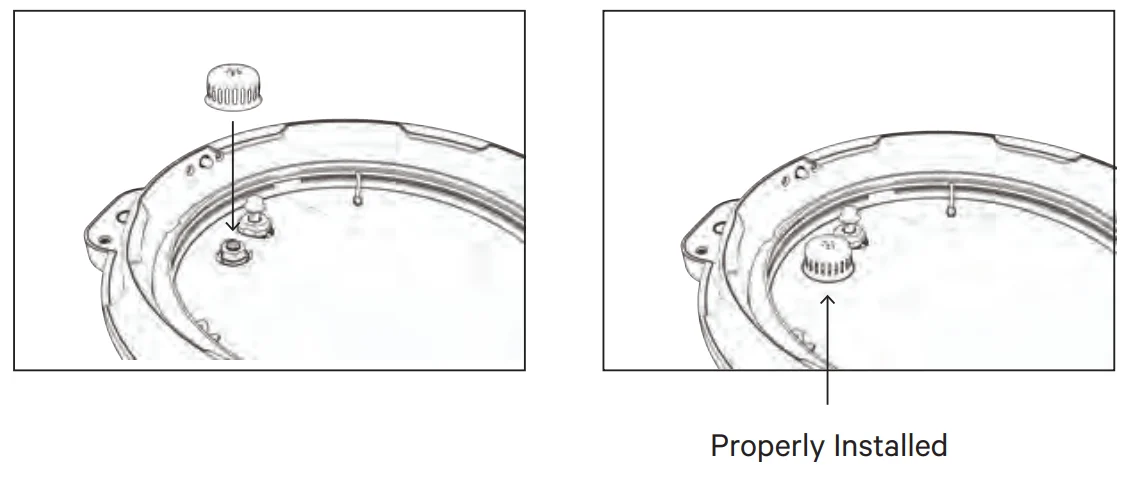
Anti-Clog Cap
The anti-clog cap prevents food and debris from entering the steam release pipe. This is a crucial component of the appliance’s safety mechanism and it’s imperative for regulating pressure while cooking. The anti-clog cap comes pre-installed with the appliance. Check the anti-clog cap regularly to make sure nothing is blocking it. Proper cleaning of the underside of the lid will help mitigate blockage. If you need to
remove the anti-clog cap to clean it, you MUST install it again before using the appliance. To install the anti-clog cap, put it on top of the prongs and press down until it snaps into place.
To Install: Position the anti-clog cap in place and push down.
Float Valve Pin
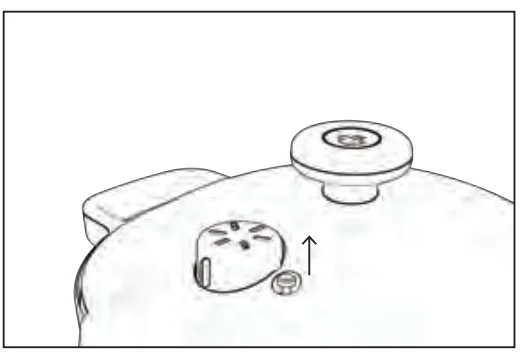
The float valve pin indicates whether the appliance is pressurized or not. The float valve pin comes pre-installed with the appliance. When it IS pressurized, the valve pin will be visibly sticking out above the lid.
When it is NOT pressurized, the valve will be flush to the lid or slightly lower. The float valve pin and anti-clog cap work together to make sure pressure and steam are sealed inside the appliance. Both parts MUST be installed before use. Never operate the appliance without the float valve pin and anti-clog cap installed, and never touch the float valve pin when the appliance is in use.
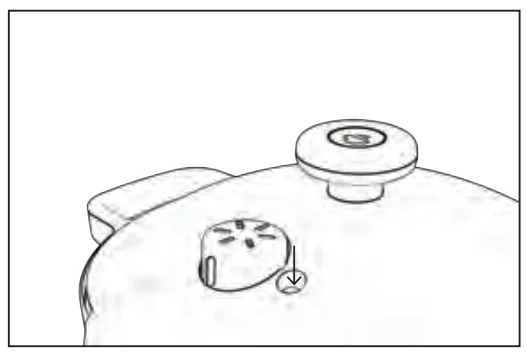
- Depressurized: Float Valve Pin will be down

- Pressurized: Float Valve Pin will be up and slightly flush with the lid
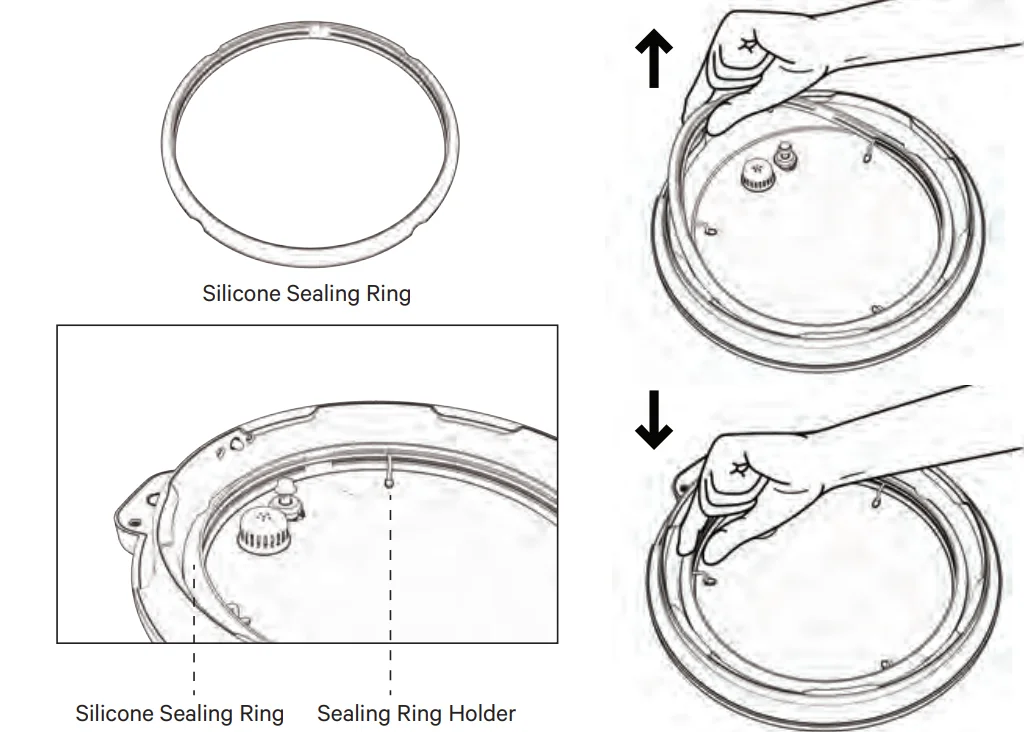
Silicone Sealing Ring
When the lid is closed, the silicone sealing ring (on the underside of the lid) creates an air-tight seal between the lid and the cooker base. The silicone sealing ring comes pre-installed with the appliance. The silicone sealing ring must be installed before using the appliance and should be cleaned after each use. NEVER install more than one silicone sealing ring at a time. The silicone sealing ring is reversible and can be inserted in either direction. Insert around the outer edge of the sealing ring holder on the underside of the lid. Ensure it is fully inserted and lies flat under the sealing ring holder. It’s normal for silicone sealing rings to stretch over time with use. To keep your appliance safe, replace the silicone sealing ring every 12 to 18 months. Replace sooner if you notice stretching, deformation, or damage. See page 31 for more information on replacement parts.
Condensation Collector
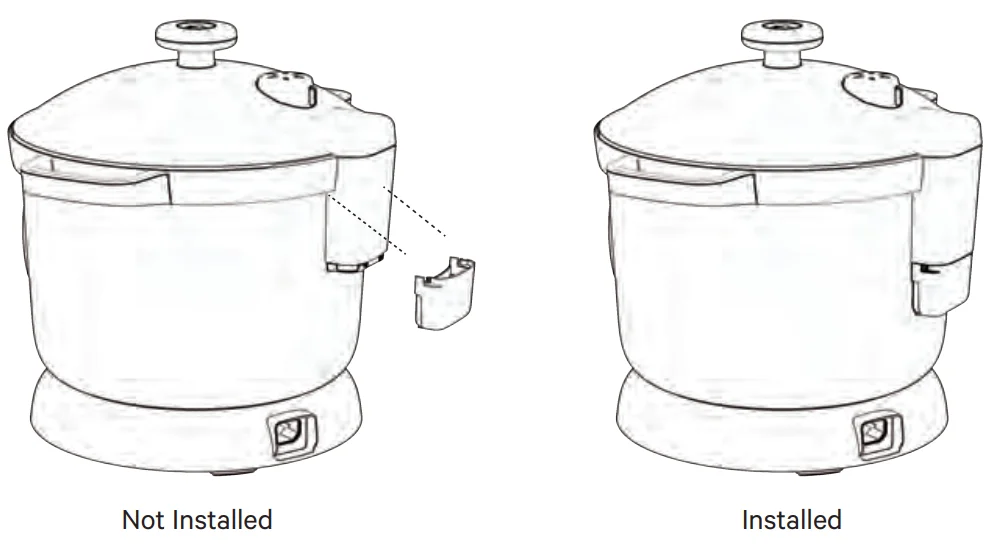
The condensation collector sits on the back of the appliance and collects any overflow of moisture. The condensation collector comes pre-installed with the appliance. The condensation collector should be installed before cooking, then emptied and rinsed out after each use of the appliance. Be sure to empty it when full. To remove, simply pull the condensation collector away (not down!) from the base of the appliance.
To install, line up the grooves on the condensation collector with the tabs on the base of the appliance, then slide it into place like a drawer.
CONTROL PANEL
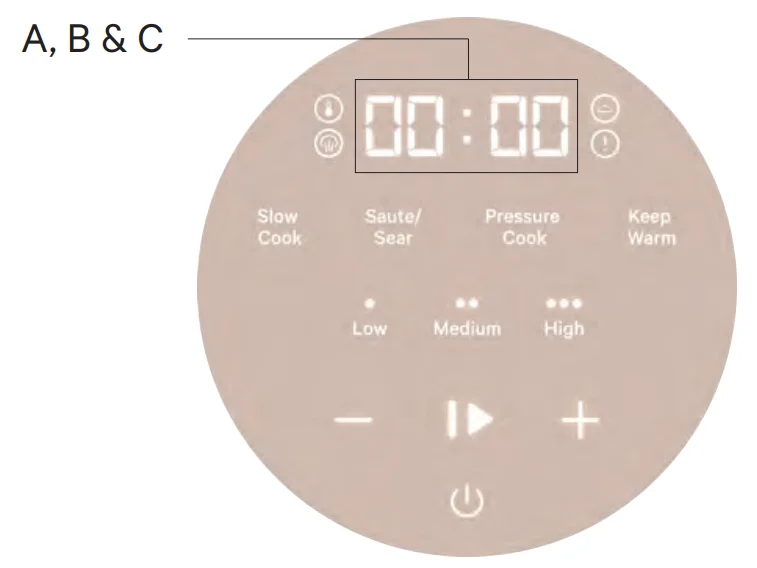
- A. Timer: The timer will count down from the set cook time. Once cooking is complete, it will switch to Keep Warm, depending on your chosen cooking mode, and will begin counting up to a maximum of 8 hours.
- B. Preheat: Preheat: “PrE” will appear on the control panel, and the Preheat Indicator icon
 will be on, indicating the appliance is preheating.
 - C. Hold: During pressure release, “HOLD” and the Steam Release icon
 will appear on the control panel. Wait until they have disappeared from the control panel and the float valve pin has dropped before removing the lid, indicating pressure has been released.
- D. The Preheat Indicator will be on during preheating when the Saute/Sear mode is selected, and during pressurizing when the Pressure Cook mode is selected.
- E. The Steam Release Indicator will be on during steam-releasing when the Pressure Cook mode is being used.
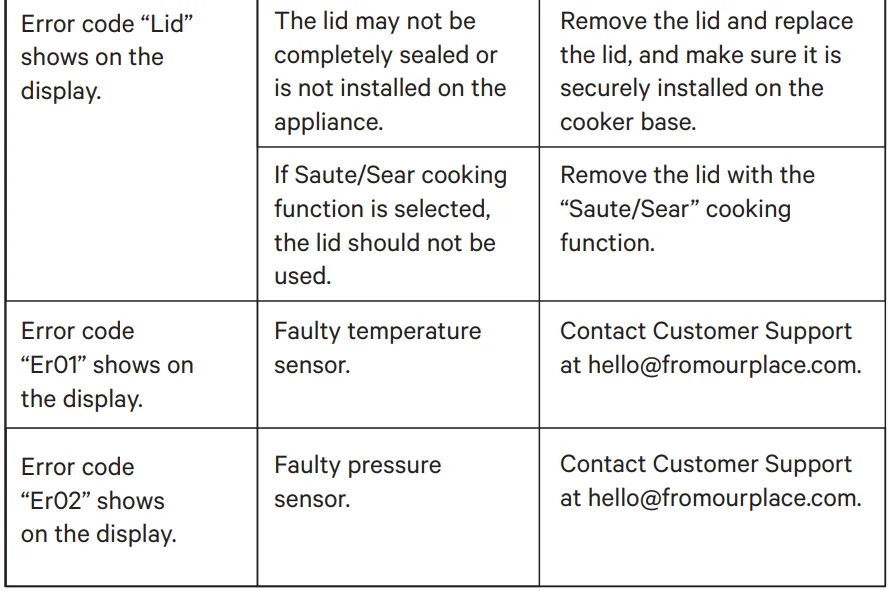
- F. The Lid Warning Indicator will be on if the lid is not closed properly or installed. Cooking will not begin until the lid is adjusted or installed correctly if using the Slow Cook or Pressure Cook modes. This icon will also appear if attempting to lock the lid while using the Saute/Sear cooking mode.
- G. The Inner Cooking Pot Warning Indicator will turn on if no inner cooking pot has been inserted. Cooking will not begin until the inner cooking pot is inserted. “POT” will also appear on the Timer until the inner cooking pot has been inserted. This icon will also be on if the lid is not installed correctly.

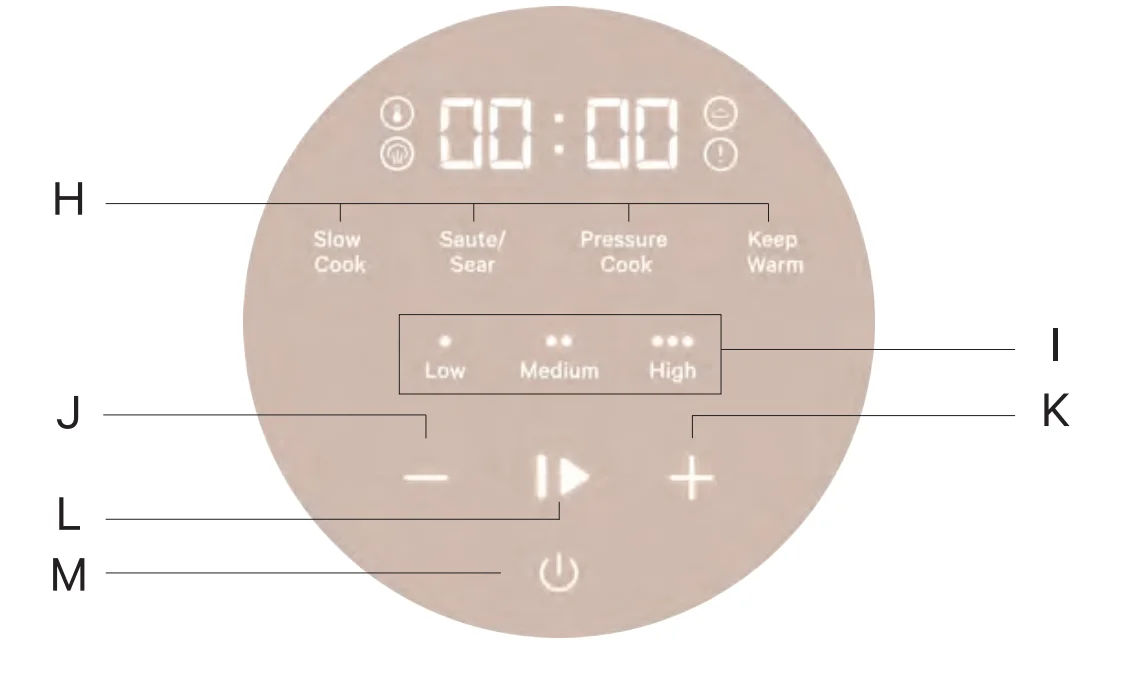
- H. Cooking Mode: Select from Slow Cook, Saute/Sear, Pressure Cook, or Keep Warm.
- I. Temperature / Pressure: Select from Low, Medium or High temperature and pressure.
- J.
 Decreases the time setting.
 - K.
 Increases the time setting
 - L.
 Start/Stop button: After selecting your cooking mode, temperature, and time, press to start cooking. Press again to stop cooking or before changing your settings.
 - M.
 On/Off button: Turns your appliance on and off.
 will be on, indicating the appliance is preheating.
 will appear on the control panel. Wait until they have disappeared from the control panel and the float valve pin has dropped before removing the lid, indicating pressure has been released.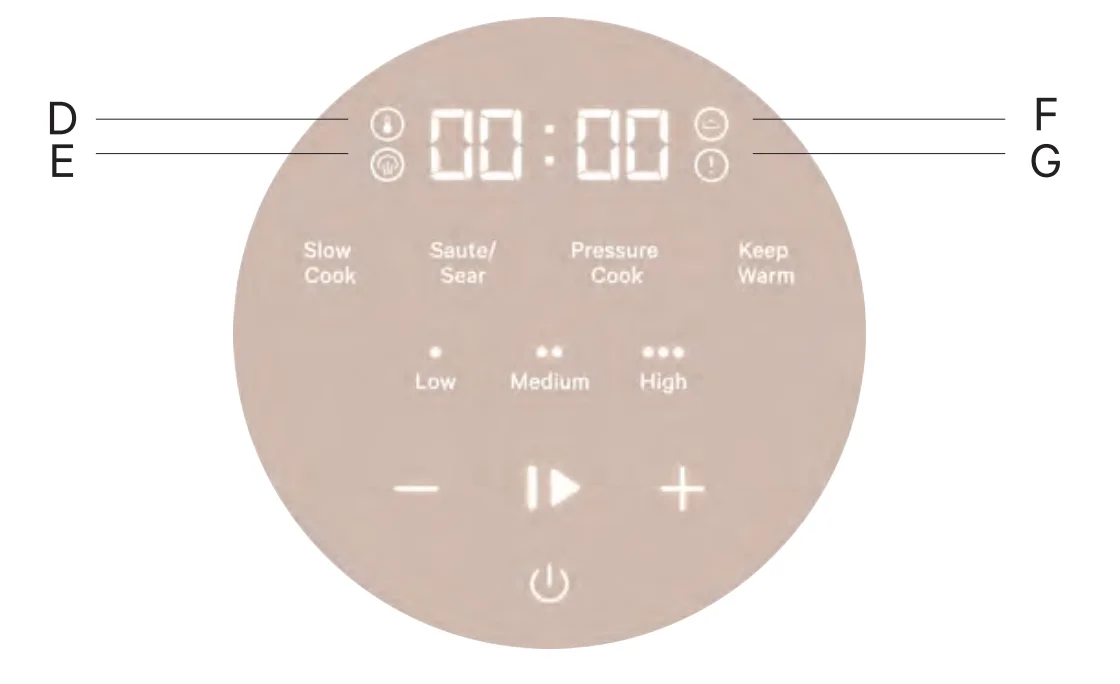
 Decreases the time setting.
 Increases the time setting
 Start/Stop button: After selecting your cooking mode, temperature, and time, press to start cooking. Press again to stop cooking or before changing your settings.
 On/Off button: Turns your appliance on and off.
BEFORE FIRST USE
- Remove and discard any packaging material from the appliance.
- Remove all components from the package and read this manual carefully. Please pay particular attention to operational instructions, warnings, and important safeguards to avoid any injury or property damage.
- Wash the inner cooking pot, lid cover, and silicone sealing ring in hot, soapy water, then rinse and dry thoroughly. NEVER put the inner cooking pot, cooker base, or lid cover in the dishwasher.
- Inspect the lid to ensure there is no debris blocking the steam release vent cover.
- The silicone sealing ring is reversible and can be inserted in either direction. Insert the silicone sealing ring around the outer edge of the sealing ring holder on the underside of the lid. Ensure it is fully inserted and lies flat under the sealing ring holder, as shown on page 8.
- Ensure the steam release anti-clog cap is installed. Place it over the prongs under the underside of the lid and press down until it snaps into position.
- Ensure the vent cover is not clogged and is securely installed on the lid.
- Ensure the float valve pin is installed properly, not clogged, and is in proper working order.
- Ensure the condensation collector is installed securely over the tabs on the back of the appliance base.
- Place the appliance on a stable, level, heat-resistant surface. Keep away from areas that can be damaged by steam (such as walls or cupboards).
- When using this appliance, provide adequate space (at least 5 inches above and at least 3 inches on all sides) for air circulation.
- Ensure the inner cooking pot is in position, and the lid is secured properly.
- Plug the appliance into a kitchen outlet.
Note: The appliance may have a plastic smell during the first use. This is normal. If the plastic smell does not decrease after the first use, please contact Customer Support at [email protected].
Cook Time and Temperature
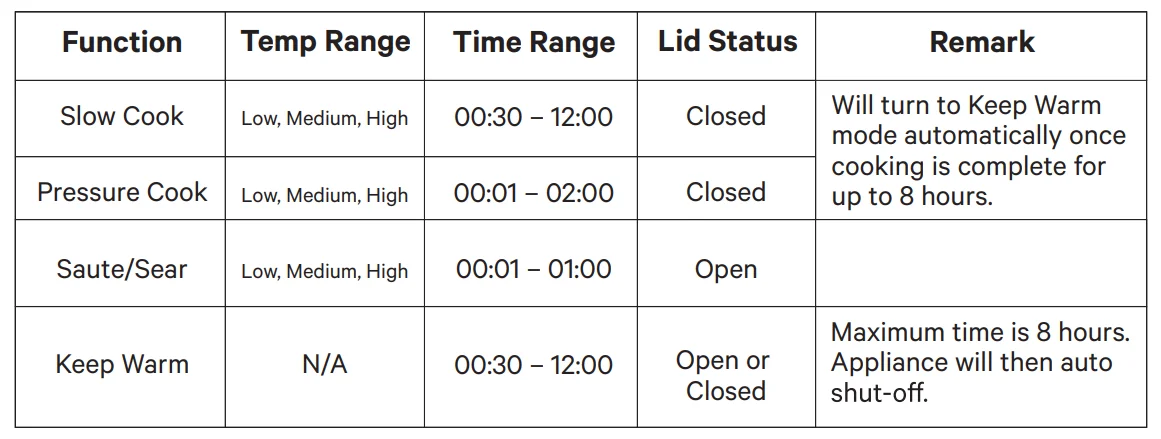
Chart Pressure Cook
Pressure cooking is the process of cooking food under pressurized steam and liquid in a sealed vessel. High pressure helps to limit boiling and create high temperatures, which cook foods faster than other cooking methods. This cooking mode is the recommended method for foods that are unlikely to overcook, such as soups and stews, or for foods you wish to cook quickly. Pressure cooking requires the use of liquid to create the steam needed. We recommend 1.5 cups (12 oz. or 375mL) as the minimum. The liquids used for pressure cooking should be water-based (such as broth, stock, or soup) and not oil-based. If your recipe calls for dairy, we recommend adding it at the end of the cooking process since dairy can curdle under pressure. Most foods cook under high pressure, which helps to break them down and cook faster. Foods that are sensitive to overcooking (like rice, pasta, and eggs) cook better with low pressure.
How to pressure cook
- Add food and required liquid to the inner cooking pot and place it in the cooker base.
- Place the lid on the appliance and twist to lock.
- Press the On/Off button to activate the control panel and turn to Standby mode. Select Pressure Cook as your desired cooking mode.
- Set the desired pressure.
- Set the desired time.
- Press the Start button.
- A beep will sound signaling that the appliance is preheating and pressurizing. “PrE” will appear on the control panel, and the Preheat Indicator iconwill be on.
- If the lid is not properly secured, the word ‘Lid’ and the Lid Warning icon
 will appear on the control panel, and the appliance will beep. Adjust the lid, and once locked, the beeping will stop, and cooking will begin.
 - If the inner cooking pot has not been properly placed in the cooker base, the word ‘Pot’ and the Inner Cooking Pot Warning icon
 will appear on the control panel, and the appliance will beep. Once the inner cooking pot is properly installed, the beeping will stop.
- If the lid is not properly secured, the word ‘Lid’ and the Lid Warning icon
- Once the appliance has reached the set pressure and temperature, you will hear a beep, the “PrE” and the Preheat Indicator will disappear from the control panel, and the timer will begin counting down from the set time.
- When the timer reaches 00:00, this indicates cooking has stopped. You will hear three beeps, indicating cooking is complete. “HOLD” will appear on the control panel, and the Steam Release iconwill be on. The appliance will then automatically switch to Keep Warm mode, and pressure will begin to release naturally. The timer will begin counting up, indicating how long it has been in Keep Warm mode.
- To turn off the appliance, press and hold the On/Off button.
 will appear on the control panel, and the appliance will beep. Adjust the lid, and once locked, the beeping will stop, and cooking will begin.
 will appear on the control panel, and the appliance will beep. Once the inner cooking pot is properly installed, the beeping will stop.
Tip: Choose the steam release method that works for your recipe. See Pressure Release Options below.
Overfill During Pressure Cooking
- Overfilling may cause a risk of clogging the steam release valve and developing excess pressure.
- DO NOT overfill or exceed the maximum fill line. Overfilling may cause personal injury or property damage or affect the safe use of the appliance. Foods such as apple sauce, cranberries, pearl barley, oatmeal and other cereals, split peas, noodles and pasta can foam, froth, and splatter when pressure-cooked. DO NOT fill the inner cooking pot past the maximum fill line (designated as “PC MAX”) when cooking these foods.
- When pressure cooking foods that expand (such as dried vegetables, beans, grains, rice, etc.), DO NOT fill the pot more than halfway (designated as the “1/2” line on the inner cooking pot), or as otherwise instructed in a recipe.
- DO NOT place oversized foods that exceed the maximum fill line (PC MAX) into the inner cooking pot as they may cause risk of fire, personal injury, and/or property damage.
Troubleshooting
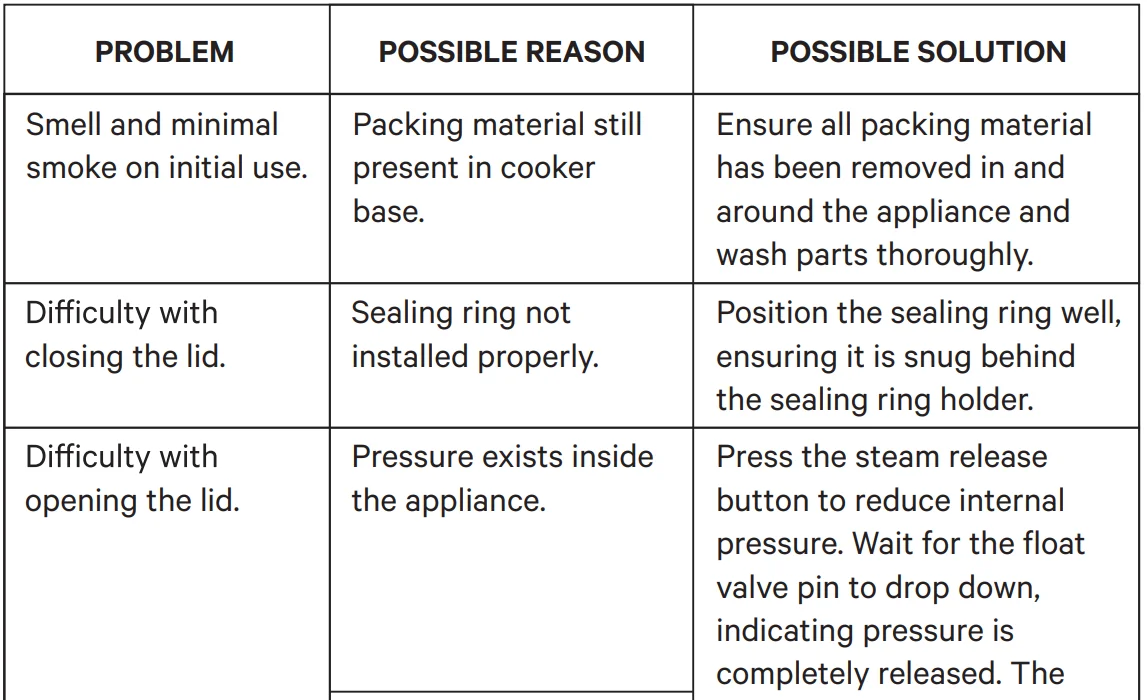
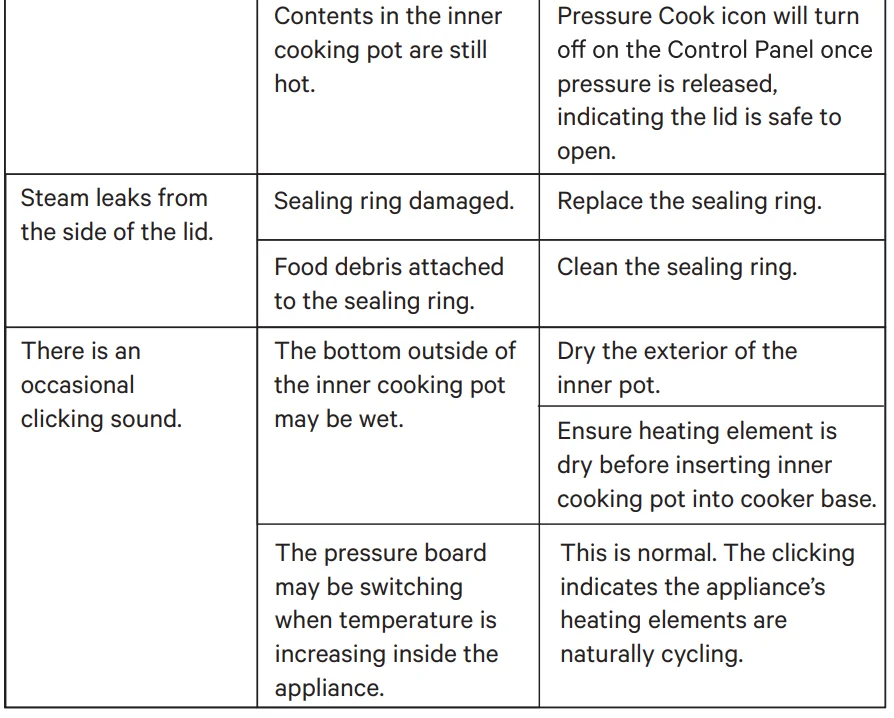
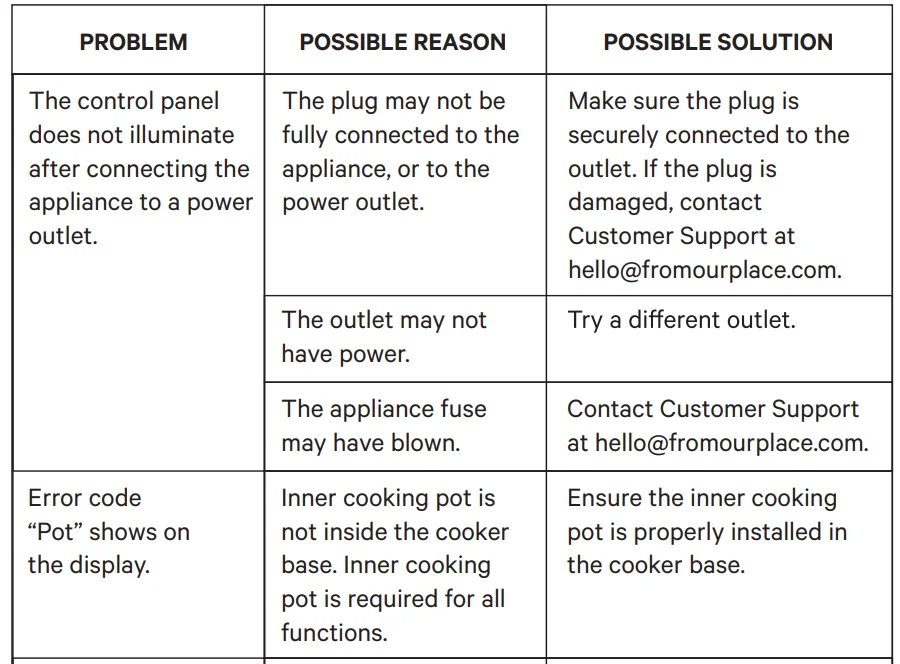
Replacement Parts
Scan this QR code for replacement parts. You can also find recipes, FAQs and more there, too.

Warranty
We stand by our products. We want you to have the best experience with your Dream Cooker, so our team is here to help. Please get in touch with us at [email protected] if you have any questions regarding our warranty program or need advice on using your product. Lagom Kitchen Company, d/b/a “Our Place” (“Our Place”, “we”, or “our”) offers a limited warranty for the Dream Cooker if purchased and used in the United States. This Limited Warranty is made solely by Our Place and no other person or entity, and is offered on the terms and conditions outlined in this Limited Warranty, also available on www.fromourplace.com/warranty.
What does this warranty cover?
This warranty covers defects in materials and workmanship for the Dream Cooker when used normally in accordance with Our Place’s user manual.
What does this warranty not cover?
This warranty does not cover any damages due to:
- Use of the product not for regular household purposes;
- Misuse, abuse, or negligent handling;
- Failure to follow the user manual (e.g. use, warning, maintenance, and care instructions);
- Normal wear and tear;
- Modifications to the product or use with products or parts not approved by Our Place;
- Cosmetic changes, including stains and discolorations;
- Installation with an incorrect electric current, voltage, circuit breaker rating, extension cord, or power supply;
- Damages or defects caused by service or repair of the product performed by an unauthorized service provider;
- Loss or damage in transit after initial delivery; and
- Accidents or other actions beyond our reasonable control.
Who is covered by this warranty?
This limited warranty covers the original retail consumer purchaser of a covered product or a consumer who receives the product new and unused as a gift from the original retail purchaser. Coverage terminates if a covered consumer sells or otherwise transfers the product. This limited warranty applies only to products purchased directly from Our Place or an Our Place authorized retailer. This limited warranty is not transferable.
For more manuals by Our Place, visit ManualsLibraryy
Dream Cooker-FAQs
How do I use the Dream Cooker step by step?
Start by adding ingredients and the required liquid into the pot. Close and lock the lid securely. Select the desired cooking mode (pressure, slow cook, or sauté). Set the time and start the cooker. Once done, release pressure carefully, open the lid, and serve your food.
Can I cook rice in the Dream Cooker?
Yes, the Dream Cooker is perfect for cooking rice. It gives soft, fluffy results with minimal effort. Just add rice and water in the correct ratio, select the pressure or rice mode, and let the cooker handle the rest automatically.
How long does it take to cook white rice?
White rice usually cooks in about 6 minutes under high pressure, but total time may be longer due to pressure build-up and release. Brown rice takes around 25–30 minutes to cook properly and reach the right texture.
What should I do before using the cooker for the first time?
Before first use, wash the inner pot and lid thoroughly. Read the user manual, check all parts, and ensure the sealing ring is properly fitted. Running a quick test cycle with water is also recommended.
How does the slow cooking function work?
Add ingredients into the pot, cover with the lid, and select the slow cook mode. Set the desired time and temperature (low or high). The cooker will slowly heat food over several hours, making it ideal for soups, stews, and tender meats.
Is cooking on high the same as cooking on low?
Both settings reach similar temperatures, but high cooks faster while low takes more time. For example, 4 hours on high is roughly equal to 7–8 hours on low, depending on the recipe.
How much liquid should I add?
You need at least a small amount of liquid (usually about 1 cup) for pressure cooking. This helps the cooker generate steam and build pressure. Avoid adding too much liquid, especially in slow cooking.
What foods should not be cooked in a pressure cooker?
Avoid cooking dairy products like milk, cheese, or cream directly under pressure, as they may curdle. Also, very delicate foods can overcook quickly. Add sensitive ingredients at the end of cooking when possible.
Can I cook meat in the Dream Cooker?
Yes, you can cook raw meat easily. The pressure function cooks meat quickly while keeping it tender and juicy. Cooking time varies depending on the type and size of the meat.