
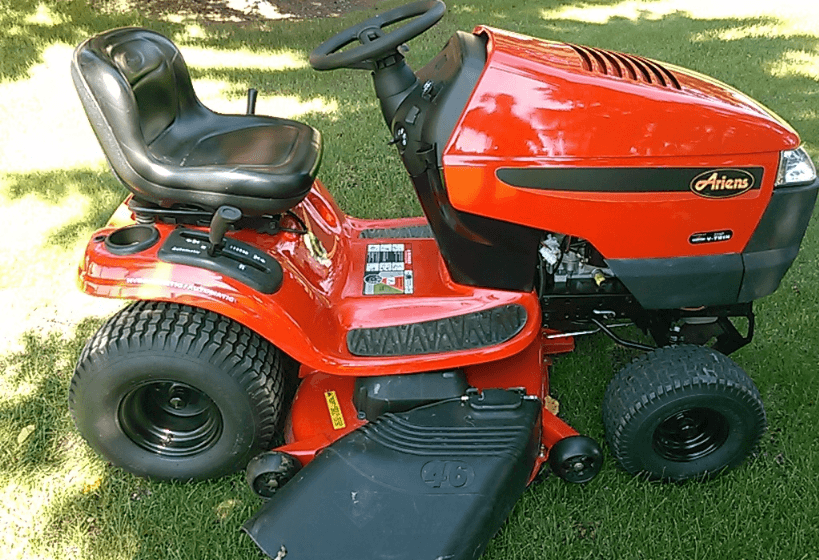

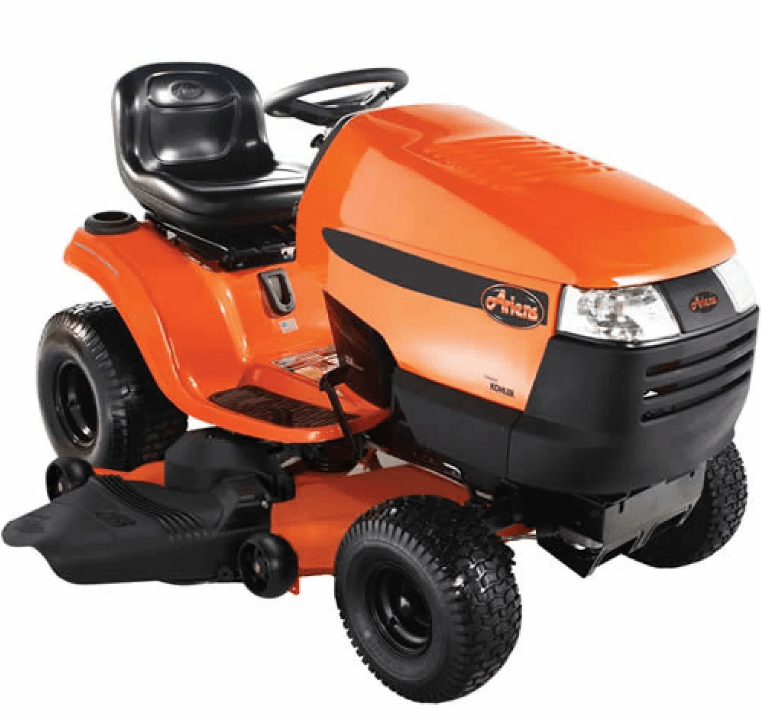
Ariens A19A42 Automatic Tractor
SAFETY RULES
GENERAL OPERATION
- Read, understand, and follow all instructions on the machine and in the manual before starting.
- Do not put hands or feet near rotating parts or under the machine. Keep clear of the discharge opening at all times.
- Only allow responsible adults who are familiar with the instructions to operate the machine.
- Clear the area of objects such as rocks, toys, wire, etc., which could be picked up and thrown by the blades.
- Ensure the area is clear of bystanders before operating. Stop the machine if anyone enters the area.
- Never carry passengers.
- Do not mow in reverse unless absolutely necessary. Always look down and behind before and while backing.
- Never direct discharged material toward anyone. Avoid discharging material against a wall or obstruction. Material may ricochet back toward the operator. Stop the blades when crossing gravel surfaces.
- Do not operate the machine without the entire grass catcher, discharge chute, or other safety devices in place and working.
- Slow down before turning.
- Never leave a running machine unattended. Always turn off blades, set the parking brake, stop the engine, and remove keys before dismounting.
- Disengage blades when not mowing. Shut off the engine and wait for all parts to come to a complete stop before cleaning the machine, removing the grass catcher, or unclogging the discharge chute.
- Operate the machine only in daylight or good artificial light.
- Do not operate the machine while under the influence of alcohol or drugs.
- Watch for traffic when operating near or crossing roadways.
- Use extra care when loading or unloading the machine into a trailer or truck.
- Always wear eye protection when operating the machine.
- Data indicates that operators aged 60 years and above are involved in a large percentage of riding mower-related injuries. These operators should evaluate their ability to operate the riding mower safely enough to protect themselves and others from serious injury.
- Follow the manufacturer’s recommendation for wheel weights or counterweights.
- Keep the machine free of grass, leaves, or other debris buildup, which can touch hot exhaust/engine parts and burn. Do not allow the mower deck to plow leaves or other debris, which can cause a buildup to occur. Clean any oil or fuel spillage before operating or storing the machine. Allow the machine to cool before storage.
SERVICE
SAFE HANDLING OF GASOLINE
To avoid personal injury or property damage, use extreme care in handling gasoline. Gasoline is extremely flammable, and the vapors are explosive.
- Extinguish all cigarettes, cigars, pipes, and other sources of ignition.
- Use only an approved gasoline container.
- Never remove the gas cap or add fuel with the engine running. Allow the engine to cool before refueling.
- Never fuel the machine indoors.
- Never store the machine or fuel container where there is an open flame, spark, or pilot light, such as on a water heater or other appliances.
- Never fill containers inside a vehicle or on a trailer bed with a plastic liner. Always place containers on the ground away from your vehicle when filling.
- Remove gas-powered equipment from the truck or trailer and refuel it on the ground. If this is not possible, then refuel such equipment with a portable container, rather than from a gasoline dispenser nozzle.
- Keep the nozzle in contact with the rim of the fuel tank or container opening at all times until fueling is complete. Do not use a nozzle lock-open device.
- If fuel is spilled on clothing, change clothing immediately.
- Never overfill the fuel tank. Replace the gas cap and tighten securely.
GENERAL SERVICE
- Never operate the machine in a closed area.
- Keep all nuts and bolts tight to ensure the equipment is in safe working condition.
- Never tamper with safety devices. Check their proper operation regularly.
- Keep the machine free of grass, leaves, or other debris buildup. Clean oil or fuel spillage and remove any fuel-soaked debris. Allow the machine to cool before storing.
- If you strike a foreign object, stop and inspect the machine. Repair, if necessary, before restarting.
- Never make any adjustments or repairs with the engine running.
- Check grass catcher components and the discharge chute frequently and replace with the manufacturer’s recommended parts when necessary.
- Mower blades are sharp. Wrap the blade or wear gloves, and use extra caution when servicing them.
- Check brake operation frequently. Adjust and service as required.
- Maintain or replace safety and instruction labels, as necessary.
PRODUCT SPECIFICATIONS
CUSTOMER RESPONSIBILITIES
- Read and observe the safety rules.
- Follow a regular schedule in maintaining, caring for, and using your tractor.
- Follow the instructions under the “Maintenance” and “Storage” sections of this manual.
- Wear proper Personal Protective Equipment (PPE) while operating this machine, including (at a minimum) sturdy footwear, eye protection, and hearing protection. Do not mow in shorts and/or open-toed footwear.
- Always let someone know you are outside mowing.
WARNING: This tractor is equipped with an internal combustion engine and should not be used on or near any unimproved forest-covered, brush-covered or grass-covered land unless the engine’s exhaust system is equipped with a spark arrester meeting applicable local or state laws (if any). If a spark arrester is used, it should be maintained in effective working order by the operator. A spark arrester for the muffler is available through your nearest authorized service center/department. In the state of California, the above is required by law (Section 4442 of the California Public Resources Code). Other states may have similar laws. Federal laws apply on federal lands.
UNASSEMBLED PARTS
ASSEMBLY
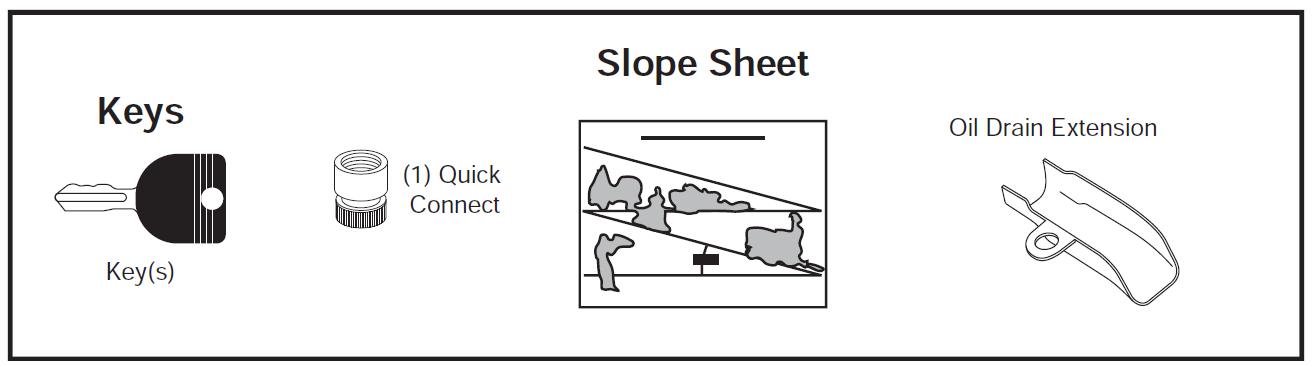
Your new tractor has been assembled at the factory with the exception of those parts left unassembled for shipping purposes.
TOOLS REQUIRED FOR ASSEMBLY
A socket wrench set will make assembly easier. Standard wrench sizes are listed.
- 1/2″ wrench Tire pressure gauge
- 7/16″ wrenches, Utility knife, Pliers
When the right or left hand is mentioned in this manual, it means when you are in the operating position (seated behind the steering wheel).
TO REMOVE THE TRACTOR FROM THE CARTON
UNPACK CARTON
- Remove all accessible loose parts and parts cartons from the carton.
- Remove end panels and lay side panels flat.
- Check for any additional loose parts or cartons and remove them.
BEFORE REMOVING THE TRACTOR FROM THE SKID
TO CHECK BATTERY (See Fig. 1)
- Lift the seat to the raised position.
NOTE: If this battery is put into service after the month and year indicated on the label (label is located between terminals) charge the battery for a minimum of one hour at 6-10 amps. (See “BATTERY” in the Maintenance section of this manual for charging instructions.)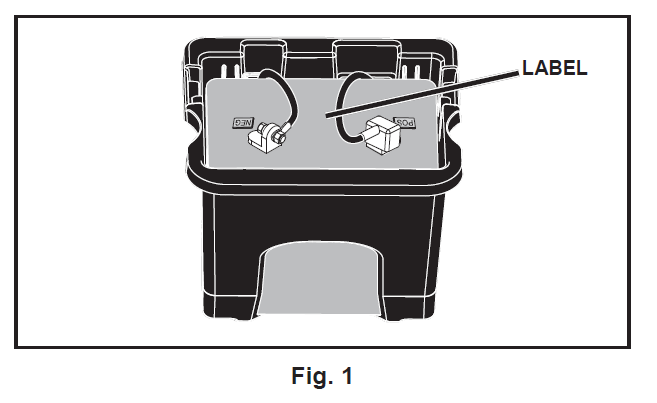
- For battery and battery cable installation, see “REPLACING BATTERY” in the “Service and Adjustments” section in this manual.
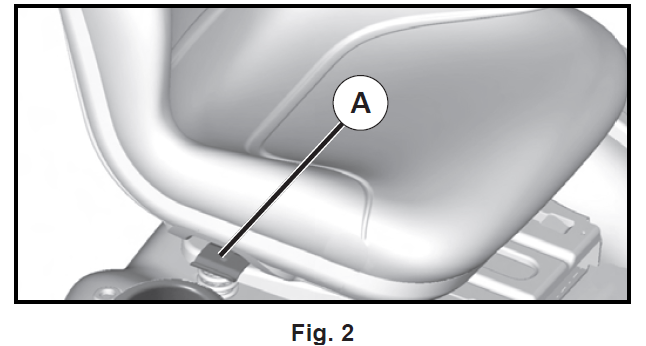
ADJUST SEAT (See Fig. 2)
- Sit in the seat.
- Lift up the adjustment lever (A) and slide the seat until a comfortable position is reached, which allows you to press the clutch/brake pedal all the way down.
- Release lever to lock the seat in position.

ASSEMBLY
NOTE: You may now roll your tractor off the skid. Follow the instructions below to remove the tractor from the skid.
WARNING: Before starting, read, understand, and follow all instructions in the Operation section of this manual.
Ensure the tractor is in a well-ventilated area. Ensure the area in front of the tractor is clear of other people and objects.
TOROLL TRACTOR OFF SKID (See Operation section for location and function of controls)
- Raise the attachment lift lever to its highest position.
- Release the parking brake by depressing the clutch/brake pedal
- Place freewheel control in the “TRANSMISSION DISENGAGED” position. (See “TO TRANSPORT” in the Operation section of this manual.)
- Roll the tractor forward off the skid.
- Remove the band holding the deflector shield up against the tractor.
Continue with the instructions that follow.
CHECK TIRE PRESSURE
The tires on your tractor were overinflated at the factory for shipping purposes. Correct tire pressure is important for the best cutting performance.
- Reduce tire pressure to the PSI shown on the tires.
CHECK DECK LEVELNESS
For best cutting results, the mower housing should be properly leveled. See “TO LEVEL MOWER HOUSING” in the Service and Adjustments section of this manual.
CHECK FOR PROPER POSITION OF ALL BELTS
See the figures that are shown for replacing motion and mower blade drive belts in the Service and Adjustments section of this manual. Verify that the belts are routed correctly.
CHECK BRAKE SYSTEM
After you learn how to operate your tractor, check to see that the brake is operating properly. See “TO CHECK BRAKE” in the Service and Adjustments section of this manual.
CHECKLIST
BEFORE YOU OPERATE YOUR NEW TRACTOR, WE WISH TO ENSURE THAT YOU RECEIVE THE BEST PERFORMANCE AND SATISFACTION FROM THIS QUALITY PRODUCT. PLEASE REVIEW THE FOLLOWING CHECKLIST:
- All assembly instructions have been completed.
- No remaining loose parts in the carton.
- The battery is properly prepared and charged.
- The seat is adjusted comfortably and tightened securely.
- All tires are properly inflated. (For shipping purposes, the tires were overinflated at the factory.)
- Ensure mower deck is properly leveled side-to-side/front-to-rear for best cutting results. (Tires must be properly inflated for leveling.)
- Check mower and drive belts. Ensure they are routed properly around pulleys and inside all belt keepers.
- Check wiring. See that all connections are still secure and wires are properly clamped.
- Before driving the tractor, ensure free wheel control is in the “TRANSMISSION ENGAGED” position. (See “TO TRANS PORT” in the Operation section of this manual.) WHILE LEARNING
HOW TO USE YOUR TRACTOR, PAY EXTRA ATTENTION TO THE FOLLOWING IMPORTANT ITEMS:
- Engine oil is at the proper level.
- The fuel tank is filled with fresh, clean, regular unleaded gasoline.
- Become familiar with all controls, their location, and functions. Operate them before you start the engine.
- Ensure the brake system is in a safe operating condition.
- Ensure the Operator Presence System and Reverse Operation System (ROS) are working properly. (See the Operation and Maintenance sections in this manual.)
OPERATION
These symbols may appear on your tractor or in literature supplied with the product. Learn and understand their meaning.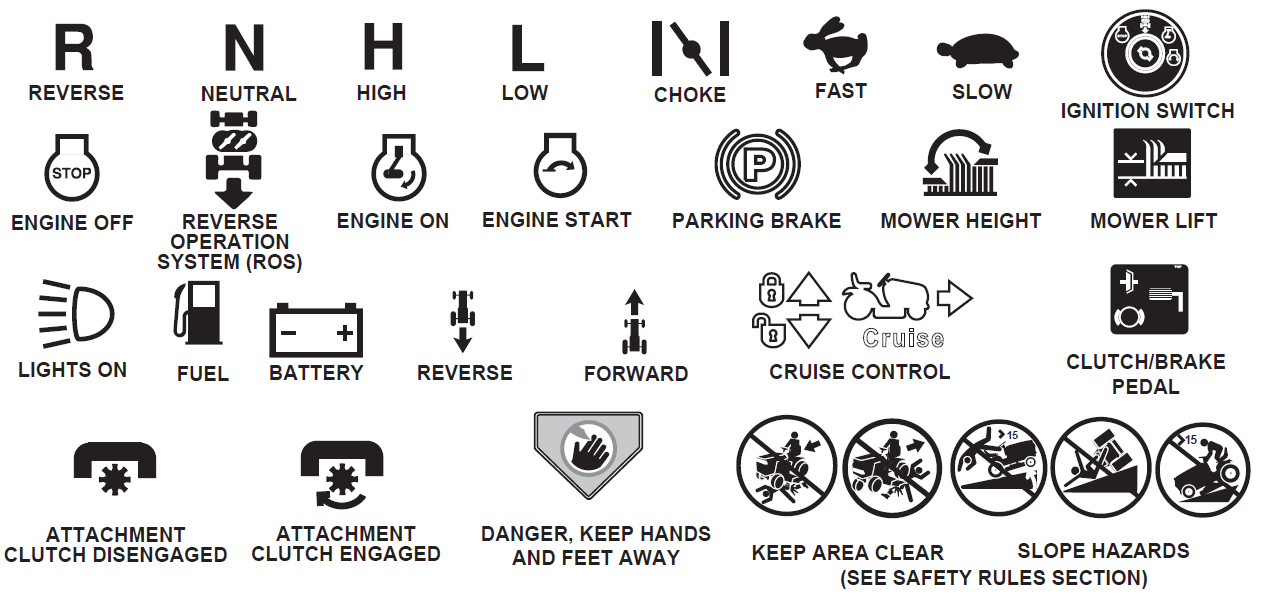
KNOW YOUR TRACTOR
READ THIS OPERATOR’S MANUAL AND SAFETY RULES BEFORE OPERATING YOUR TRACTOR
Compare the illustrations with your tractor to familiarize yourself with the locations of various controls and adjustments. Save this manual for future reference.
Our tractors conform to the applicable safety standards of the American National Standards Institute.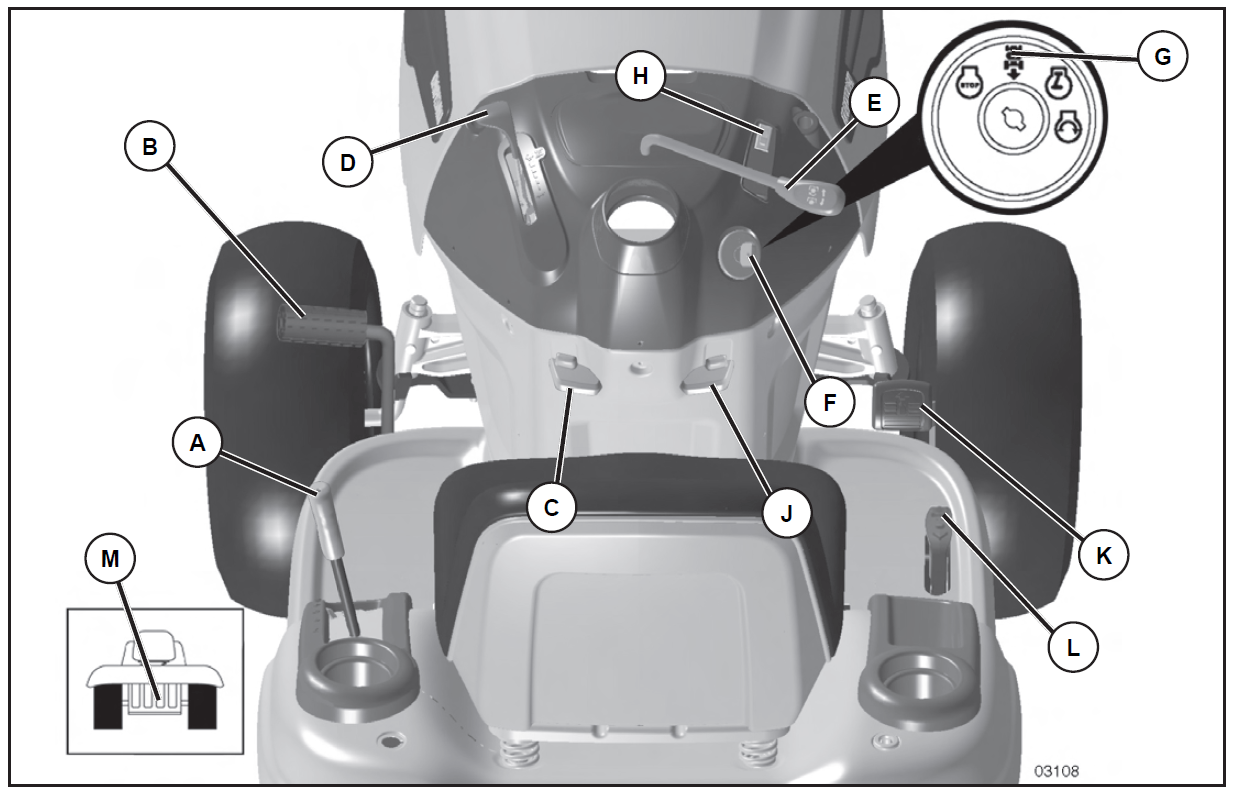
- (A) ATTACHMENT LIFT LEVER – Used to raise and lower the mower or other attachments mounted to your tractor.
- (B) BRAKE PEDAL – Used for braking the tractor and starting the engine.
- (C) PARKING BRAKE – Locks clutch/brake pedal into the brake position.
- (D) THROTTLE/CHOKE CONTROL – Used for starting and controlling engine speed.
- (E) ATTACHMENT CLUTCH LEVER – Used to engage the mower blades or other attachments mounted to your tractor.
- (F) IGNITION SWITCH – Used for starting and stopping the engine.
- (G) REVERSE OPERATION SYSTEM (ROS) “ON”
POSITION – Allows operation of mower or other powered attachment while in reverse. - (H) LIGHT SWITCH – Turns the headlights on and off.
- (J) CRUISE CONTROL LEVER – Used to set forward movement of tractor at desired speed without holding the forward drive pedal.
- (K) FORWARD DRIVE PEDAL – Used for forward movement of the reactor.
- (L) REVERSE DRIVE PEDAL – Used for reverse movement of the tractor.
- (M) FREEWHEEL CONTROL – Disengages transmission for pushing or slowly towing the tractor with the engine off.
HOW TO USE YOUR TRAC TOR
TO SET PARKING BRAKE (See Fig. 4)
Your tractor is equipped with an operator presence sensing switch. When the engine is running, any attempt by the operator to leave the seat without first setting the parking brake will shut off the engine.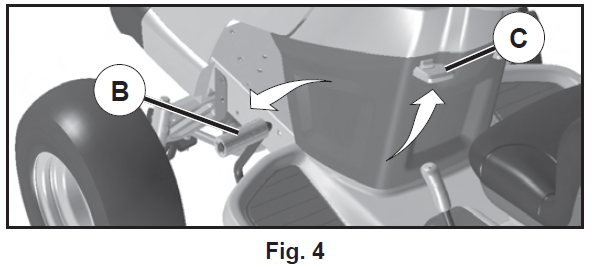
- Depress the brake pedal (B) all the way down and hold.
- Pull the parking brake lever (C) up and hold, release pressure from the brake pedal (B), then release the parking brake lever. The pedal should remain in the brake position. Ensure the parking brake will hold the tractor secure.
STOPPING (See Fig. 5)
MOWER BLADES –
- To stop the mower blades, place the attachment clutch control in the “DISENGAGED” position.

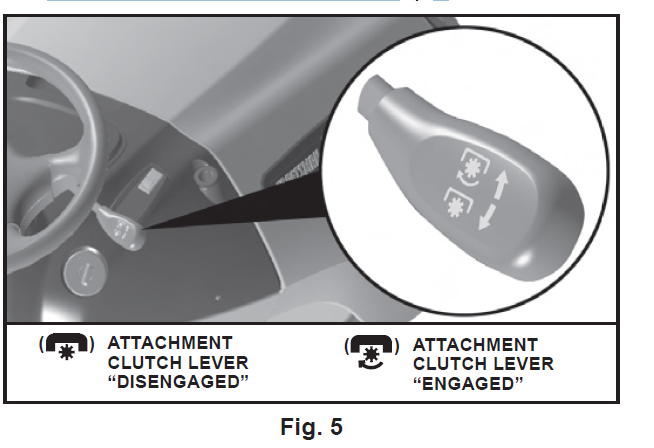
GROUND DRIVE –
- To stop the ground drive, depress the brake pedal into the full “BRAKE” position.
IMPORTANT: FORWARD AND REVERSE DRIVE PEDALS RETURN TO NEUTRAL POSITION WHEN NOT DEPRESSED.
ENGINE –
- Move throttle control (D) to the slow position.
NOTE: Failure to move the throttle control to the slow position and allowing the engine to idle before stopping may cause the engine to “backfire”. - Turn ignition key (F) to “STOP” position and remove key. Always remove the key when leaving the tractor to prevent unauthorized use.
- Never use the choke to stop the engine.
IMPORTANT: LEAVING THE IGNITION SWITCH IN ANY POSITION OTHER THAN “STOP” WILL CAUSE THE BATTERY TO DISCHARGE AND GO DEAD.
NOTE: Under certain conditions, when the tractor is standing idle with the engine running, hot engine exhaust gases may cause “browning” of grass. To eliminate this possibility, always stop the engine when stopping the tractor on grass areas.
CAUTION: Always stop the tractor completely, as described above, and set the parking brake before leaving the operator’s position.
TO USE THROTTLE CONTROL (D) (See Fig. 6)
Always operate the engine at full speed (fast).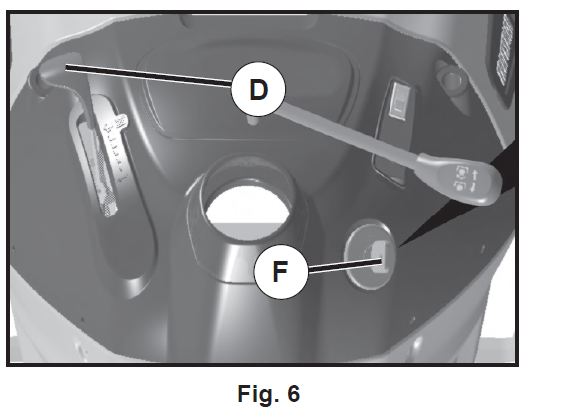
- Operating the engine at less than full speed (fast) reduces the engine’s operating efficiency.
- Full speed (fast) offers the best mower performance.
TO MOVE FORWARD AND BACKWARD (See Fig. 7)
The direction and speed of movement is controlled by the forward and reverse drive pedals.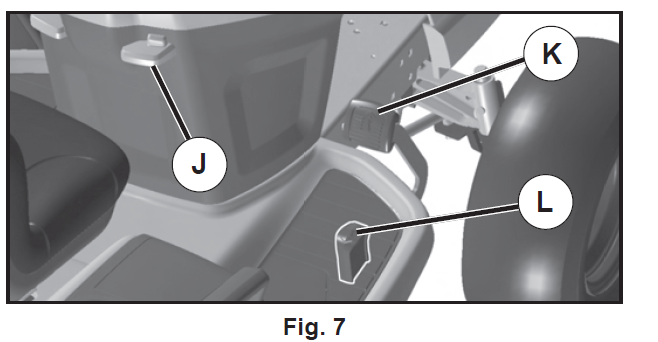
- Start the tractor and release the parking brake.
- Slowly depress forward (K) or reverse (L) drive pedal to begin movement. Ground speed increases the further down the pedal is depressed.
BEFORE STARTING THE ENGINE
CHECK ENGINE OIL LEVEL
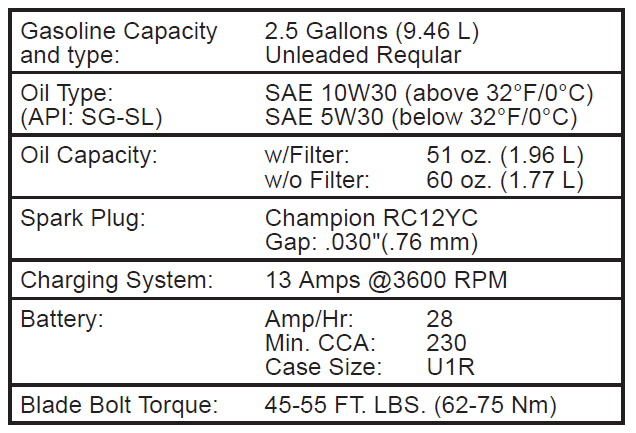
The engine in your tractor has been shipped from the factory, already filled with summer-weight oil.
- Check the engine oil with the tractor on level ground.
- Remove oil fill cap/dipstick and wipe clean, reinsert the dipstick and screw cap tight, wait for a few seconds, remove and read oil level. If necessary, add oil until the “FULL” mark on the dipstick is reached. Do not overfill.
- For cold-weather operation, you should change the oil for easier starting (See “OIL VISCOSITY CHART” in the Maintenance section of this manual).
- To change engine oil, see the Maintenance section in this manual.
ADD GASOLINE
- Fill the fuel tank to the bottom of the filler neck. Do not overfill. Use fresh, clean, regular unleaded gasoline with a minimum of 87 octane. (Use of leaded gasoline will increase carbon and lead oxide deposits and reduce valve life). Do not mix oil with gasoline. Purchase fuel in quantities that can be used within 30 days to assure fuel freshness.
CAUTION: Wipe off any spilled oil or fuel. Do not store, spill or use gasoline near an open flame.
IMPORTANT: WHEN OPERATING IN TEMPERATURES BELOW 32°F (0°C), USE FRESH, CLEAN WINTER GRADE GAS O LINE TO HELP ENSURE GOOD COLD WEATHER STARTING.
CAUTION: Alcohol blended fuels (called gasohol or ethanol or methanol) can attract moisture, which leads to separation and formation of acids during storage. Acidic gas can damage the fuel system of an engine while in storage. To avoid engine problems, the fuel system should be emptied before storage of 30 days or longer. Drain the gas tank, start the engine, and let it run until the fuel lines and carburetor are empty. Use fresh fuel next season. See Storage Instructions for additional information. Never use engine or carburetor cleaner products in the fuel tank, or permanent damage may occur.
TO START ENGINE (See Fig. 3)
When starting the engine for the first time or if the engine has run out of fuel, it will take extra cranking time to move fuel from the tank to the engine.
- Ensure freewheel control is in the transmission engaged position.
- Sit on the seat in the operating position, depress the brake pedal, and set the parking brake.
- Move the attachment clutch to the “DISENGAGED” position.
- Move the throttle control to choke position.
NOTE: Before starting, read the warm and cold starting procedures below. - Insert key into ignition and turn key clockwise to “START” position and release key as soon as engine starts. Do not run the starter continuously for more than fifteen seconds per minute. If the engine does not start after several attempts, move the throttle control to the fast position, wait a few minutes, and try again. If the engine still does not start, move the throttle control back to the choke position and retry.
WARM WEATHER STARTING (50°F/10°C and above)
- When the engine starts, move the throttle control to the fast position.
- The attachments and ground drive can now be used. If the engine does not accept the load, restart the engine and allow it to warm up for one minute using the choke as described above.
COLD WEATHER STARTING (50°F/10°C and below)
- When the engine starts, allow the engine to run with the throttle control in the choke position until the engine runs roughly, then move the throttle control to the fast position. This may require an engine warm-up period from several seconds to several minutes, depending on the temperature.
AUTOMATIC TRANSMISSION WARM UP
- Before driving the unit in cold weather, the trans mission should be warmed up as follows:
- Ensure the tractor is on level ground.
- Release the parking brake and let the brake slowly return to its operating position.
- Allow one minute for transmission to warm up. This can be done during the engine warm-up period.
- The attachments can also be used during the engine warm-up period after the transmission has been warmed up.
NOTE: If at a high altitude (above 3000 feet) or in cold temperatures (below 32°F/0°C), the carburetor fuel mixture may need to be adjusted for best engine performance. See “TO ADJUST CARBURETOR” in the Service and Adjustments section of this manual.
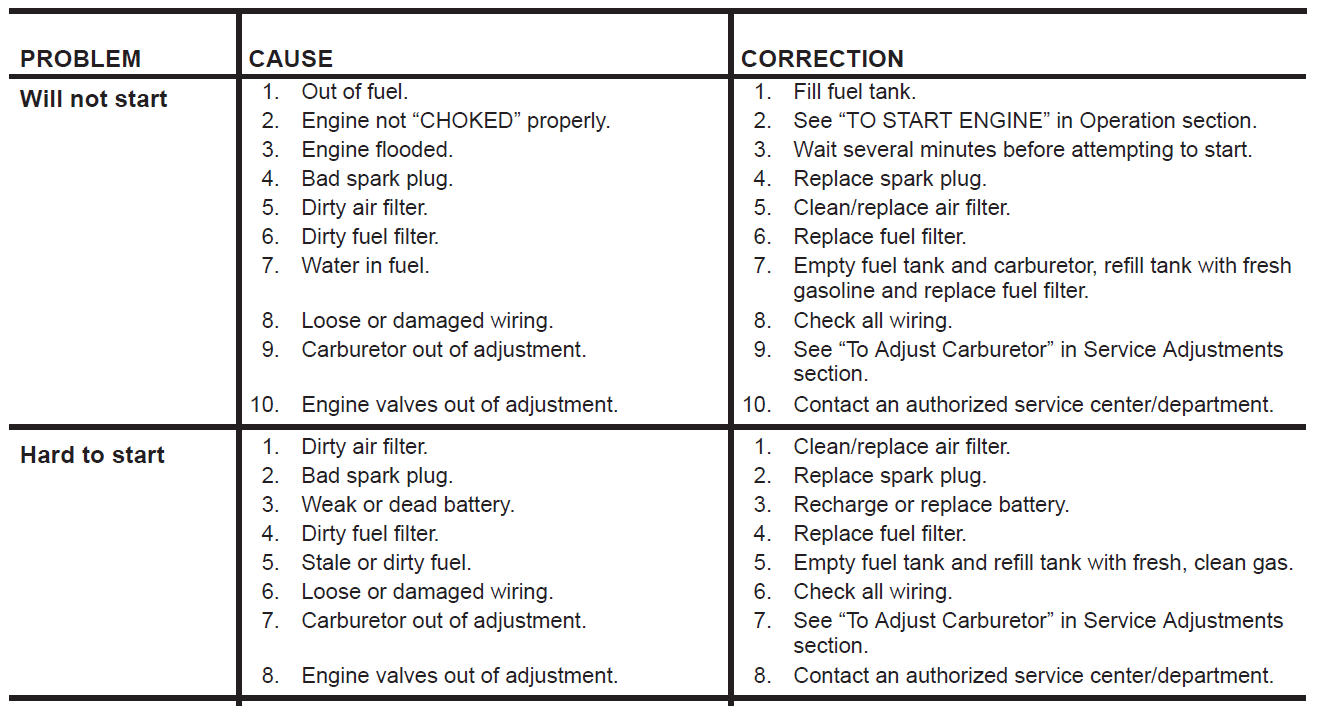
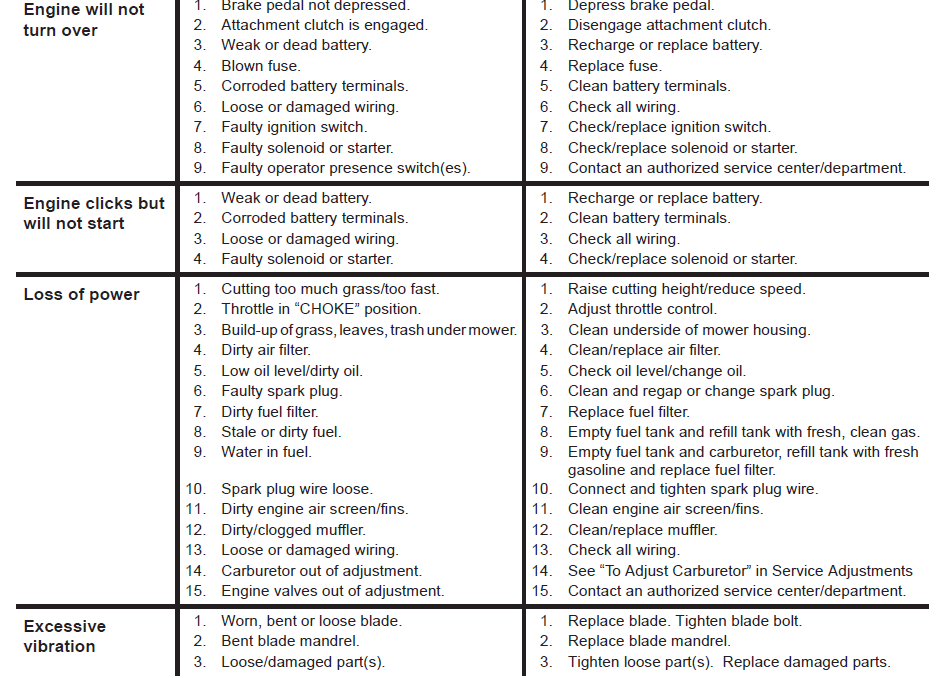
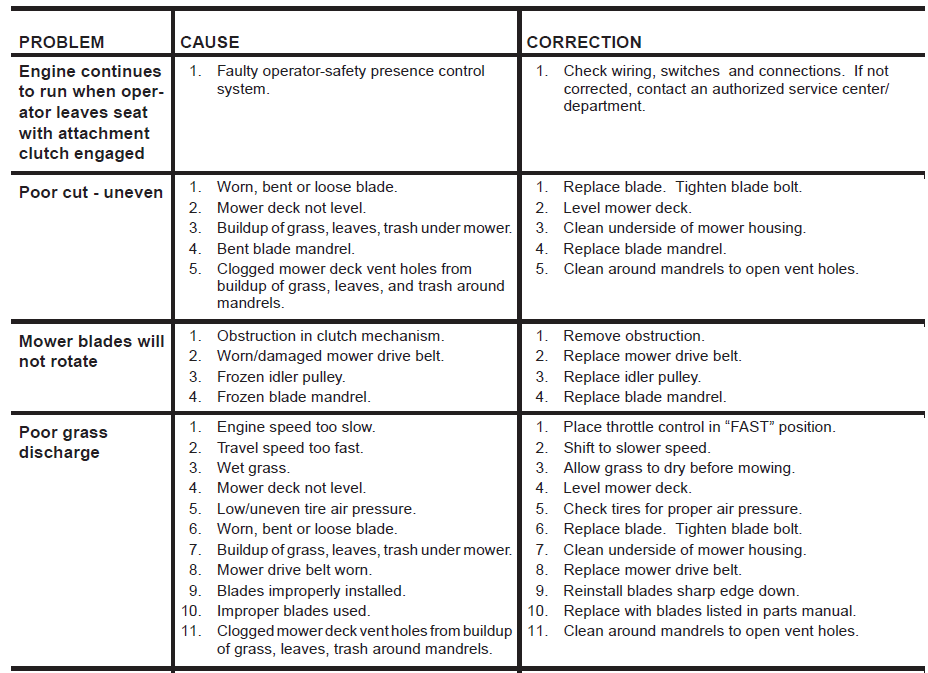
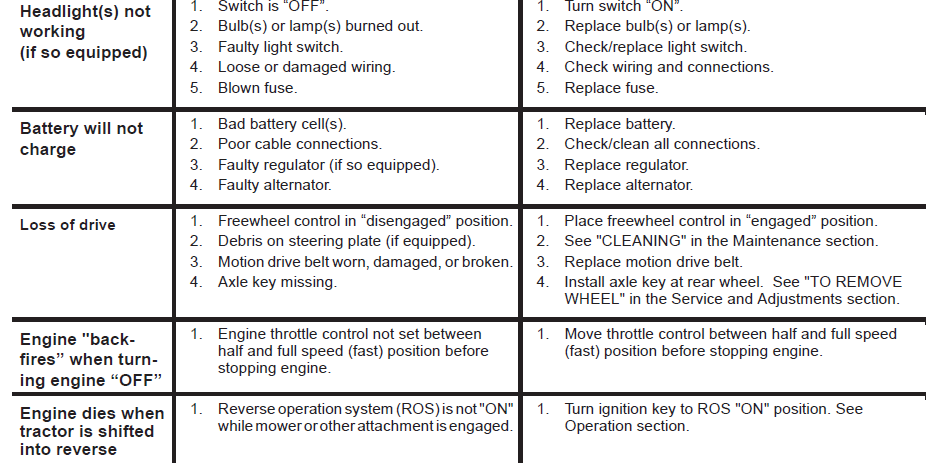
TROUBLESHOOTING
LIMITED WARRANTY
The Manufacturer warrants to the original consumer purchaser that this product, as manufactured, is free from defects in materials and workmanship. For a period of two (2) years from date of purchase by the original consumer purchaser, we will repair or replace, at our option, without charge for parts or labor incurred in replacing parts, any part which we find to be defective due to materials or workmanship. This Warranty is subject to the following limitations and exclusions.
- This warranty does not apply to the engine, transaxle/transmission components, battery (except as noted below) or components parts thereof. Please refer to the applicable manufacturer’s warranty on these items.
- Transportation charges for the movement of any power equipment unit or attachment are the responsibility of the purchaser. Transportation charges for any parts submitted for replacement under this warranty must be paid by the purchaser unless such return is requested by the manufacturer.
- Battery Warranty: On products equipped with a Battery, we will replace, without charge to you, any battery which we find to be defective in manufacture, during the first ninety (90) days of ownership. After ninety (90) days, we will exchange the Battery, charging you 1/12 of the price of a new Battery for each full month from the date of the original sale. The battery must be maintained in accordance with the instructions furnished.
- The Warranty period for any products used for rental or commercial purposes is limited to 90 days from the date of original purchase.
- This Warranty applies only to products which have been properly assembled, adjusted, operated, and maintained in accordance with the instructions furnished. This Warranty does not apply to any product which has been subjected to alteration, misuse, abuse, improper assembly or installation, delivery damage, or to normal wear of the product.
- Exclusions: Excluded from this Warranty are belts, blades, blade adapters, normal wear, normal adjustments, standard hardware, and normal maintenance.
- In the event you have a claim under this Warranty, you must return the product to an authorized service dealer.
For more manuals by Ariens, visit ManualsLibraryy
Ariens A19A42 Automatic Tractor-FAQs
How does the Ariens Auto-Turn work?
The Auto-Turn feature allows the tractor to automatically adjust steering when making turns, improving maneuverability without manual effort. It senses direction changes and adjusts wheel movement accordingly.
How do I electric-start my Ariens tractor?
Ensure the battery is charged (if equipped).
Turn the ignition key or press the electric start button (if available).
If the engine doesn’t start, check the battery connections or use the manual recoil starter as a backup.
Who manufactures Ariens tractors?
Ariens tractors are made by AriensCo, a Wisconsin-based company founded in 1933. They specialize in snow blowers, lawn tractors, and zero-turn mowers.
Where are Ariens tractors made?
Ariens products are manufactured in Brillion, Wisconsin, with some components sourced globally. The company emphasizes U.S.-based production.
How do I start my Ariens riding mower?
Sit on the seat (safety switch requires operator presence).
Engage the parking brake.
Set the throttle to “Fast” (if cold, use the choke).
Turn the key or pull the recoil starter.
How does a tractor snowblower attachment work?
The PTO (Power Take-Off) connects the tractor’s engine to the snowblower.
The tractor’s 3-point hitch lifts and controls the blower.
No separate engine is needed—the tractor powers the auger and impeller.
What type of fuel does an Ariens tractor use?
Unleaded gasoline with up to 10% ethanol (E10).
Avoid higher ethanol blends (e.g., E15/E85) to prevent engine damage.
Are Ariens tractors reliable?
Yes! Ariens is known for durable, commercial-grade equipment with strong warranties. Their tractors handle heavy-duty tasks efficiently.