


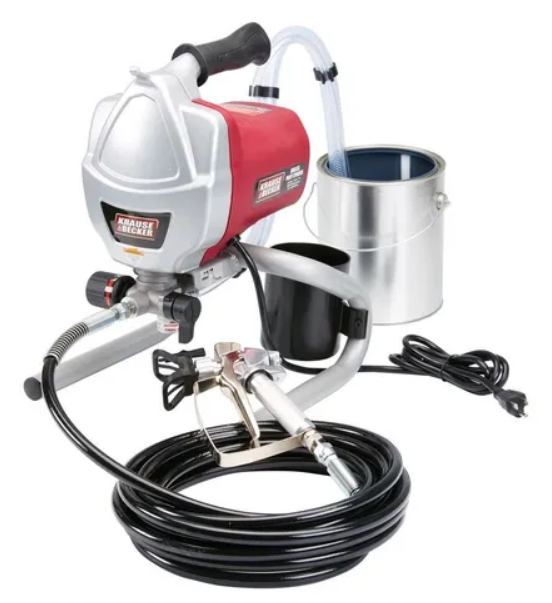
Krause & Becker 62915 Airless Paint Sprayer Kit
Specific Safety Instructions
 INJECTION HAZARD! Although this paint gun is airless, it still puts out paint at a very high pressure. Through improper use, paint can be injected through a person’s skin, leading to serious injury, possibly amputation. If paint is accidentally injected into someone’s skin, contact a doctor immediately. Do not treat an injection injury as a simple cut. Injection can lead to amputation and requires immediate surgical treatment.
- Do not direct spray at people or animals. Do not place your hand in front of the Spray Gun’s nozzle or attempt to deflect paint spray with your hand during use. Gloves and clothing don’t offer adequate protection from toxic paints, sealers, water-proofers, or stains.
- Do not spray flammable materials in the vicinity of open flame or near ignition sources. Motors, electrical equipment, and controls can cause electrical arcs that will ignite a flammable gas or vapor. Do not store flammable liquids or gases in the vicinity of this unit.
- Do not come into contact with a fluid stream created by a leak in the paint hose.
- Do not leave the paint sprayer pressurized while unattended.
- Do not clean the spray gun tip while it is still connected to the paint hose.
- Keep the trigger and the electrical cord plug clean and paint-free.
- Do not run the Paint Sprayer while empty. Damage to the unit may occur.
- Do not use a paint sprayer to spray asbestos, metallic paints, glazes, red lead, cement, ground chalk, abrasive grainy paints containing lime, or bleach. These will damage the spray gun and void the warranty.
- Read all of the information concerning coating products and cleaning solvents. Do NOT use bleach, low-flash naphthalene, acetone, alcohol, or toluene when cleaning Paint Sprayer equipment. Do not use chlorinated solvents (e.g., 1,1,1-trichloroethane and dichloromethane, also known as methylene chloride) to clean spray guns. Many spray guns contain aluminum, which reacts strongly to chlorinated solvents. Contact the solvent or coating manufacturer as needed regarding potential chemical reactions.
- Do NOT use solvents with flash points less than 70° F (21° C) to clean equipment. These may cause an explosion. Examples of acceptable cleaning solvents are water, mineral spirits, and lacquer thinner. Note that some of these solvents may be inappropriate for certain kinds of paint; follow the paint supplier’s recommendations. Contact Harbor Freight Tools to request a Material Safety Data Sheet (MSDS).
- Industrial applications must follow OSHA requirements.
- Spraying hazardous materials may result in serious injury or death. Do not spray pesticides, acid, corrosive material, fertilizer, or toxic chemicals.
- Paints and solvents may be harmful or fatal if swallowed or inhaled. Avoid prolonged skin contact with solvents or paints, as they will irritate the skin. After any contact, immediately wash off the exposed area with hot, soapy water.
- Keep the paint hose away from sharp objects. Bursting hoses may cause injury. Examine hoses regularly and replace them if damaged.
- When flushing the Paint Sprayer system, use the lowest possible pressure setting.
- All hoses and spray gun accessories used with the Paint Sprayer must be pressure rated at or above 3000 PSI.
- The Paint Sprayer must be plugged into an outlet that is grounded in accordance with all local codes and ordinances.
- Use caution while spraying on windy days.
- Do not use the paint sprayer without the Spray Gun’s nozzle guard in place.
- The Paint Sprayer’s housing may become hot during use. Do not touch housing until it has completely cooled.
- Remove Spray Tip or turn to cleaning position BEFORE cleaning or flushing the Paint Sprayer system.
- Do not use pliers to tighten or loosen high-pressure connections.
 Sparks from improper grounding can ignite fumes! Follow all local regulations regarding the use of fluid supply containers and solvent pails used for flushing the Paint Sprayer. Use only conductive metal pails placed on a grounded (concrete) surface. Do not place pails on nonconductive surfaces (such as cardboard or paper). Ground all metal pails by clamping one end of a ground wire to the pail and the other end to a grounded structure (such as a nearby pipe). Maintain grounding, even when flushing or relieving pressure from the paint sprayer into the metal pail. The force of the spray can knock a metal pail over, so hold down the metal pail and keep the metal part of the spray gun set against the grounded metal pail when pressing the spray gun trigger.
- Maintain labels and nameplates on the sprayer. These carry important safety information. If unreadable or missing, contact Harbor Freight Tools for a replacement.
- People with pacemakers should consult their physician(s) before use. Electromagnetic fields in proximity to a heart pacemaker could cause pacemaker interference or pacemaker failure.
- WARNING: Some dust created by power sanding, sawing, grinding, drilling, and other construction activities contains chemicals known to the State of California to cause cancer and birth defects or other reproductive harm. Some examples of these chemicals are:
- Lead from lead-based paints
- Crystalline silica from bricks and cement, or other masonry products
- Arsenic and chromium from chemically treated lumber
- Your risk from these exposures varies, depending on how often you do this type of work. To reduce your exposure to these chemicals: work in a well-ventilated area, and work with approved safety equipment, such as those dust masks that are specially designed to filter out microscopic particles. (California Health & Safety Code § 25249.5, et seq.)
- WARNING: The brass components of this product contain lead, a chemical known to the State of California to cause cancer and birth defects or other reproductive harm. (California Health & Safety Code § 25249.5, et seq.)
 Sparks from improper grounding can ignite fumes! Follow all local regulations regarding the use of fluid supply containers and solvent pails used for flushing the Paint Sprayer. Use only conductive metal pails placed on a grounded (concrete) surface. Do not place pails on nonconductive surfaces (such as cardboard or paper). Ground all metal pails by clamping one end of a ground wire to the pail and the other end to a grounded structure (such as a nearby pipe). Maintain grounding, even when flushing or relieving pressure from the paint sprayer into the metal pail. The force of the spray can knock a metal pail over, so hold down the metal pail and keep the metal part of the spray gun set against the grounded metal pail when pressing the spray gun trigger.
Components and Controls

Prime/Spray Switch
This switch toggles the unit between priming mode and spraying mode.
Nozzle
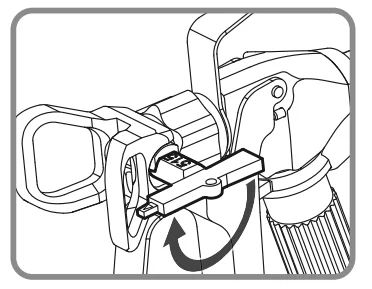
The nozzle is reversible and removable to make cleaning and unclogging easier. Turn the spray gun to the spray position to use the spray gun. Turn the Clean position to clean the nozzle.
Pressure Control Knob
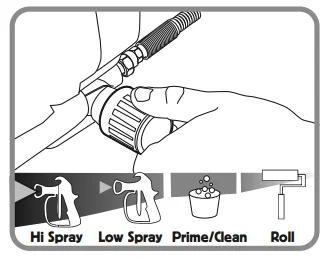
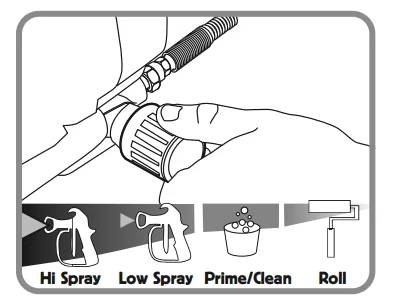
The Pressure Control Knob can be adjusted for High Pressure Spraying, Low Pressure Spraying, Priming/Cleaning, or Rolling. Align the Pressure Control Knob with the indicator on the Sprayer Housing to set the function.
Set Up
Note: Remove or cover objects that you want to protect from overspray (paint mist).
- Attach the Paint Hose to the Paint Hose Outlet and tighten with a wrench.

- Attach the paint hose to the paint gun and tighten with two wrenches.

- Turn the Pressure Control Knob to the Low Pressure Spray setting.


To Relieve Sprayer Pressure
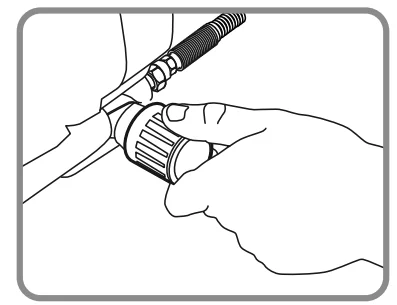
- Turn the Power Switch OFF and unplug the unit from the outlet.

- Switch Prime/Spray switch to Prime mode to safely release most pressure.

- Point the gun into the paint pail and activate the Sprayer Trigger to relieve any remaining pressure.


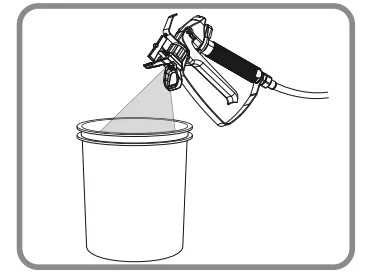
Note: Always set to Prime mode between uses.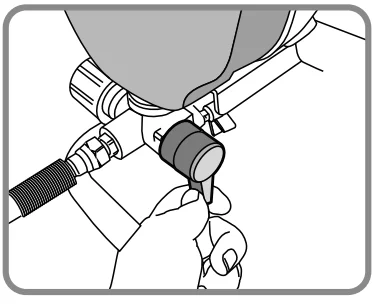
Operating Instructions
Caution: Read the ENTIRE IMPORTANT SAFETY INFORMATION section at the beginning of this manual, including all text under subheadings therein, before setting up or using this product. Inspect the tool before use, looking for damaged, loose, and missing parts. If any problems are found, do not use the tool until repaired.
Priming Spray Gun
This procedure is used for the first time operation and also to flush storage fluids out of the Sprayer.
- For Oil-based Paint: Flush with mineral spirits followed by warm, clean water.
- For Water-based (Latex) Paint: Flush with warm, clean water.
- WARNING! TO PREVENT FIRE: When using mineral spirits, ground the gun by holding it against a metal container while flushing.
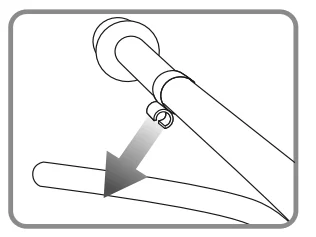
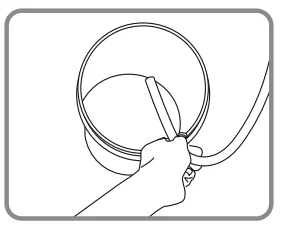
- Separate the smaller Priming Tube from the Suction Tube.

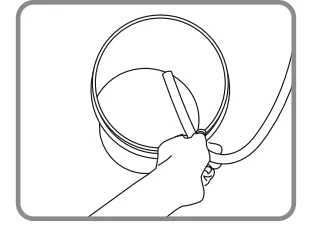
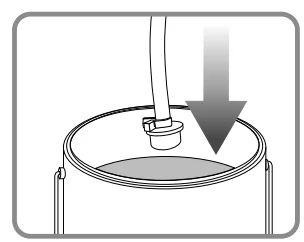
- Place the Priming Tube in the waste bucket.

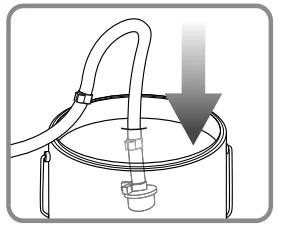
- Submerge the Suction Tube in water or flushing solvent.

- Turn the Prime/Spray switch to Prime mode.

- Adjust Pressure Control Knob to Prime/Clean setting.

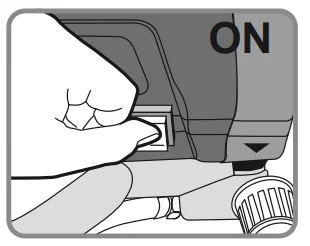
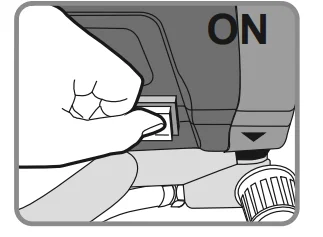
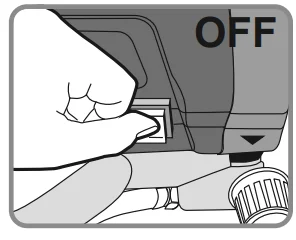
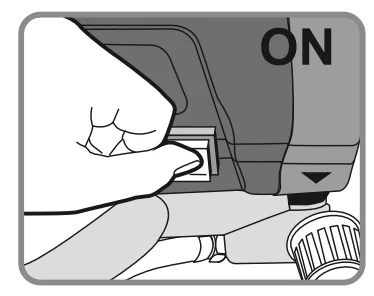
- Plug in the Sprayer and turn the power ON.

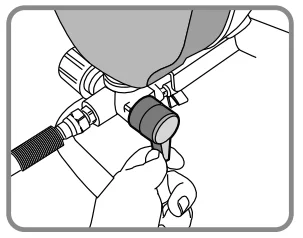
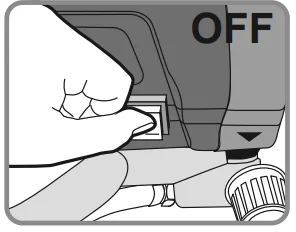
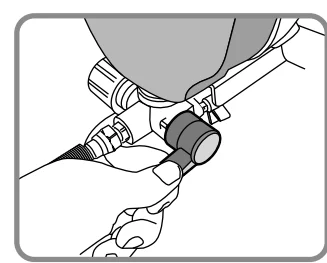
- Sprayer will start pumping, and water or flushing solvent, as well as air bubbles, will be purged from the system. Let fluids discharge from the Priming Tube into the waste bucket for 30 to 60 seconds, then switch the power to OFF. IMPORTANT: If the solvent will not flow through the hoses, try pressing the red inlet release button underneath the pump to loosen the inlet check ball.

- Remove the suction tube from water or flushing solvent and submerge it in the paint pail.

- Switch the power ON.

- Paint should work itself from the Suction Tube to the Sprayer to the Priming Tube until paint discharges from the Priming Tube.

- Switch the power OFF. Remove the Priming Tube from the waste bucket and clip the Suction Tube to it, and submerge it in the paint pail.

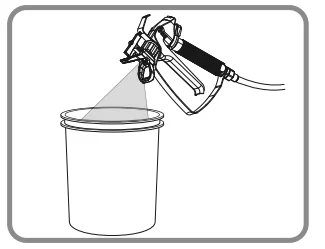
- Switch the power ON. Point the gun into the waste bucket and pull the trigger.

- Turn the Spray/Prime Switch to Spray mode and continue to spray into the waste bucket.
- Stop spraying. If the motor stops, the pump and tubes are primed. If it does not stop, repeat the priming steps.
Painting
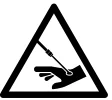 INJECTION HAZARD!
Although this paint gun is airless, it still puts out paint at a very high pressure. Through improper use, paint can be injected through a person’s skin, leading to serious injury, possibly amputation. If paint is accidentally injected into someone’s skin, contact a doctor immediately. Do not treat an injection injury as a simple cut. Injection can lead to amputation and requires immediate surgical treatment.
Before painting, ensure the Sprayer has been primed (see Priming and Startup steps) and verify that the nozzle’s Tip is aligned properly. Practice painting techniques on a scrap workpiece before painting your workpiece. Note: Remove or cover objects that you want to protect from overspray and paint mist.
- Once primed, adjust the nozzle to the Spray setting.

- Start spraying at the lowest setting on the Pressure Control Knob and increase pressure as needed by turning clockwise to create a good spray pattern.

- Keep the gun straight and move the arm across at a steady rate while staying one foot from the surface.

- Do not fan the gun, or the paint will be uneven.

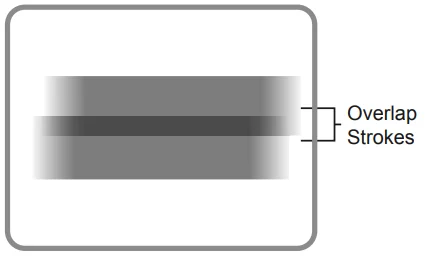
- Overlap strokes by half. Always aim the stroke at the bottom edge of the last stroke.



Clearing Spray Tip
Occasionally, the Spray Gun Tip will become clogged with paint. Follow these instructions to clear the Spray Gun Tip.
- Switch the power OFF.

- Adjust the nozzle to the Clean setting.

- Turn Spray/Prime Switch to Spray mode.

- Turn the power ON.

- Spray into the waste bucket until the clog clears.

- Release Trigger.

- Adjust the nozzle to the Spray setting.





User-Maintenance Instructions
Caution: Procedures not specifically explained in this manual must be performed only by a qualified technician.
Warning
TO PREVENT SERIOUS INJURY FROM ACCIDENTAL OPERATION: Unplug the Sprayer from its electrical outlet before performing any inspection, maintenance, or cleaning procedures.
TO PREVENT SERIOUS INJURY FROM TOOL FAILURE: Do not use damaged equipment. If abnormal noise, vibration, or leaking air occurs, have the problem corrected before further use.
Cleaning
- Turn the power OFF and turn the Prime/Spray switch to Prime mode to relieve pressure.

- Drain paint from Tubes.

- Separate tubes.

- Place the Priming Tube in an empty waste bucket and submerge the Suction Tube in water or flushing fluid.

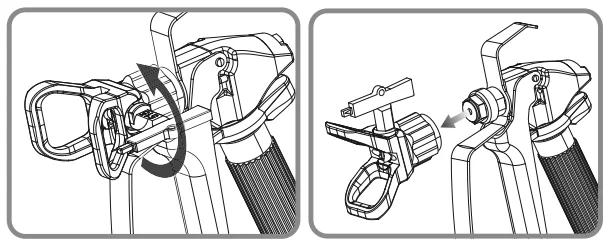
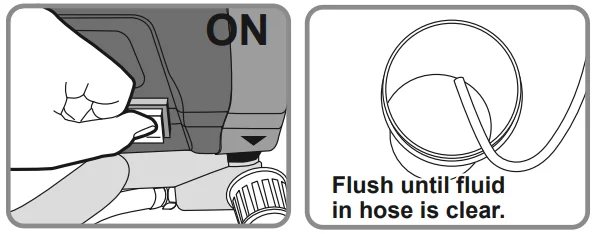
- Unthread the spray tip and remove it. Flush until the fluid in the hose is clear.

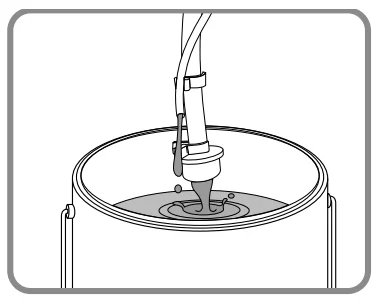
- Plug in the Sprayer and turn the power ON. Sprayer will start pumping, and water or flushing solvent, as well as air bubbles, will be purged from the system. Let fluids discharge from the Priming Tube into the waste bucket until the fluid is clear.

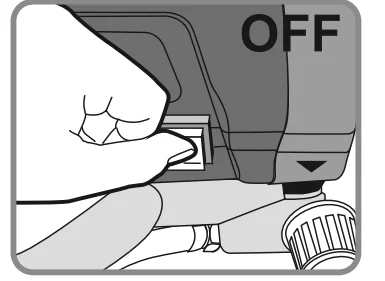
- After the fluid in the Priming Tube is clear, switch Power to OFF.

- Turn to Spray mode and switch power to ON.

- Spray paint into the paint pail.

- Change to the waste bucket as the paint thins.

- Turn to Prime mode.

- Continue to flush until clear.

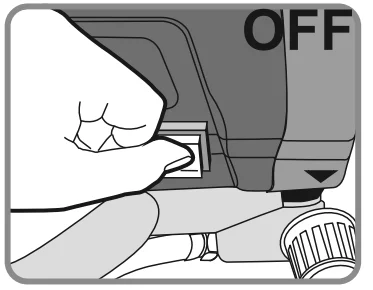
- Release the trigger, turn the power OFF, and turn the Prime/Spray switch to Prime mode to relieve pressure.

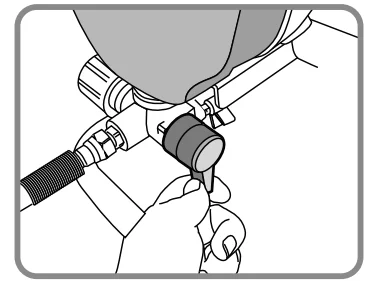
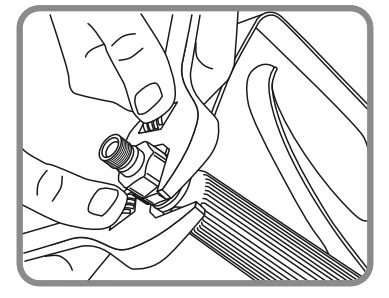
- Unscrew the nut from the housing; it is behind the swivel connector.

- Remove filter.

- Clean all parts in warm, soapy water or flushing fluid with a bristled brush.







Long-Term Storage
When cleaning for long-term storage (more than 48 hours), the Paint Sprayer mustn’t be stored with any water or water-based material left in the Pump, Hose, Tubes, or Spray Gun. This will corrode the product. IMPORTANT: Clean the Sprayer before storage. Refer to Cleaning on pages 16–17.
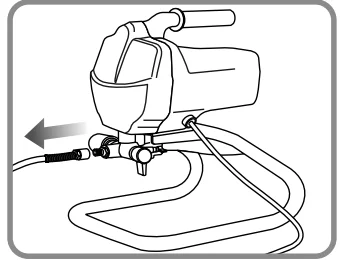
- Remove paint hose if not already removed.

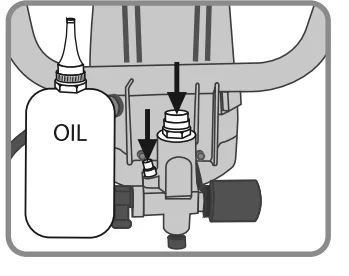
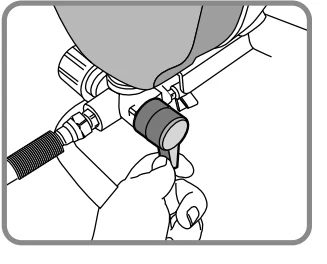
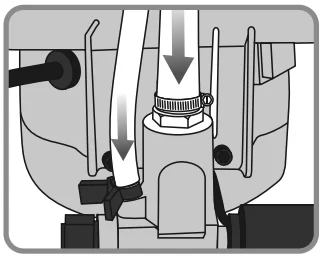
- Turn the unit over and loosen the Clamps from both Tubes, then disconnect the tubes from the Pump Body.

- Add one ounce of light household oil or a pump storage product into each inlet.

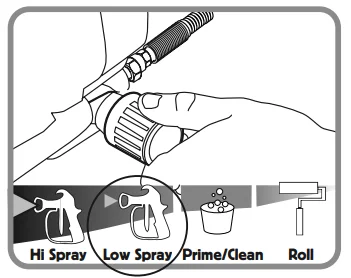
- Turn the Prime/Spray switch to Spray.

- Turn the Pressure Control Knob to Low/Spray.

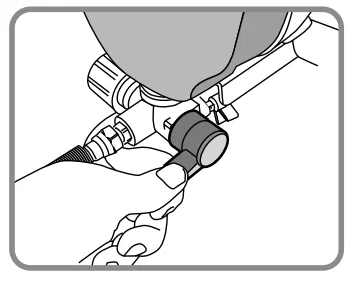
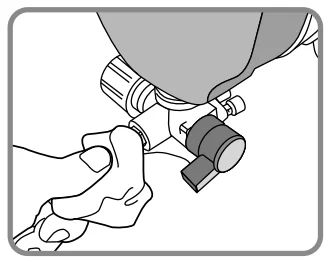
- Hold a rag over the paint hose outlet.

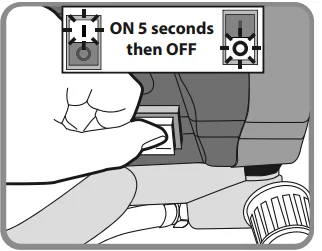
- Switch the power to ON for five seconds, then turn the power OFF.

- Turn the Prime/Spray switch to Prime; this will keep storage fluids in the sprayer.

- Replace the Tubes and secure with the Clamps.

- Wipe the sprayer with a clean cloth. Store in a clean, dry location out of reach of children.

Troubleshooting

Limited 90 Day Warranty
Harbor Freight Tools Co. makes every effort to assure that its products meet high quality and durability standards, and warrants to the original purchaser that this product is free from defects in materials and workmanship for the period of 90 days from the date of purchase. This warranty does not apply to damage due directly or indirectly to misuse, abuse, negligence, or accidents, repairs or alterations outside our facilities, criminal activity, improper installation, normal wear and tear, or to lack of maintenance.
We shall in no event be liable for death, injuries to persons or property, or for incidental, contingent, special, or consequential damages arising from the use of our product. Some states do not allow the exclusion or limitation of incidental or consequential damages, so the above limitation of exclusion may not apply to you. THIS WARRANTY IS EXPRESSLY INSTEAD OF ALL OTHER WARRANTIES, EXPRESS OR IMPLIED, INCLUDING THE WARRANTIES OF MERCHANTABILITY AND FITNESS.
To take advantage of this warranty, the product or part must be returned to us with transportation charges prepaid. Proof of purchase date and an explanation of the complaint must accompany the merchandise. If our inspection verifies the defect, we will either repair or replace the product at our election, or we may elect to refund the purchase price if we cannot readily and quickly provide you with a replacement.
We will return repaired products at our expense, but if we determine there is no defect, or that the defect resulted from causes not within the scope of our warranty, then you must bear the cost of returning the product. This warranty gives you specific legal rights, and you may also have other rights which vary from state to state.
Visit our website at: http://www.harborfreight.com
Email our technical support at: [email protected]
For More Manuals By Krause & Becker, Visit ManualsLibraryy
Krause & Becker 62915 Airless Paint Sprayer Kit -FAQS
How do you use an airless paint sprayer?
Start by straining and preparing the paint, then connect the hose and spray gun. Prime the sprayer, adjust the pressure, test the spray pattern, and apply paint using smooth, even passes.
How much does the Krause & Becker airless paint sprayer cost?
The Krause & Becker Airless Paint Sprayer Kit is commonly priced around $169.99, depending on promotions and availability.
Do you need to thin paint for an airless sprayer?
Most wall and latex paints can be sprayed without thinning. Very thick coatings may require light dilution, usually 5–10%, depending on the material.
What is the number one rule when using an airless spray gun?
Always wear proper safety gear and never place your hand or finger in front of the spray tip, as high pressure can cause serious injury.
What pressure should I set on the sprayer?
Use the lowest pressure that produces a clean, even spray pattern. Too little pressure causes uneven coverage, while too much leads to overspray and paint waste.
What are the disadvantages of airless paint sprayers?
Airless sprayers have a learning curve, can create overspray, use more paint, and are not ideal for very small or detailed jobs.
Can you leave paint in the sprayer overnight?
It’s best to clean the sprayer after each use. If necessary, paint can be left overnight in a cool, dry area, but thorough cleaning is recommended before reuse.
Can you run soapy water through a paint sprayer?
Yes, warm soapy water works well for cleaning water-based paints. Always follow up with clean water to remove residue.
What is the best way to clean an airless paint sprayer?
Flush the system immediately after use with clean water for water-based paints or mineral spirits for oil-based paints. Continue flushing until the liquid runs clear.