
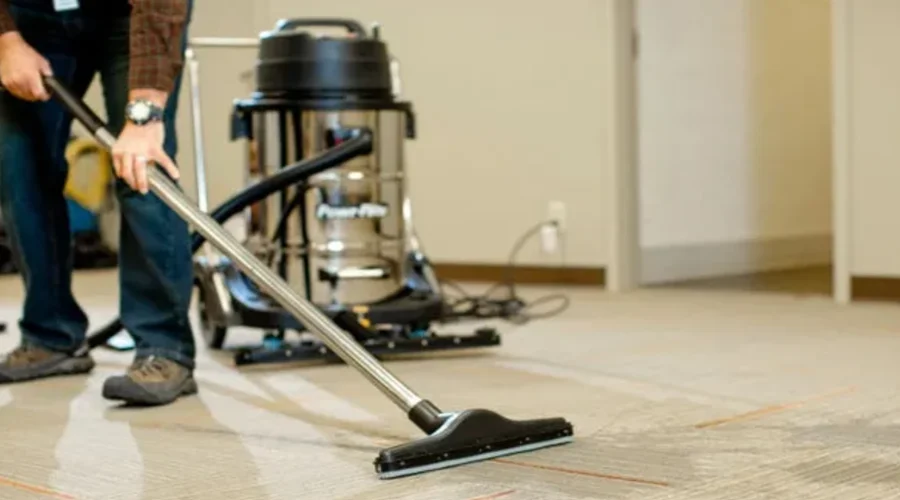

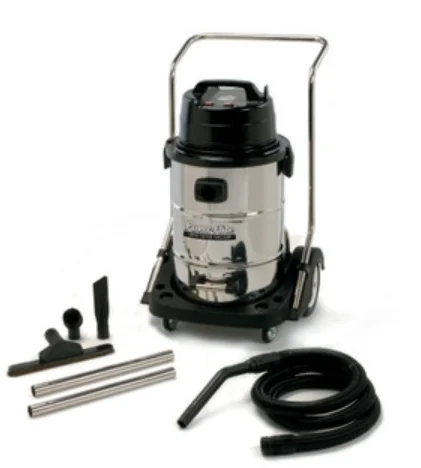
Powr-Flite Wet/Dry Vacuum PF25HM
IMPORTANT SAFETY PRECAUTIONS
WARNING!: To reduce the risk of fire, electric shock, or injury
- FOR DRY UNITS
Electric shock could occur if used on wet surfaces. DO NOT expose to rain. Store Indoors. - FOR WET UNITS
To avoid electric shock, DO NOT expose to rain. Store Indoors. An electric shock could occur if the power nozzle is used on wet surfaces.
When using this electric vacuum/blower, basic precautions should always be followed, including the following:
- DO NOT leave the unit when plugged in. Unplug from the outlet when not in use and before servicing.
- DO NOT allow the unit to be used as a toy. Close attention is necessary when used around or near children.
- Use only as described in this manual. Use only the manufacturer’s recommended attachments.
- DO NOT use with a damaged cord or plug. If the unit is not working properly because it has been dropped, dropped into water, left outdoors, or damaged in any way, contact a service center of Powr-Flite.
- DO NOT pull or carry by cord, use cord as a handle, close door on cord, or pull cord around sharp edges or corners. Do not run the unit over the cord. Keep the cord away from heated surfaces.
- DO NOT unplug by pulling on the cord. To unplug, grasp the plug, not the cord.
- DO NOT handle the plug or appliance with wet hands.
- DO NOT put any objects into openings. DO NOT use with any opening blocked: keep free of dust, lint, hair, or anything that may reduce air flow.
- Keep hair, loose clothing, fingers, and all parts of the body away from openings and moving parts.
- DO NOT pick up anything that is smoking or burning, such as cigarettes, matches, or hot ashes.
- DO NOT use without a dust bag and/or filters in place for dry operation, and a wet adapter for wet operation.
- Turn off all controls before unplugging.
- Use extra care when cleaning the stairs.
- DO NOT use to pick up flammable or combustible liquids such as gasoline, or use in areas where they may be present.
- DO NOT use where oxygen or anesthetics are used.
- DO NOT use an extension cord unless necessary. If an extension cord is used, then the wire size must be #14 or larger and should not exceed 50 ft. in length. The extension cord must be a three-wire type to ensure grounding protection.
- Replace damaged or worn parts immediately with genuine original equipment parts to maintain safety.
- This unit must be connected to a properly grounded outlet only. See grounding instruction. If your vacuum/blower has an outlet for a motorized power nozzle, always turn it off before connecting or disconnecting the motorized nozzle.
GROUNDING INSTRUCTIONS
DANGER: Improper use of the grounding plug can result in a risk of electric shock.
GROUNDING INSTRUCTIONS
This vacuum/blower must be properly grounded. If it should malfunction or break down, grounding provides a path of least resistance for electrical current to reduce the risk of electric shock. This machine is equipped with a cord having an equipment-grounding conductor and grounding plug. The plug must be inserted into an appropriate outlet that is properly installed and grounded in accordance with all local codes and ordinances. If repair or replacement of the cord or plug is necessary, DO NOT connect the grounding wire to either flat blade terminal. The wire with insulation having an outer surface that is green with or without stripes is the grounding wire.
GROUNDING METHODS
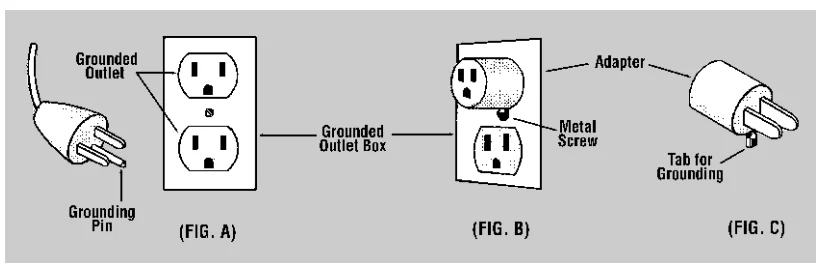
This unit is for use on a nominal 120-volt circuit and has a grounded plug that looks like the plug illustrated in (Fig. A). A temporary adapter that looks like the adapter illustrated in (Fig. B&C) may be used to connect the plug to a 2-pole receptacle as shown in (Fig. B) if a properly grounded outlet is not available. The temporary adapter should be used only until a properly grounded outlet (Fig. A) can be installed by a qualified electrician. The green color rigid ear, lug, or the like extending from the adapter must be connected to a permanent ground, such as a properly grounded outlet box cover. Whenever the adapter is used, it must be held in place by a metal screw.
NOTE: In Canada, the use of a temporary adapter is not permitted by the Canadian Electrical Code.
WARNING! Improper connection of the equipment-grounding conductor can result in a risk of electric shock. Check with a qualified electrician or service person if you are in doubt as to whether the outlet is properly grounded. DO NOT modify the plug provided with the appliance. If it will not fit the outlet, have a proper outlet installed by a qualified electrician.
OPERATING INSTRUCTIONS
FOR DRY (ONLY) OPERATION
Filter Installation
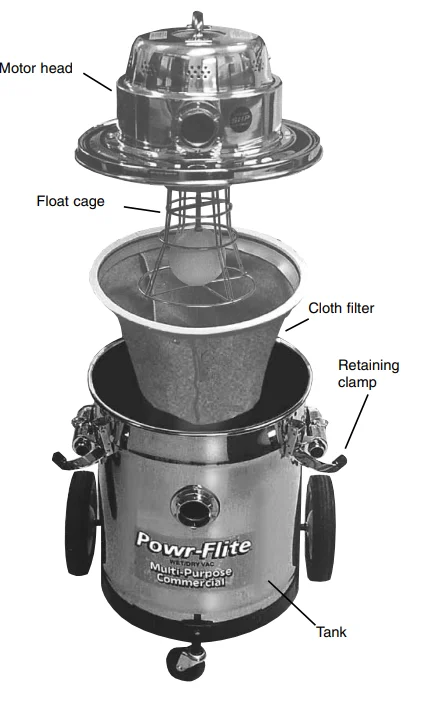
- Disengage the three (3) retaining clamps that hold the motor head to the tank. Carefully remove the motor head and set it aside.
- Lift the cloth filter from the rim of the tank and remove any hoses, tools, etc. stored in the tank.
- Install a disposable paper filter bag as illustrated on page 10 (optional), set the cloth filter bag on the tank, replace the motor head, and snap down the hold-down clamps.
CAUTION: Care should be exercised when handling the motor head. Dropping the motor head may cause permanent damage to internal components.
NOTE: Do not wash the cloth filter. Shrinkage to the cloth and damage to the gasket can occur. Wet/dry vacuum cleaners are equipped with a by-pass motor, designed for wet or dry pick-up.
FOR WET/DRY OPERATION
Wet/dry vacuum cleaners are equipped with a by-pass motor, designed for wet or dry pick-up.
Wet Pick-Up Adaptation
When ordered as a wet/dry vac, this unit is shipped with a dry filter for dry pick-up and a float cage assembly attached to the motor head for liquid recovery. The safety float located in the protective frame of the float cage stops the vacuum action of the motor head when maximum recovery of liquid is reached.
- Disengage the three (3) retaining clamps that hold the motor head to the tank. Carefully remove the motor head and set it aside.
- Lift the cloth filter from the rim of the tank and remove any hoses, tools, etc. stored in the tank.
- Remove cloth filter from tank, replace motor head & cage, and snap down hold-down clamps.
CAUTION: Excessive foam must be reduced with a chemical defoamer sprayed or poured into the tank. Powr-Defoamer part # SNQT is recommended.
NOTE: In order to maintain maximum efficiency of this vacuum cleaner, it is important to clean the cloth filter each time the tank is emptied. To clean the cloth filter, shake off loose particles and brush the exposed surface with a soft-bristle brush.
Wet Pick-Up Maintenance
DO NOT store this unit with any liquid inside the vacuum tank. Before storing or converting over to dry pick-up, run an emptied vacuum for approximately five minutes to eliminate moisture in the tank, hose, and attachments.
NOTE: Caution should be exercised when handling the motor head. Dropping the motor head may cause permanent damage to internal components.
ASSEMBLY INSTRUCTIONS
VACUUM ASSEMBLY
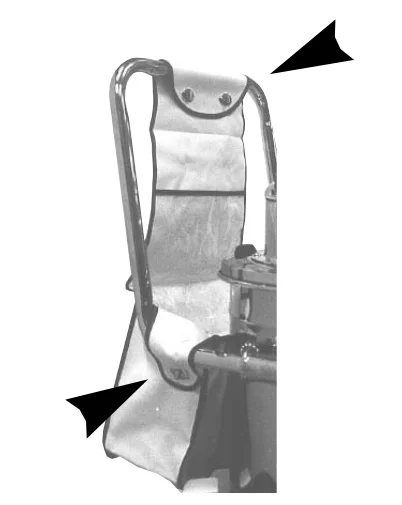
TOOL CADDY
- Attaches to the top of the handle facing the tank.
- Snap closures over the top handle and Closures on each side of the handle.
HANDLE
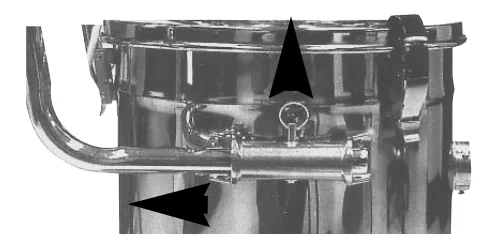
On 20-gallon units, this vacuum ships with the handle in the storage position and must be moved to the operating position. On 10-gallon units, the handle is shipped off and must be attached.
- Firmly grasp the speed pin on each side of the handle and pull up and out.
- Pulling the handle slowly away from the tank, align the front handle holes with the holes in the handle bracket.
- Insert speed pins through the holes on both sides to lock the handle in place. Attach the tool caddy.
TOOLS & ATTACHMENT INSTALLATION & ASSEMBLY
HOSE CADDY
- Standard equipment on 20-gallon units.
- Shipped assembled.
- Mounted to the motor head with three tank-mounted clamps.
HOSE CONNECTOR
The hose and swivel connector are pre-assembled at the factory. To attach the swivel connector to the intake fitting on the vacuum tank:
- Line up the slots in the swivel connector with the retaining rivets on the intake.
- Insert the swivel connector and twist clockwise until the rivets reset against the slot end.
TO ASSEMBLE WAND
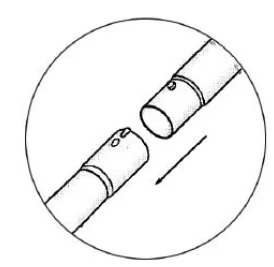
The two-piece wand requires assembly.
- Align the button lock of the upper wand section with the opening for the button lock in the lower wand section.
- Push sections together until the lock is accomplished.
To attach the hose to the wand, slide the free end of the hose onto the grooved end of the upper wand.
TO ASSEMBLE TOOL
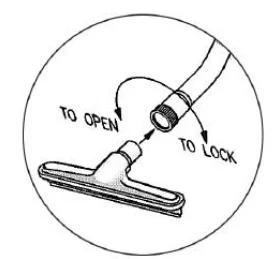
- Turn the wand nut counterclockwise approximately four complete turns.
- Insert the tool into the wand and coupling. While holding the tool in place, turn the nut clockwise until the wand nut is fully locked.
REMOVAL OF LIQUIDS
REMOVAL OF LIQUID FROM VACUUM TANK
Tanks without drain valves
- Disengage hold-down clamps on the tank.
- Remove the motor head and wet pick-up adapter, and carefully place them to one side.
- Pour liquid from the tank into a suitable drain.
Tanks with drain valves
- Center the drain valve over the drain in the floor.
- To open the drain, turn the valve counterclockwise and continue turning until the desired flow is reached.
- To close, make sure there are no obstructions that will prevent the valve from sealing, then turn the valve clockwise until it is fully closed and sealed
PAPER AND CLOTH FILTERS
FILTER INSTALLATION AND REMOVAL
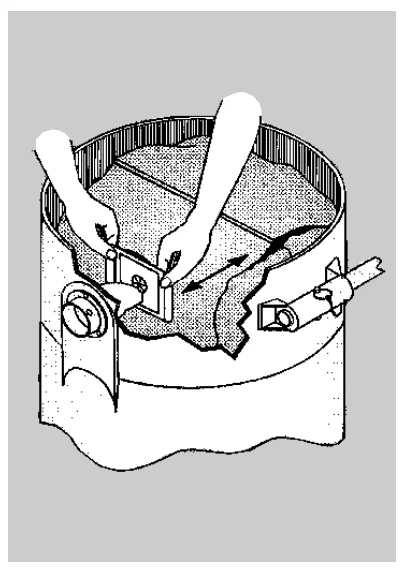
To install paper and cloth filters
- Expand filter bag pleats, then grasp scored ends of cardboard and pull forward completely onto inlet tube as close to tank wall as possible.
- Position the cloth filter assembly on the tank, then place the motor head on the tank and close the clamps.
To remove the loaded filter bag
- Remove the motor head and cloth filter assembly, and lay the cleaner on its side with the inlet tube on top.
- Pull the bag out of the tank using care not to puncture the bag with the inlet tube.
- Re-seal the cardboard flap that covered the filter bag opening.
- Install a fresh new bag.
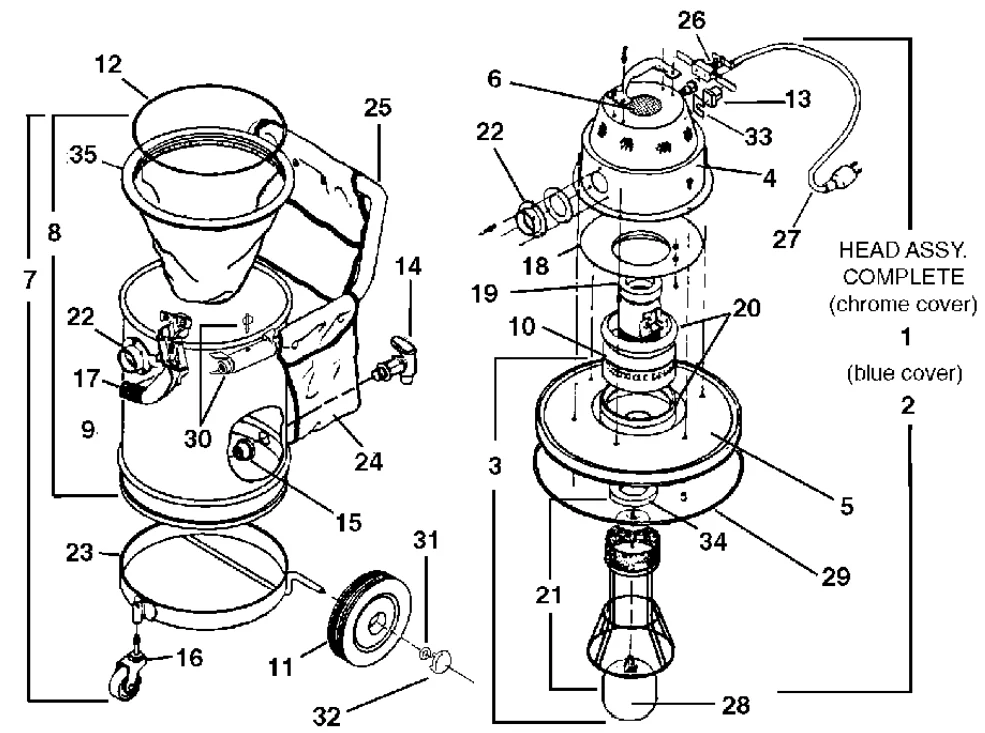
CAN ASSEMBLIES
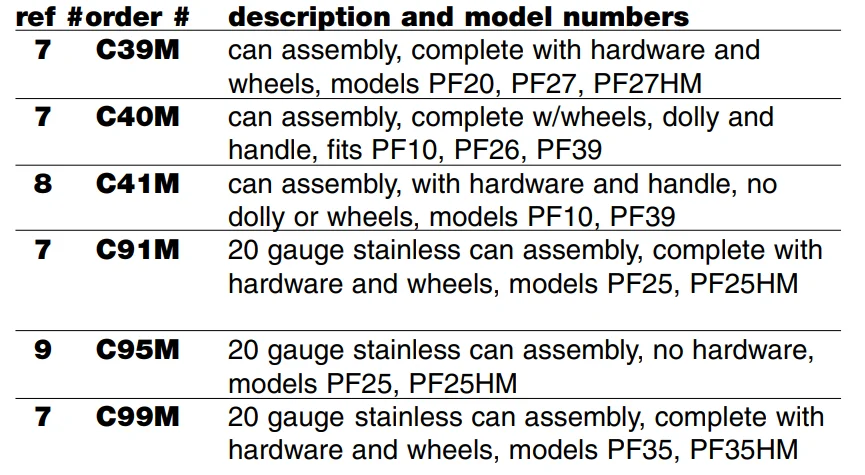
COVER ASSEMBLIES
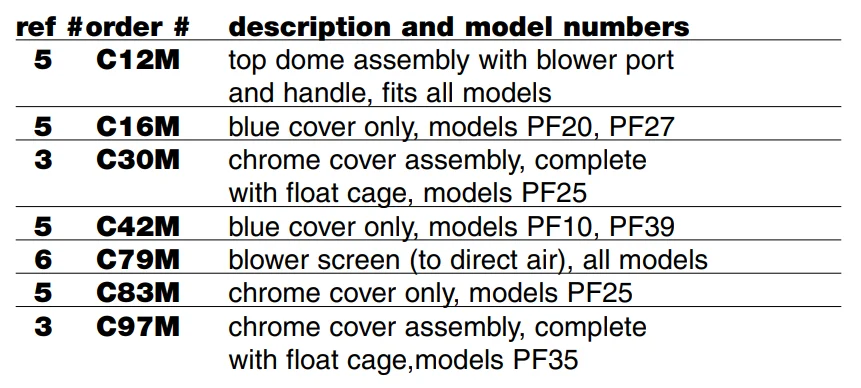
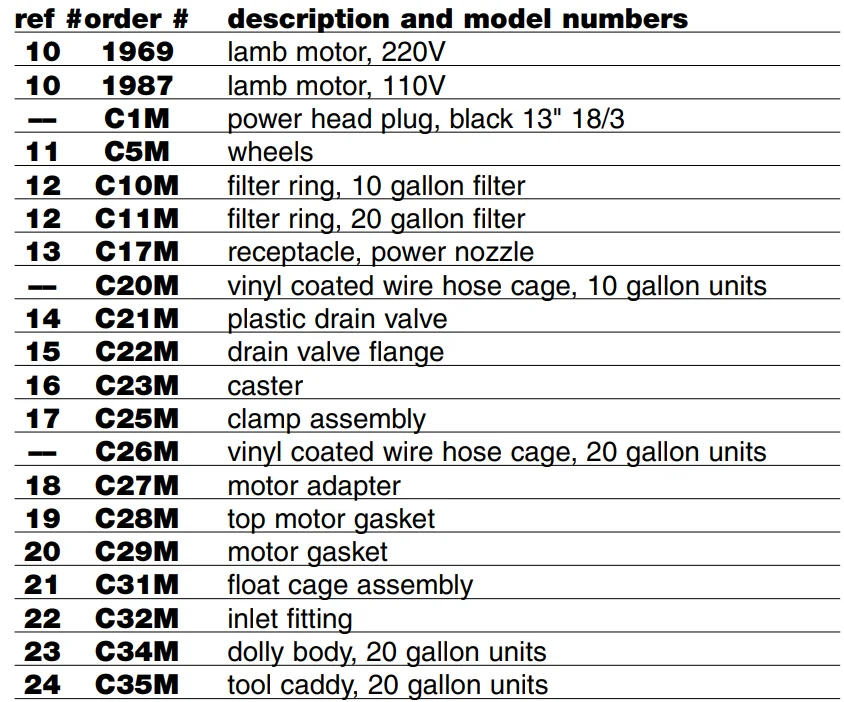
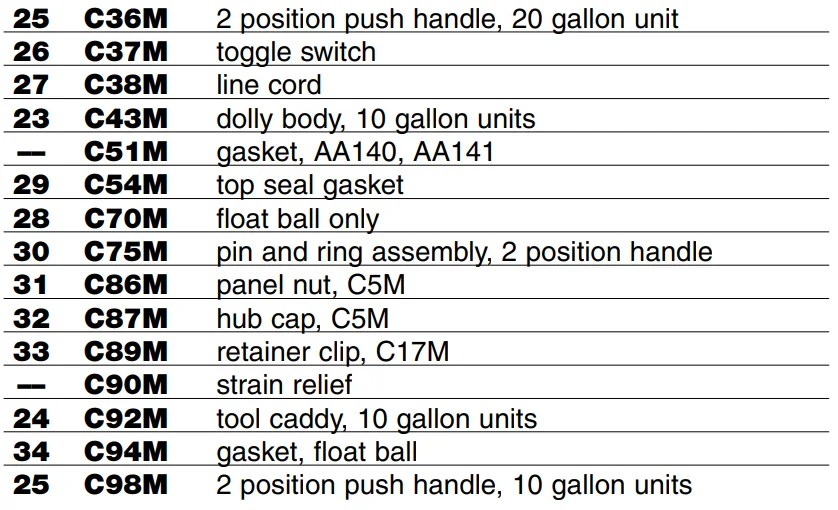
COMPONENT PARTS
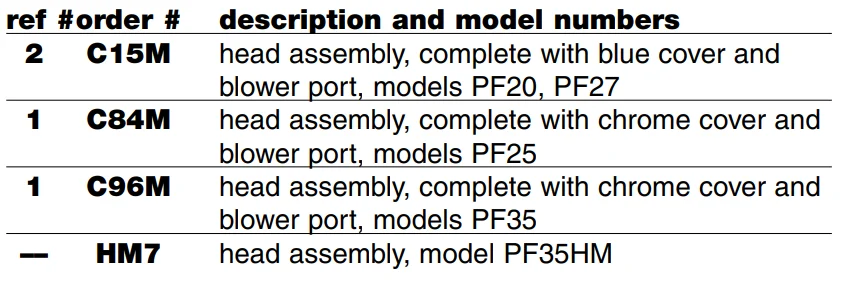
HEAD ASSEMBLIES
TOOLS
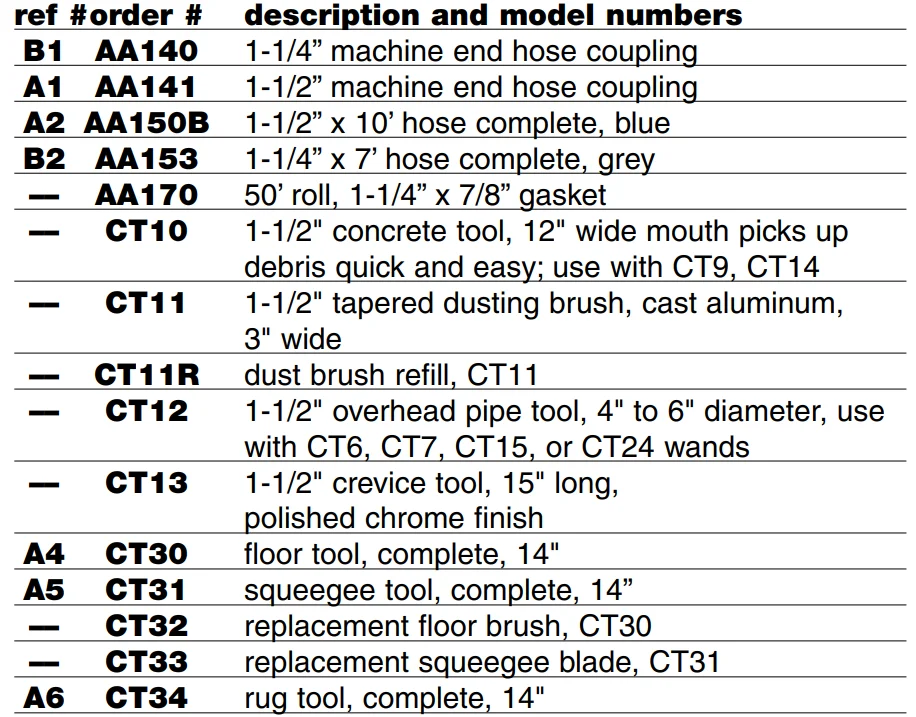
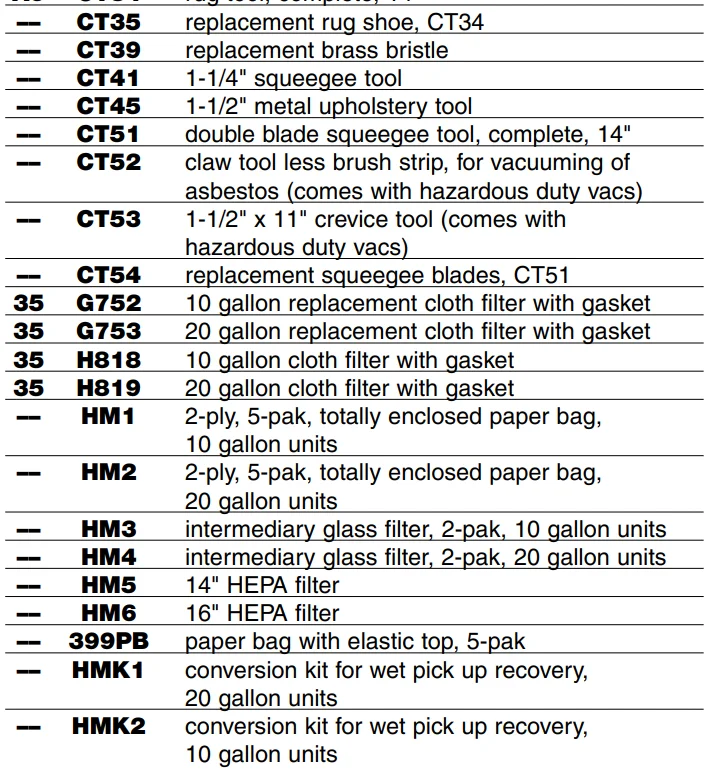
TK2
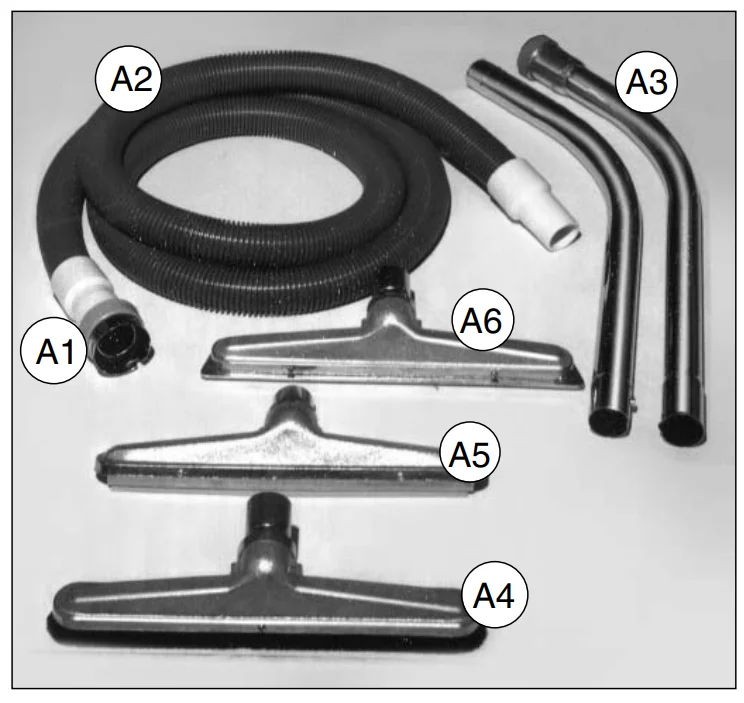
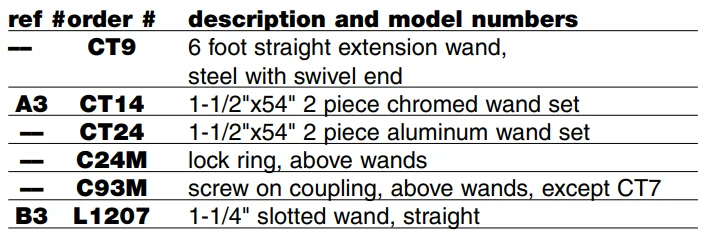
WANDS
MAINTENANCE GUIDE
Loss of Suction
CAUSE:
- Full paper filter bag.
- Dry filter assembly clogged.
- Clogged hose or wand.
- The tank rim is dented.
- Loose or broken fan.
- Motor not working.
- The float-not-functioning tank is full.
- Gasket worn.
SOLUTION:
- Replace the paper filter bag.
- Clean cloth filter.
- Remove obstruction.
- Replace the tank.
- Contact the manufacturer of the service center.
- Contact the manufacturer or service center.
- Check to see if the ball on the rod moves freely or
- Replace the gasket.
The motor is not running
CAUSE:
- Broken switch.
- Defective power cord.
- Defective motor.
- Blown fuse or tripped circuit breaker at the power source
SOLUTION:
- Contact the manufacturer or service center.
- Contact the manufacturer or the service center.
- Contact the manufacturer or the service center.
- Contact the manufacturer or the service center.
Dust is blowing from the unit when running
CAUSE:
- Full paper filter bag.
- The paper filter bag was not installed properly or off the inlet tube.
- The cloth filter bag is dirty.
- The cloth or paper filter bag is torn.
- The paper bag is not installed.
SOLUTION:
- Replace the filter bag.
- Reinstall or replace the paper filter bag properly.
- Clean the cloth filter bag.
- Replace the filter bag.
- Install the paper filter bag.
Water is blowing from the unit when running
CAUSE:
- The tank is full of liquid.
- Sudsy or foamy liquid is being picked up.
SOLUTION:
- Empty tank.
- Add defoamer to the tank.
WARRANTY
The manufacturer warrants to the original purchaser that the products manufactured are free from defects of workmanship and material, provided such goods are installed, operated, and maintained in accordance with written manuals or other instructions for a period of 1 year from the date of purchase. In case you, as our customer, meet any trouble with your machine, contact your Powr- Flite® representative, who will be happy to be of service to you and will take care of the warranty settlement.
NOTE: Alterations and changes made to the machine without the written approval of the manufacturer and use of unapproved spare parts will not be covered by warranty.
For more manuals by Powr-Flite, visit ManualsLibraryy
Powr-Flite Wet/Dry Vacuum PF25HM-FAQs
How does the Powr-Flite Wet/Dry Vacuum PF25HM work?
The vacuum operates by using an electric motor to spin a high-speed fan. This creates low air pressure inside the unit. Higher atmospheric pressure then pushes air, dust, and debris into the tank, producing strong suction.
What is the main purpose of the PF25HM wet/dry vacuum?
The PF25HM is designed to clean both dry debris (dust, dirt, sawdust) and liquid spills. It is ideal for commercial spaces, workshops, garages, and heavy-duty cleaning jobs.
How is suction created in this vacuum?
Suction is generated when the motor-driven fan reduces internal air pressure. The pressure difference pulls debris through the hose and into the collection tank.
What type of motor does the PF25HM use?
Like most professional wet/dry vacuums, it uses a high-speed universal motor, known for strong starting torque and reliable performance.
How strong should vacuum suction be?
Good suction power for commercial wet/dry vacuums typically ranges between 180–200 air watts (AW) or equivalent high CFM performance for heavy-duty cleaning.
How long does a wet/dry vacuum typically last?
With proper maintenance, commercial vacuums like the PF25HM can last 5–8 years or more, depending on usage and care.
How often should I clean or maintain the vacuum?
Empty the tank after each major use. Check filters regularly and clean or replace them as recommended to maintain suction efficiency.
What happens inside a vacuum (scientific principle)?
Vacuum cleaners operate based on air pressure differences and airflow dynamics (often explained using Bernoulli’s principle). Faster-moving air creates lower pressure, resulting in suction.
What is the correct way to vacuum for best results?
Move slowly in overlapping passes, adjust attachments for corners and edges, and vacuum high-traffic areas more thoroughly.